Real driver stories · UK railway careers

My Train Driver Journey

Real stories from real train drivers across the UK. Each feature shares the personal route into the railway, the recruitment process, the reality of the job and the lessons applicants can learn before applying.

The real journeys behind the job

There is no single route into train driving.

Behind every successful driver is a different story — different starting points, different challenges and different decisions along the way. Select a driver below to read their journey.
Govia Thameslink Railway

RAF to railway

Seven years with the RAF on Harriers, five years maintaining trains at Hornsey Depot, then into the driving cab and now instructing the next generation of drivers.

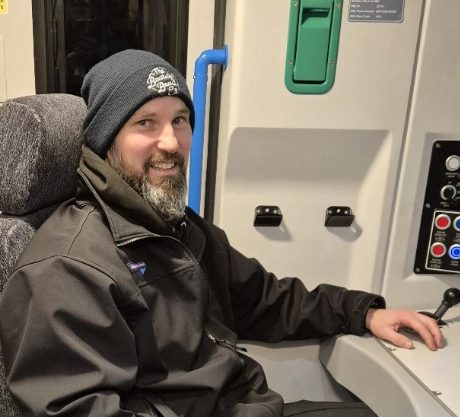
Neil — GTR Driver Instructor

Neil

GTR Driver Instructor

Meet the driver

From RAF Weapons Technician to GTR Driver Instructor

Seven years with the RAF on Harriers, five years maintaining trains at Hornsey Depot, then into the driving cab and now instructing the next generation of drivers.

“The job pays well because it is a highly safety-critical role and you hold a lot of responsibility. Do your research and be prepared to put in the hard work — you will then reap the rewards.”

— Neil, GTR Driver Instructor

From the RAF to the railway

Background

Question 1

How did you get into the railway and what did you do before?

I served for just shy of 7 years in the RAF as a Weapons Technician and spent most of that working on Harriers at 20 (R) Sqn. I honestly had not thought about the railway as a career path until a colleague said, had I considered it when I was looking at leaving? I began looking into it and put together a CV relevant to maintenance on the railway. At this point, driving had not piqued my interest. I left the RAF in August 2008 and began working for Thompson Fly at Luton Airport while actively applying for railway jobs. After 6 weeks I interviewed and was offered a job for Bombardier at Hornsey Depot working on Class 365 trains. I enjoyed the work and after 6 months was TUPE'd across to First Capital Connect at the same depot. I worked 5 more years as a train maintainer on numerous rolling stock and really enjoyed the work and the people I worked alongside. I saw an advert for train drivers at the same company, so decided it would be a change and a new challenge for me and applied internally. I eventually got the position as a train driver for Great Northern in 2014. I am now a driver instructor helping with the practical side of driver training.

Question 2

Why did you choose driving?

I saw the advert for the driver role and the pay was a big step up from what I was on as a train maintainer. It seemed like a challenge I wanted to take on, so I looked more into it and decided to apply.

The recruitment process

Getting into train driving

Question 1

What was the recruitment process like?

The recruitment process is very thorough and is designed to really get to the right candidates. For me, it was a 3-day process, the first being a day of tests over morning and afternoon. There were a lot of people present in the morning session and we went through a series of tests on mechanical comprehension, concentration and problem solving. Those who made the grade were invited back in the afternoon for more tests. There were a lot fewer in the afternoon. Once the afternoon was over, if you had made it through, you were invited to come back at a later date for a reaction test and a criteria-based interview. This was my stumbling block — I passed the reaction test but failed the criteria-based interview. The interview consists of about 10 questions that you answer on paper in the morning before being brought back in the afternoon for a 1-2-1 interview looking into the answers you had given. It was a psychological test designed to see if you would change under pressure and whether you met the criteria they were looking for. After 6 months I was able to reapply and continue the process from the area I had failed. I did not have to do the tests again, as these are held for up to 2 years. This time round I was more prepared for the criteria-based interview and passed it. The final stage was medical and a manager's interview. For the interview I did a lot of preparation around my knowledge of the company and the trains they worked with.

Question 2

Anything that surprised you?

The criteria-based interview surprised me in how it was carried out. I can honestly say it was my worst interview experience up to that point. Questions on the paper included giving examples of working in emergency situations, working alone, and when I had worked with safety systems. My previous job in the RAF had been highly safety-critical and I was able to quote explosive storage regulations, weapon handling regulations and aircraft movement regulations. I also had 5 years' experience in train maintenance and the work safety protocols. I was therefore quite taken aback when they failed me first time around. On looking into it afterwards, I realised it was due to changing my work process under extreme pressure while in Iraq. I was able to adjust the way I answered the questions next time and show I was able to stick to strict working protocols even under intense pressure.

Question 3

What do people think it's like vs what it's actually like to be a train driver?

I believe people have a warped sense of what they think the job entails. The number of people who have told me, "well you just press a button to start and one to stop!" or "the train does all the work for you!" The reality of the job is that you are alone in the cab of your train, responsible for in excess of 1,700 passengers on a 12-car Class 700 in peak hours. The trains are full to capacity with only the driver on board to deal with any incidents.

Day-to-day responsibilities

The reality of the job

Question 1

What does a typical shift look like?

Shifts range from 7.5–10 hours but can be up to 12 hours in one shift. My diagrams tend to have 3–4 hours of driving before my break and 2–3 after the break. Some days the jobs are long with a lot of stops at stations, while other days can be flyers that are non-stop to the destination. In my current role as a driver instructor I will have a trainee with me for a minimum of 250 hours' driving. In this time they need to learn all the routes they will drive, the platform lengths, where the coach-length marker boards are, speeds over sections of line, and all the crossover speeds on junctions. They also need to know all about the traction, the route risks and be aware of potential wrong routes. This must all be done while driving the train across 3 shifts, starting as early as 3–4 am and also working night shifts.

Question 2

Talk us through the mental side — concentration, fatigue, pressure.

This is the hardest part of the job. In its simplest form my job entails sitting down and staring out a window while controlling a train. The driving is the easy part — once you have mastered smooth acceleration and braking you then have to feed in all the other aspects. Staying sharp is really difficult, so we use a personal protection strategy and non-technical skills to aid us in staying safe and not making mistakes. It may sound silly, but remembering how many coaches are on your train and what side the doors need to be opened can really catch you out when you are fatigued. In one diagram I can drive three different rolling stock, all of different lengths, and I need to remind myself what I am driving to ensure I don't stop short or over-run. Open the doors the correct side, or forget to recheck my signal before leaving as it may be on red. It is all these areas put together that make it the challenge it is. Learning ways to stay focused is all part of the job.

The honest bits

Challenges

Question 1

What is the biggest day-to-day challenge?

The biggest challenge for me is getting up at 3 or 4 am to go to work. The getting-up is difficult because you have to go to bed really early to get enough sleep. If the environment is not right you can struggle to get enough rest, and this can snowball through the week. Find a good routine that works, keep healthy and hydrated, and these will benefit you through shift work.

Question 2

What might people actually struggle with?

As I mentioned, the shifts can be difficult and it takes some getting used to. Being alone in the cab for long hours with only your thoughts can be hard, and it can distract your focus. It can be boring at times but also can be very enjoyable.

Question 3

Anything that took time to get used to?

Working alone and being responsible for a lot of people can be quite daunting, but falling back on your training gives you comfort in knowing you worked hard to get here. All the testing and learning helps build a strong knowledge of the railway — keep returning to that learning to refresh it.

Question 4

Any mistakes or learning curves?

Don't be complacent. It is easy to fall into the trap of thinking "I've got this now" after a few months driving on your own. This is the time when mistakes can be made. Don't stop using your protection strategy — keep using risk-triggered commentary or whatever other strategy works for you.

From driver to teacher

Becoming an instructor

Question 1

Why did you move into instructing?

After 10 years as a driver I had found myself just going through the motions and not really pushing myself. I decided that I felt confident enough in my driving and railway knowledge to help others. I like that it gets me thinking when trainees question me and it makes me recall the knowledge I had maybe not thought about for some time. It keeps my knowledge fresh, as the trainee is straight out of the training school with all their learning at the front of their mind.

Question 2

What is different from being a driver?

As an instructor my focus is shifted between watching the trainee and instructing their driving for the first month. They will have no idea of braking points or train control. The first part is very verbal — I tell them when to accelerate and when to brake until they start to learn the areas. Once that is starting to sink in you have to bring in the speed changes, crossing names, station lengths and build up a full railway in their head. It is different in that you are recalling your own learning and creating a learning environment in which you both feel comfortable and safe.

Question 3

What do you look for in trainees?

I like a trainee to listen carefully to begin with and not be overconfident. It is good to ask questions — but they need to be able to find the answers too. Be professional, turn up smart and on time, as rushing around leads to mistakes. Give yourself the time to prepare for your shift, inspect your diagram for the day, sign on at the correct time and be ready for your first trip without being flustered.

For anyone wanting to join

Advice for new applicants

Question 1

What actually matters — mindset and behaviours, not just CV stuff?

Understanding the role and what is expected. Knowing about the company you are applying to. Being willing to learn.

Question 2

What common mistakes do applicants make?

Thinking it is an easy job. Not being prepared when turning up to tests or interviews. Put the work in at home and show them you really want it.

Reflections

Final thoughts

Question 1

What do you enjoy most about the job?

I am so thankful for the job I have. I enjoy the work I do, and on the days when I don't have a trainee I really like getting back behind the controls myself and just driving.

Question 2

Would you recommend it, and why?

I would definitely recommend it — but don't come to it expecting easy money. The job pays well because it is a highly safety-critical role and you hold a lot of responsibility. Do your research and be prepared to put in the hard work — you will then reap the rewards.

Key takeaways

What aspiring drivers should learn from Neil

Prepare properly

Criteria-based interviews catch out under-prepared applicants. Structure your examples and show you stick to procedure under pressure.

Respect the responsibility

Over 1,700 passengers can be on a 12-car train in peak hours. This is not 'press a button' work — it is safety-critical.

Stay sharp, stay humble

Fatigue, complacency and distraction are real risks. Good drivers keep using their protection strategy every shift.

Why this matters

Understand the role before you apply.

Real experience

Hear directly from people who have been through the process and done the job.

Better preparation

Understand what recruitment is really testing before you apply.

Safety-critical mindset

Learn why responsibility, concentration and rule compliance matter so much.

Ready to follow the same path?

Prepare properly for UK train driver recruitment.

Use structured CV support, interview preparation, online assessment practice, psychometric guidance and CPD learning to go into the recruitment process properly prepared.

Career update list

Move closer to the driver’s seat.

Get train driver recruitment updates, preparation tips, application guidance and career articles to help you plan your next step.

  • Recruitment window alerts
  • Application & CV guidance
  • Assessment & interview prep
  • Unsubscribe any time

One email at a time — no spam, no shared lists. Read our privacy notice.