
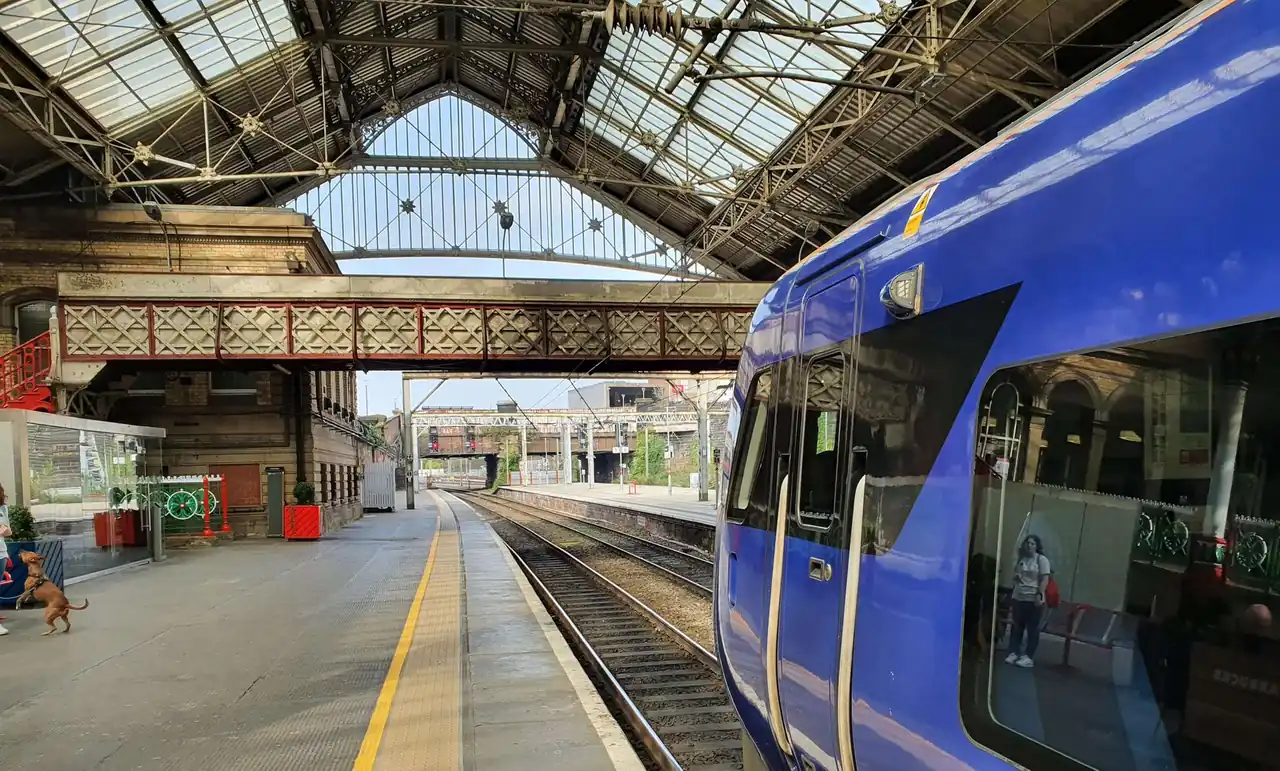
UK Train Driver Role · Duties · Responsibilities
What Does a Train Driver Actually Do?
A realistic look at the day-to-day responsibilities, skills and challenges of driving passenger trains on the UK network.
The real job
It is not "press a button to start, press a button to stop".
A UK train driver is a safety-critical professional responsible for operating passenger trains that can carry well over a thousand people in peak hours. The role combines precision driving, continuous concentration, rule compliance, professional communication and calm decision-making when things go wrong.

Step inside the cab
360° interactive view of a modern train driver's cab
Drag, look around and explore — this is the office a UK train driver sits in for up to 10 hours a shift. Use the VR icon on mobile for an immersive headset view.
Hosted via Kuula · Works on desktop, mobile and VR headsets.
Daily responsibilities
What a train driver does on a typical shift
Pre-duty sign-on and route briefing
Reporting for duty on time, checking notices, route updates, speed restrictions and safety bulletins before stepping into the cab.
Train preparation and safety checks
Carrying out preparation routines on rolling stock, brake tests, driver vigilance systems and TPWS/AWS checks before entering service.
Driving to timetable
Accelerating and braking smoothly, observing signals, sticking to permissible speeds and maintaining an accurate timetable across the route.
Communication with signallers and control
Using the GSM-R and cab radio to speak with signallers, control room, station staff and the guard — always accurate, brief and confirmed.
Station stops and platform duties
Stopping at the correct coach-length marker, opening doors on the correct side and making sure the train is safe to depart.
Handling degraded and emergency situations
Managing signal failures, trespass incidents, animal strikes, weather disruption and medical emergencies using the rule book.
Hours and shifts
The reality of shift work on the railway
Train drivers work a rolling roster across 24/7 operations. It suits disciplined people who can manage sleep, energy and personal routine across changing shifts.
Skills that matter
What makes a good train driver
Employers are not just looking for people who want to drive trains. They are looking for people who can prove they will do the job safely, reliably and professionally.
Sustained concentration
Train driving looks simple but demands hours of focused attention — you cannot lose attention for even a moment.
Rule compliance
Rules and procedures exist to keep passengers and staff safe. Drivers follow the rule book, even under pressure.
Clear communication
Every message must be accurate, brief, clear and confirmed. The railway relies on unambiguous communication.
Situational awareness
Anticipating risks — weather, trespassers, track workers, signal changes — and reacting with calm, safe decision-making.
Punctuality and reliability
Train crews must report for duty on time across early starts, late finishes, weekends and shift patterns.
Technical understanding
Understanding traction, braking systems, air systems and how different rolling stock types behave on the line.
Pay & progression
It pays well because it is a safety-critical role.
Train driver salaries reflect the responsibility of the job. Starting salaries for trainees are competitive, and qualified drivers earn strong wages with further progression into instructing, management and specialist operational roles.
Explore the recruitment processTrainee driver
£27k – £33k
Starting salary during training
Qualified driver
£48k – £68k
Varies by operator, with overtime and allowances on top
Future progression
Qualified drivers can move into driver instructor, driver manager, depot manager, freight or high-speed roles after building experience on the main line.
Hear from real train drivers
Real journeys into train driving
Read honest first-hand interviews from qualified train drivers across the UK. Learn how they got into the railway, what the recruitment process was really like, and what the job involves day to day.
Featured interview
Neil — GTR Driver Instructor
From RAF Weapons Technician to railway maintainer, train driver and now Driver Instructor. Neil shares what the recruitment process was really like, why the criteria-based interview caught him out first time, and what the job demands once you are in the cab.
More driver journeys
Paul — Revenue Protection to Train Driver
Paul’s journey started with a childhood interest in rail, before joining the railway as a Revenue Protection Assistant, progressing to conductor and eventually becoming a train driver. His story highlights the value of feedback, preparation and understanding the lifestyle behind the role.
UK Train Driver Role FAQs
Common questions about what UK train drivers actually do.
What does a train driver actually do all day?
Do trains drive themselves?
How many hours do train drivers work?
What is the biggest challenge of being a train driver?
Is driving a train stressful?
How much does a UK train driver earn?
Can anyone become a train driver?
Think the role is right for you?
Understand the real UK train driver selection process and start preparing properly before you apply.