Real driver stories · UK railway careers

My Train Driver Journey

Real stories from real train drivers across the UK. Each feature shares the personal route into the railway, the recruitment process, the reality of the job and the lessons applicants can learn before applying.

The real journeys behind the job

There is no single route into train driving.

Behind every successful driver is a different story — different starting points, different challenges and different decisions along the way. Select a driver below to read their journey.
TransPennine Express

Revenue Protection to Driver Instructor

Paul’s journey began with a childhood interest in trains, moved through Revenue Protection and conductor roles, and eventually led to the driving cab.

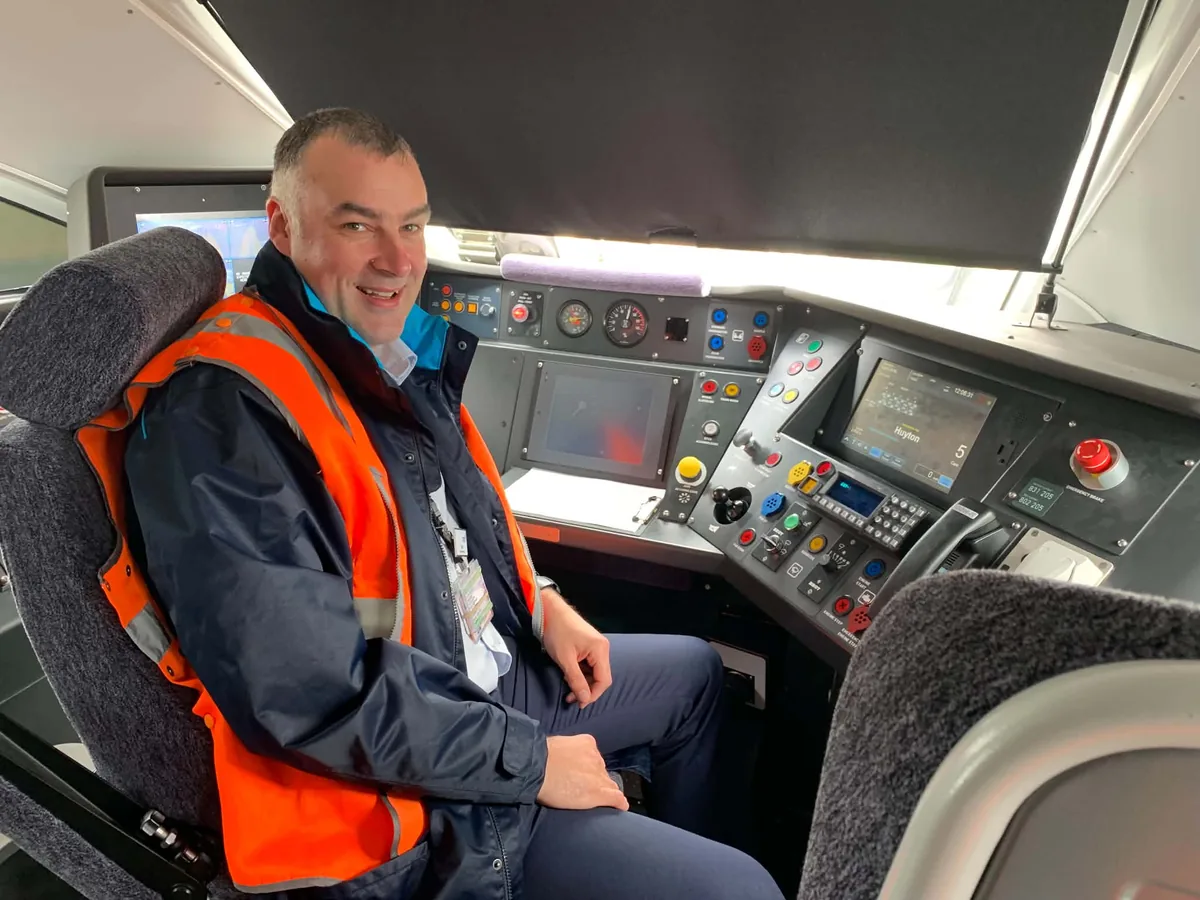
Paul — TPE Driver Instructor

Paul

TPE Driver Instructor

Meet the driver

From Revenue Protection Assistant to Train Driver Instructor

Paul’s journey began with a childhood interest in trains, moved through Revenue Protection and conductor roles, and eventually led to the driving cab.

“Any setbacks should always get feedback. This can then turn it into a positive for the next time.”

— Paul, TPE Driver Instructor

A childhood interest in rail

Background

Question 1

Tell us a bit about your background and how you first got into the railway.

I have always had an interest in the railway, from around 8 years old when my uncle took me to watch trains at Doncaster station. I was going to work on a night shift and saw an advert in the Metro newspaper. There were 2 vacancies with Arriva Trains Northern at Sheffield — one for a train driver and one for a Revenue Protection Assistant.

Question 2

What were you doing before the railway, and did those experiences help you later in your career?

From leaving school at 16 I went straight into employment. I started off in factories as a hygiene cleaner, responsible for cleaning machines and accessories associated with the food industry. I left at 18 and had various agency jobs in factories. I found a vacancy at age 19 monitoring fire and intruder alarms in a small business. It was in this job that I saw the advert at Arriva Trains Northern. The structure of the alarm monitoring position involved following procedures and guidelines, which helped me in getting the job on the railway, as I was already used to working to a set procedure.

Progression through the railway

Getting into train driving

Question 1

At what point did train driving become something you wanted to pursue?

I have always wanted to become a train driver, but when I saw the position I was only age 19, so at that time I was too young for that campaign's entry criteria. I applied for the role as Revenue Protection Assistant and knew career progression would be an opportunity at some point. I progressed to a conductor after 12 months in the revenue team and then after 3 years as a conductor I was lucky enough to get a position as train driver.

Question 2

What was the recruitment process like for you?

The recruitment was a long time ago now, but there are some similarities to the current process. Obviously Train Driver is a very sought-after position, so there were lots of applications. There were interviews with local managers and then, after whittling down the numbers, we were given a date for an assessment day. There were 8 of us on the day — 2 for Arriva Trains Northern and 6 for EWS — and we were using the EWS assessment centre. At the start of the day we had to write down a subject for a structured interview. If we were successful in the morning, then the afternoon would be the structured interview. We carried out 6 assessments to test various skills, such as the Group Bourdon dots test, mechanical comprehension test, and reaction tests where we had 5 coloured buttons, high and low tones in headphones, and left and right pedals. We had to react to visual and audible prompts. These were done twice — once at the programmed speed and a second time at your own speed. In the afternoon we sat with 2 interviewers who questioned me on the subject I had given in the morning. The interview was intense, a lot more so than with the local managers. Two people passed that day, both Arriva Trains candidates.

Question 3

Were there any parts of the process that surprised you or caught you out?

I was surprised at the number of various assessments we had to do, and how high the pass mark was. I was also unprepared for how in-depth the structured interview was. Luckily, I managed to get through it all and get the position.

Turning rejection into preparation

Setbacks and learning

Question 1

Did you face any setbacks or failures along the way, and how did you deal with them?

The first time I applied for a Train Driver position I was unsuccessful at the local interview stage. I went to the manager and obtained feedback for the good bits and where I could improve. I took all this into consideration and when the next position came up I was prepared and managed to get there. Any setbacks should always get feedback. This can then turn it into a positive for the next time.

What people do not always see

The reality of the job

Question 1

What do people outside the industry misunderstand most about train driving?

Most people think driving a train is easy. The reality is how much it changes your lifestyle and how mentally challenging it can be.

Question 2

What is the reality of the job compared to what people imagine?

You sacrifice things in your family life. You can miss birthdays, weddings, funerals, school assemblies, parties and many more things. Shift work can mean starting at any time of the day, whether it be 02:00 in the morning or 23:00 at night. It really is a 24/7 job. However, I feel it is the best job in the world. The views out of the window can be stunning — sunrises, sunsets and differing weather patterns. Every day is different. A Train Driver also undergoes regular assessments, simulator assessments and rules assessments. We need to pass all these to carry on in the role of a train driver.

Question 3

What does a normal working day or shift look like for you?

A shift at work starts with preparation up to 48 hours in advance. You are subject to strict drugs and alcohol policies, so you have to ensure you are clean from everything ready for the working day. That means no having a pint or two watching football, especially if you are on an early shift. It can mean going to bed before the kids to ensure you have enough rest, which is especially important on the very early morning starts.

Lessons from Paul’s journey

Advice for applicants

Question 1

What should aspiring train drivers learn from your journey?

There is no single route into train driving. I started in Revenue Protection, progressed to conductor and then moved into driving when the opportunity came up. If you are unsuccessful, ask for feedback and use it properly. The first failure does not have to be the end of the journey. It can be the thing that prepares you better for the next opportunity.

Question 2

What should candidates understand before applying?

Candidates need to understand that train driving is not just about wanting the job. It is a safety-critical role with high standards, assessments, strict procedures and a lifestyle impact. You need to be prepared for the recruitment process, but also prepared for the reality of the job once you get there.

Looking back

Final thoughts

Question 1

How would you sum up the job?

It can be mentally challenging and it changes your lifestyle, but it is also an excellent career. The views, the responsibility and the variety make it a job like no other. For the right person, it really can be the best job in the world.

Key takeaways

What aspiring drivers should learn from Paul

There is more than one route in

Paul did not enter the railway directly as a driver. Revenue Protection and conductor roles gave him operational exposure and progression.

Feedback matters

After an unsuccessful interview, Paul sought feedback, used it properly and was better prepared when the next vacancy came up.

Understand the lifestyle

Train driving is 24/7 work. Early starts, late finishes and family sacrifices are part of the reality candidates need to understand.

Why this matters

Understand the role before you apply.

Real experience

Hear directly from people who have been through the process and done the job.

Better preparation

Understand what recruitment is really testing before you apply.

Safety-critical mindset

Learn why responsibility, concentration and rule compliance matter so much.

Ready to follow the same path?

Prepare properly for UK train driver recruitment.

Use structured CV support, interview preparation, online assessment practice, psychometric guidance and CPD learning to go into the recruitment process properly prepared.

Career update list

Move closer to the driver’s seat.

Get train driver recruitment updates, preparation tips, application guidance and career articles to help you plan your next step.

  • Recruitment window alerts
  • Application & CV guidance
  • Assessment & interview prep
  • Unsubscribe any time

One email at a time — no spam, no shared lists. Read our privacy notice.