
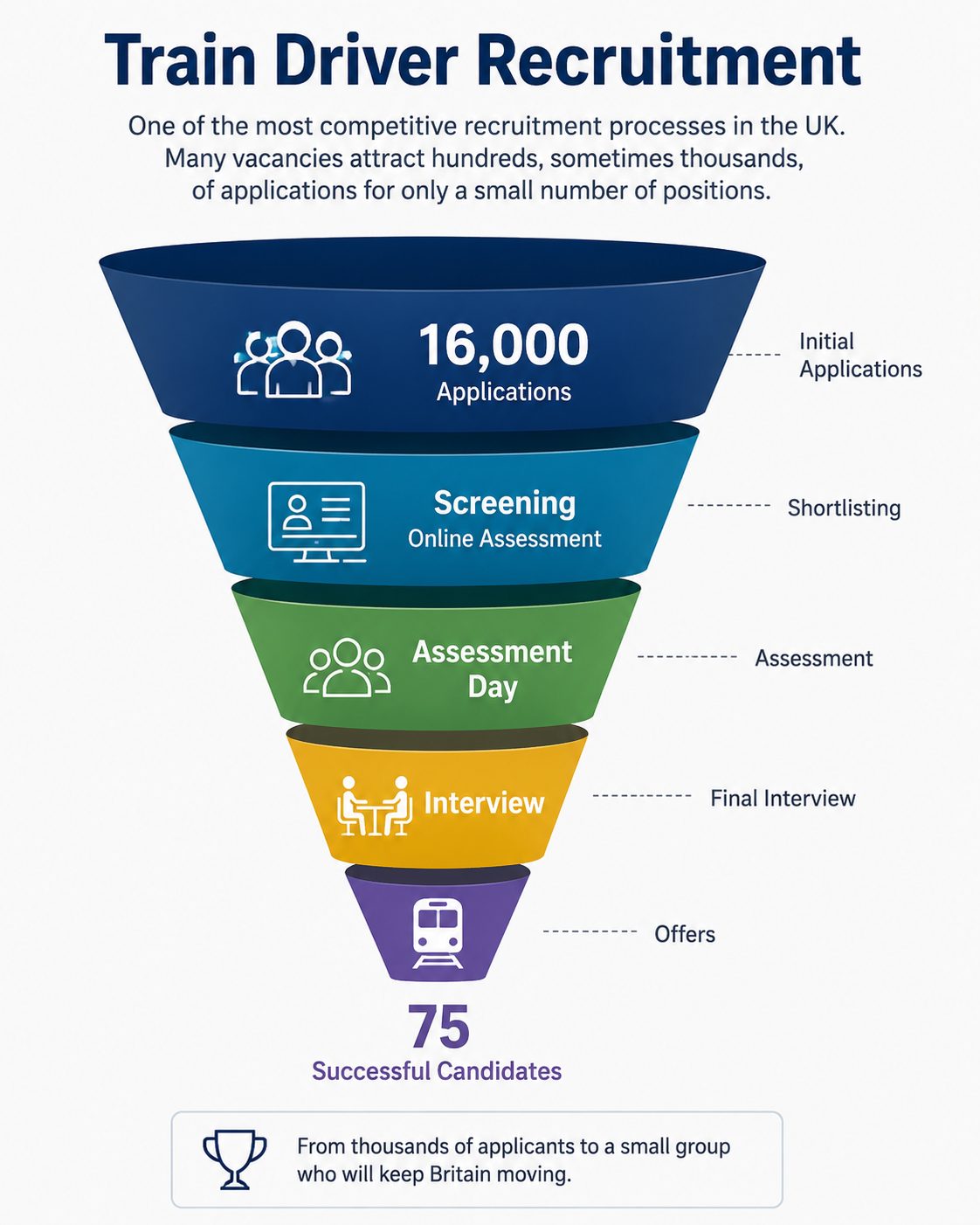


A trainee train driver application can involve several distinct stages, each designed to assess suitability for a safety-critical role. The best preparation tools for rail applicants are therefore not a single practice test or a generic CV template. They are a focused set of resources that help you understand the role, present relevant evidence, prepare honestly for assessments and communicate your judgement under interview conditions.
The right mix depends on where you are in the process. Someone deciding whether rail is the right move needs clarity around eligibility and operational expectations. An applicant approaching an assessment day needs structured, ethical practice. A candidate invited to interview needs to turn their work history into clear examples of safety, concentration, rule compliance and personal responsibility.
Start with eligibility and role research
Before investing significant time in application preparation, establish whether the role and working pattern are realistic for you. Train driver recruitment is competitive because the work carries substantial responsibility. TOCs will look for candidates who can reliably manage shift work, follow procedures, maintain concentration over long periods and make sound decisions within defined rules.
An eligibility checker or role-readiness questionnaire is useful at this stage. It should prompt you to consider practical matters such as distance from the depot, the ability to work early, late and weekend turns, and your comfort with independent, routine-focused work. These are not minor details to address after an offer. They are central to whether you can build a sustainable railway career.
Role research should also go beyond job adverts. Read the stated requirements carefully and identify the behaviours behind them. Phrases such as “safety-conscious”, “able to work alone” and “customer-focused” need evidence from your previous employment, not just agreement. A strong preparation tool helps you translate those requirements into examples from your own experience.
CV tools that make relevant experience visible
A CV is often the first opportunity to show that you understand the standard expected in a safety-critical environment. Generic CV builders can make a document look tidy, but they rarely help applicants select the evidence that matters most to a rail recruiter.
A rail-focused CV review is more useful because it examines relevance as well as presentation. It can identify where an applicant has described duties but not outcomes, or where useful experience has been left vague. Experience in logistics, bus operations, manufacturing, emergency services, the Armed Forces, engineering, retail management or other regulated settings can all be relevant when presented accurately.
The strongest CVs normally demonstrate a pattern of dependable behaviour. That may include following a defined process, completing checks, dealing calmly with disruption, reporting concerns, working shifts, maintaining records or taking ownership when something is not right. Do not force railway language onto experience that does not support it. Clear, specific wording is more credible than a list of buzzwords.
AI CV checking can be a helpful second pair of eyes, particularly when used to spot unclear phrasing, repeated points and missing detail. It should not replace your judgement. Check every suggestion against your actual experience, and never add claims you could not explain at interview. A well-written CV creates a consistent foundation for the later stages of the process.
Psychometric practice: build familiarity, not shortcuts
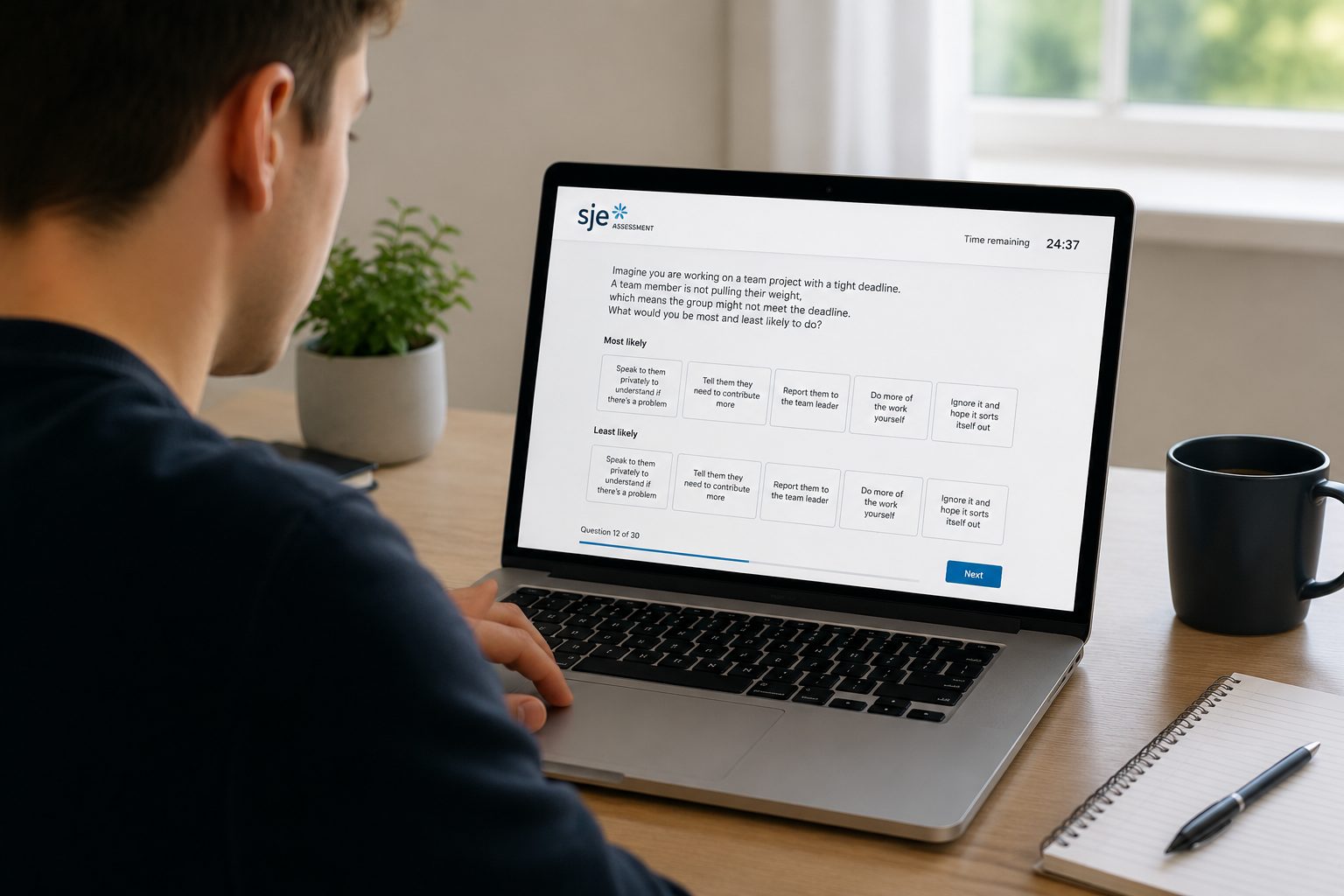
Psychometric assessments are often the stage that causes applicants the most uncertainty. They may assess areas such as concentration, rule application, memory, attention to detail, reaction, coordination and work-related judgement. Their purpose is to help employers assess suitability for a role where sustained attention and reliable decision-making matter.
Preparation is worthwhile when it is based on familiarisation and disciplined practice. Timed exercises can help you understand instructions, settle into a measured pace and recognise where you lose accuracy under pressure. Practice also allows you to develop a routine: read the guidance carefully, remove distractions, take appropriate breaks and work steadily rather than rushing.
The best preparation tools for rail applicants should explain the type of capability being developed without claiming to reveal or reproduce a live employer assessment. Be cautious of any service that suggests there is a trick to passing. Recruitment assessments are designed to be approached honestly, and trying to manipulate them is neither a sensible nor a professional strategy.
Quality practice materials should give you feedback that is useful but proportionate. For example, they may show whether errors rise when you speed up, whether you miss information in longer instructions, or whether you need more exposure to timed tasks. The aim is to arrive prepared, composed and able to show your natural working style under fair conditions.
Structured interview preparation that uses your real evidence
A structured interview is not a conversation in which confidence alone carries the day. It is a formal opportunity for the recruiter to gather evidence against specific competencies. You may be asked about safety, communication, concentration, dealing with pressure, motivation, teamwork, independent working or responding to mistakes.
Interview preparation works best when it is practical. Start by listing situations from your employment, volunteering, military service or wider responsibilities that show the required behaviours. Then practise explaining each example in a logical order: the situation, your responsibility, the action you took and the outcome. Keep the focus on what you did and why it was appropriate.
A mock interview or interview review can be particularly valuable for applicants who have not faced competency-based questions before. It exposes vague answers early. Saying “I always put safety first” is not evidence on its own. Explaining how you stopped a task, sought clarification and reported a concern when conditions changed is far more persuasive, provided it is true.
Preparation should also cover motivation. A convincing answer recognises the reality of the job: shift work, disciplined routines, responsibility, continuous learning and the need to work within procedures. It should not rely solely on salary, prestige or a childhood interest in trains. Those may be part of your story, but they do not demonstrate informed commitment to the role.
Operational learning strengthens career readiness
Not every useful preparation tool is tied directly to an application form or assessment. Introductory learning in railway operations, risk-based decision-making, operational maturity, personal track safety, traction and rolling stock can give applicants a more realistic understanding of the industry they want to enter.
This learning is not a substitute for employer training, and it should never be presented as one. Its value lies in building context. Candidates who understand why controlled processes, clear communication and professional boundaries matter are often better equipped to discuss the role with maturity.
CPD-oriented courses can also be useful for career changers who want to show purposeful development before applying. This is especially relevant where your previous work has not been obviously transport-based. The trade-off is that training should support, rather than distract from, the immediate application requirements. If a vacancy closes in two weeks, prioritise the quality of your application and assessment preparation before taking on several new courses.
Choose tools for your current stage
A large bundle is not automatically the right choice. If you have not yet applied, an eligibility resource, rail-specific CV support and interview evidence planning may be the most practical starting point. If you have already received an assessment invitation, focused psychometric practice and a calm test-day routine deserve priority.
Where several stages are approaching, a structured package can reduce the risk of treating each one in isolation. Train Driver Foundation, for example, approaches preparation as a progression from career clarity through to CV, assessment, interview and operational learning. The benefit of this approach is consistency: the behaviours on your CV should be the same behaviours you can explain in an interview and demonstrate through your approach to assessment.
Avoid preparing with too many unrelated resources. Contradictory advice can create unnecessary doubt, particularly for first-time applicants. Choose tools that are specific to UK rail recruitment, clear about their limits and centred on professional preparation rather than promises.
Turn preparation into a practical routine
The most effective tools still require regular effort. Set aside short, planned sessions rather than trying to prepare everything in one weekend. One session may be for improving a CV example, another for timed practice, and another for speaking through interview answers aloud. Keep a record of recurring weaknesses so that you can address them deliberately.
Give yourself enough time to reflect, particularly after mock tests or feedback. Accuracy, attention and judgement improve more through considered practice than through repetition without review. If you are balancing a current job, family commitments or shift work, a realistic schedule is better than an ambitious plan you cannot maintain.
A rail application is an opportunity to show the habits the role demands: preparation, consistency, honesty and attention to detail. Choose tools that reinforce those habits, then use them with the same professional discipline you would bring to the railway.