



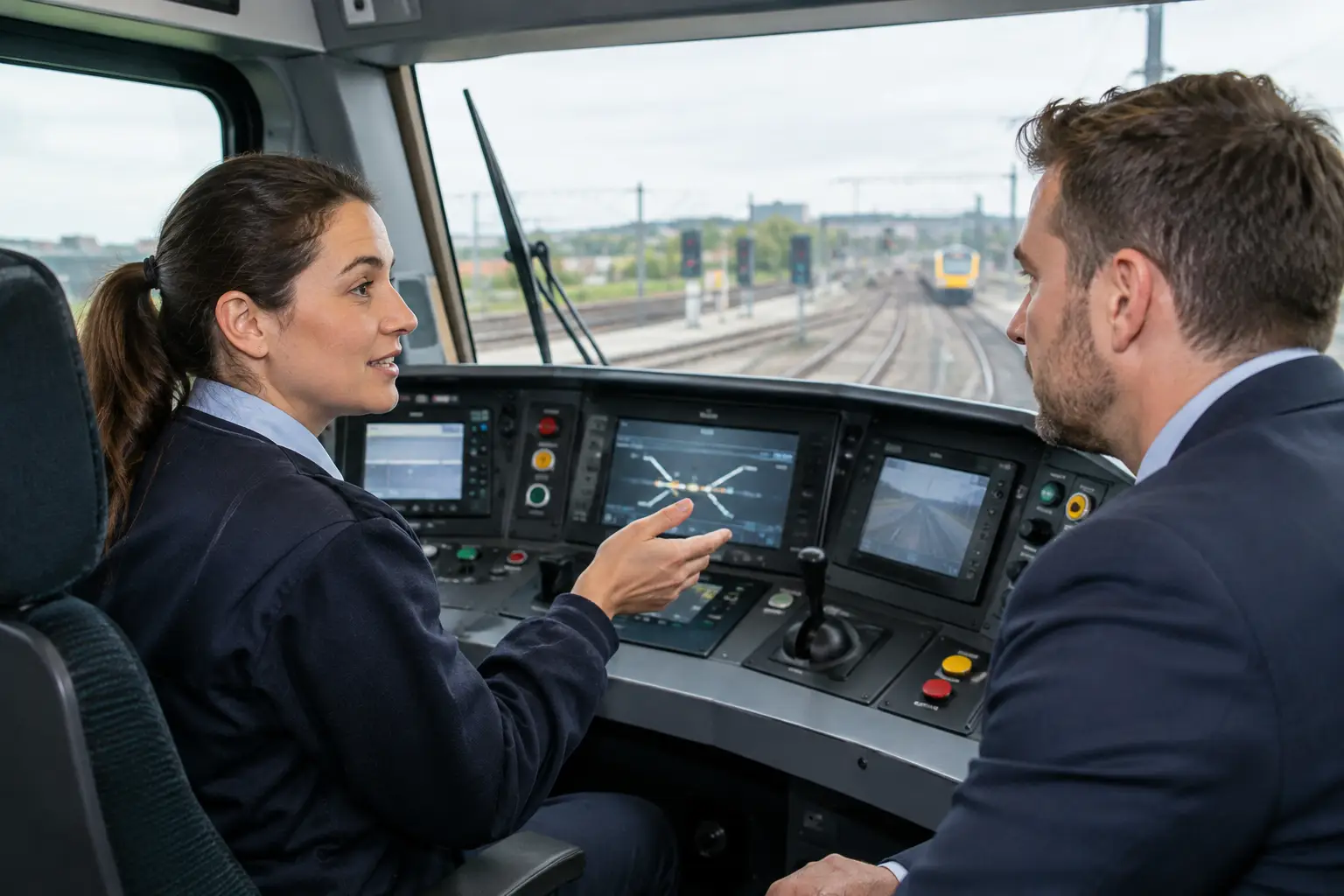
A conversation with a rail recruiter is not an opportunity to prove that you know every detail of train driver recruitment. It is an opportunity to show that you understand the responsibility of the role, have prepared carefully and are making a considered career decision. The best questions for rail recruiters do exactly that. They help you gain useful information while demonstrating the professional judgement expected in a safety-critical industry.
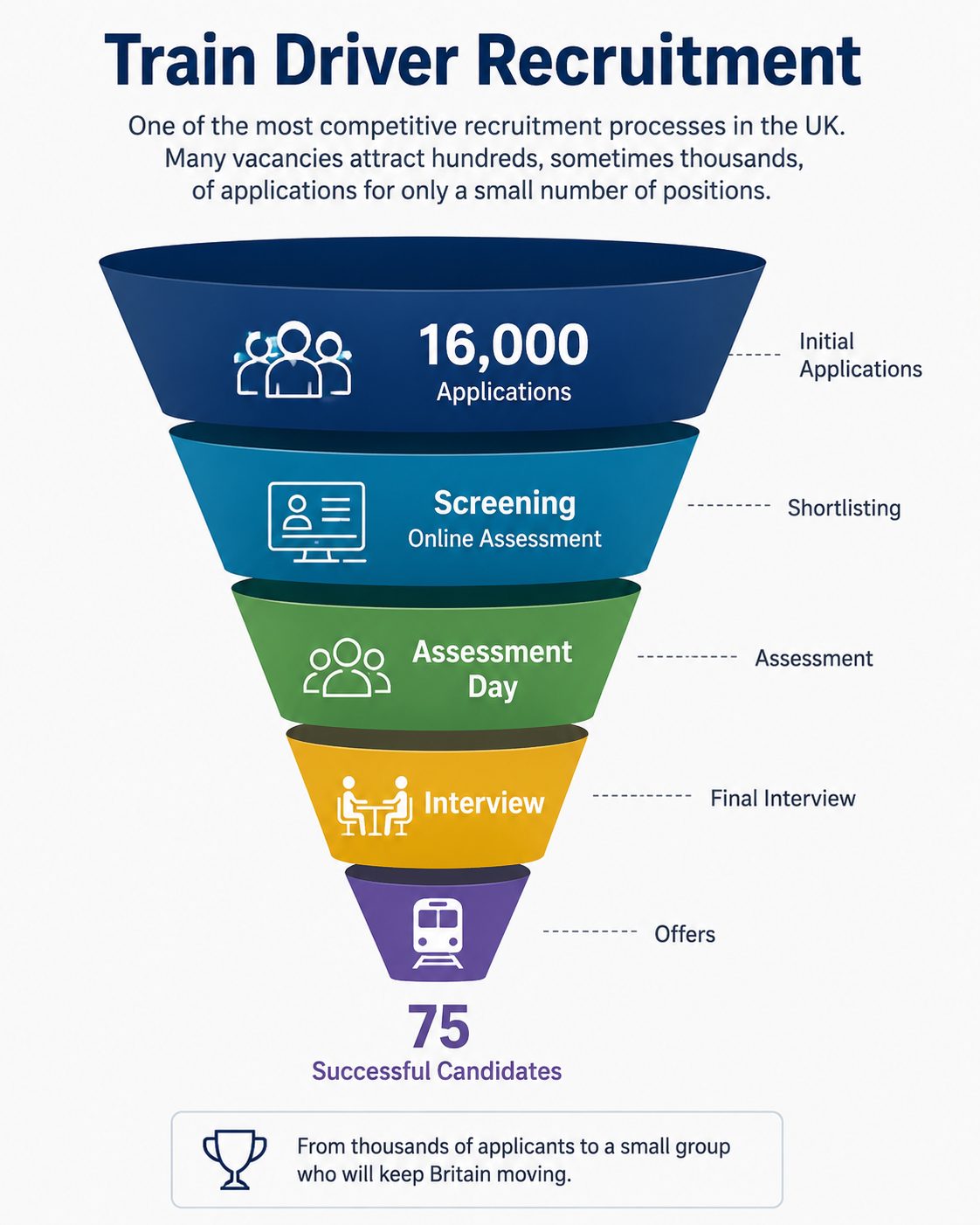
Whether you are attending a recruitment event, speaking to a representative at a careers fair or reaching the end of a structured interview, your questions should be purposeful. A trainee train driver application is rarely strengthened by asking for information already available in the vacancy advert. It is strengthened by showing that you have considered the realities of the role, the recruitment process and the commitment required after appointment.
What a good question tells a rail recruiter
Recruiters are assessing more than your words. They will notice whether you listen, communicate clearly and focus on the right issues. Questions about safety, availability, learning, standards and long-term contribution are usually more valuable than questions centred only on pay, perks or how quickly the process can be completed.
That does not mean you should avoid practical matters. Location, roster flexibility, training arrangements and timescales can all affect whether a role is right for you. The difference is in the way you ask. Frame the question around your ability to make an informed commitment, rather than around convenience alone.
It also helps to recognise the recruiter’s role. They may be able to explain the broad recruitment journey, eligibility criteria and what their Train Operating Company looks for. They may not be able to discuss confidential assessment content, give individual feedback during a live campaign or predict exactly when vacancies will open.
Best questions for rail recruiters at each stage
What does a strong candidate demonstrate at the application stage?
This is one of the most useful opening questions because it invites the recruiter to explain the standard expected without asking them to reveal assessment material. Listen for themes such as attention to detail, reliable work history, safety awareness, accountability, communication and evidence of working to procedures.
Use the answer to review your own application. If the recruiter highlights operational discipline, for example, your employment history should include specific, truthful examples of how you followed processes, identified risks or maintained standards under pressure.
Which eligibility requirements should I check before applying?
Eligibility rules can vary between vacancies and TOCs. Ask which requirements deserve particular attention, such as location, availability, right to work, medical standards, shift patterns or previous applications. This signals that you want to apply appropriately and avoid wasting anyone’s time.
Do not use this question to negotiate an exception before you have applied. If a vacancy states a requirement, treat it seriously. Where a recruiter can clarify how a published criterion is interpreted, that clarification can help you decide whether an application is realistic.
How is the recruitment process communicated to candidates?
Train driver recruitment can involve several stages, and candidate communication matters. Asking how updates are normally issued, whether there is a candidate portal and when applicants should expect contact shows organised thinking.
This is particularly useful for people balancing work, family commitments or military resettlement. It allows you to plan sensibly without expecting a recruiter to guarantee dates that may change because of operational recruitment needs.
What does the initial training commitment involve once appointed?
A recruiter may not be responsible for delivering training, but they can often outline the level of commitment involved. Ask about the broad structure of initial training, the expectation around attendance, study and assessments, and the transition into practical learning.
The value of this question is that it moves the conversation beyond getting the job. Train driving is a professional career with a demanding learning period. Demonstrating that you are considering the training commitment can distinguish you from someone focused only on the outcome.
How should applicants think about depot location and flexibility?
Base location is not a minor detail. Early starts, late finishes, weekend working and the practical journey to depot can all shape whether you can maintain reliable attendance. Ask how applicants should assess their travel arrangements and what flexibility may be expected within the advertised role.
Avoid assuming that a particular depot, route or duty pattern will be available indefinitely. Rail operations change. A credible candidate shows that they have thought through the practicalities and can meet the requirements set out in the vacancy.
Which behaviours matter most in a structured interview?
You should not ask for the interview questions in advance. A better approach is to ask which broad behaviours the organisation values in safety-critical colleagues. The response may point towards communication, situational awareness, personal responsibility, calm decision making, teamwork or adherence to rules.
You can then prepare honestly. Build examples from your own work and life that show what you did, why you acted that way and what happened. Strong structured interview preparation is about clear evidence, not rehearsed speeches or invented railway experience.
What preparation would you recommend before applying?
This question gives the recruiter room to identify sensible preparation: reading the vacancy carefully, understanding shift work, reviewing the employer’s values and reflecting on your own evidence. It may also reinforce the need to approach assessments with integrity and adequate practice.
For career changers, this is a useful moment to ask how transferable experience can be presented. Experience from the Armed Forces, logistics, emergency services, manufacturing, customer operations or other regulated environments can be relevant when it demonstrates the right behaviours. The key is to explain the relevance rather than simply list job titles.
Are there other operational roles that would suit my experience?
If you are interested in rail but not yet certain that trainee train driver is the right entry point, this is a constructive question. It shows long-term interest in the industry without treating another role as a shortcut.
The answer may help you understand the range of safety-critical and operational opportunities available. However, apply only for roles you genuinely want and can commit to. Recruiters can usually recognise when an applicant sees a vacancy merely as a temporary stepping stone.
Questions to handle carefully
Some questions are reasonable, but need careful timing. Pay, annual leave, benefits and pension arrangements are legitimate considerations, particularly when you are planning a major career move. At an early careers event, it is usually better to ask where the full employment information can be found. During a later-stage conversation, you can ask for clarification on terms relevant to an offer or the published vacancy.
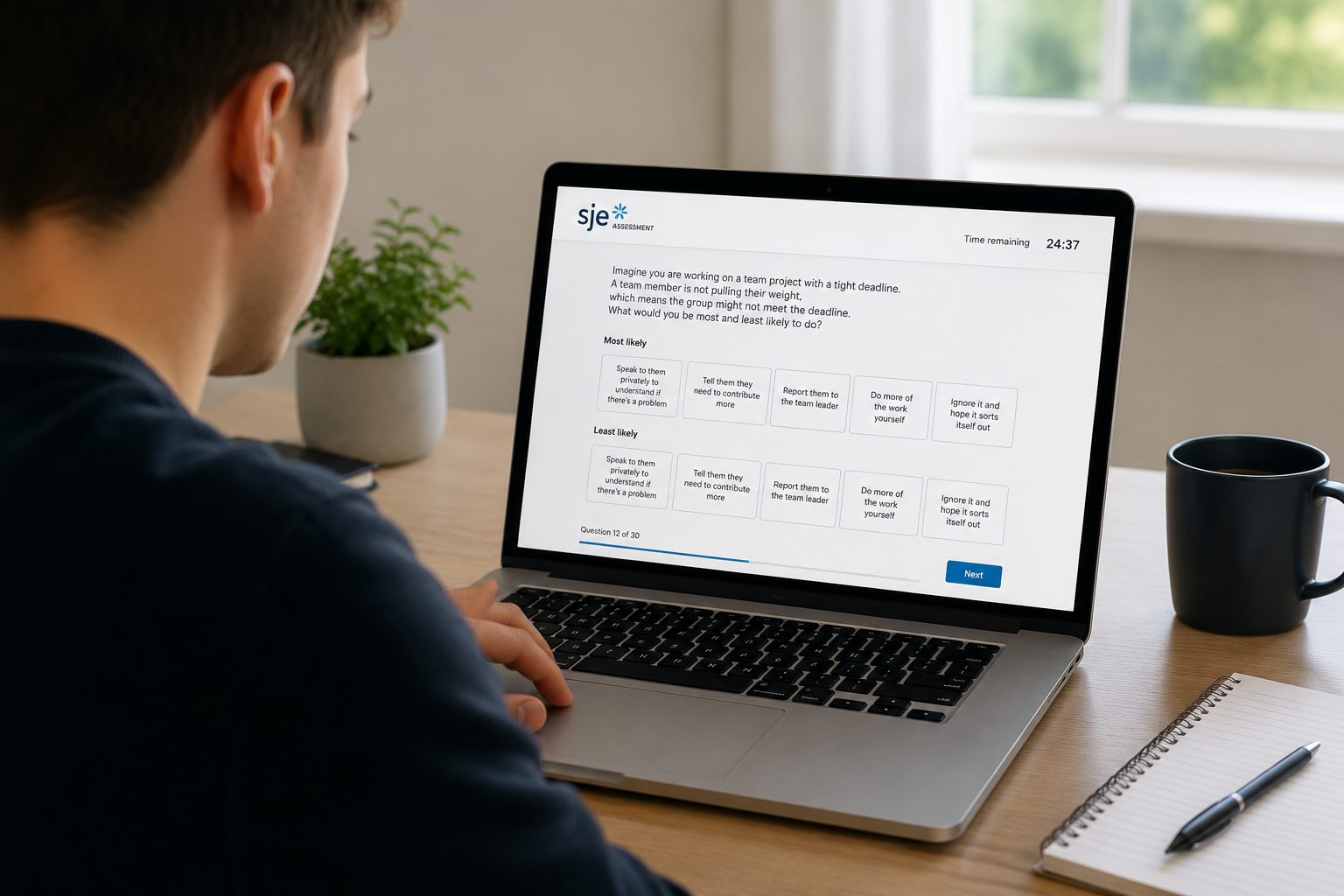
Be cautious about asking, “How can I pass the tests?” Psychometric assessments are designed to assess suitability against defined standards, not to reward tactics. A better question is, “How can applicants prepare professionally for the stages described in the recruitment information?” This keeps the focus on familiarity, readiness and honest performance.
Similarly, avoid pressing for exact interview questions, confidential operational procedures or unannounced recruitment plans. These requests can suggest poor judgement. In a safety-critical setting, respect for boundaries is part of professional credibility.
How many questions should you ask?
Quality matters more than quantity. At the end of an interview, two well-chosen questions are often enough. At a careers event, you may ask more because the purpose is exploratory, but still keep the conversation focused and allow time for other candidates.
Before speaking to a recruiter, prepare three questions and prioritise them. Start with the one you cannot answer from the vacancy information. Listen closely to the response rather than moving mechanically through a script. If the recruiter has already addressed a point, acknowledge it and move on.
Write down any useful guidance after the conversation. Then turn it into action: check your eligibility, improve the evidence in your CV, prepare structured examples and make sure you understand the working realities of the role. Professional preparation is not about finding a perfect question. It is about showing, consistently, that you are ready to meet a demanding standard.