




Aptitude assessments are not simply a test of how clever you are on a particular day. In train driver recruitment, they help employers assess whether you can process information accurately, sustain attention and make dependable decisions under controlled pressure. The best rail aptitude practice methods therefore build reliable working habits, rather than teaching you to rush through unfamiliar questions.
For aspiring trainee train drivers, this distinction matters. The selection process is competitive and safety-critical. Practice should help you understand assessment formats, identify the skills you need to develop and arrive prepared to show your natural capability fairly and professionally.
What rail aptitude practice should achieve
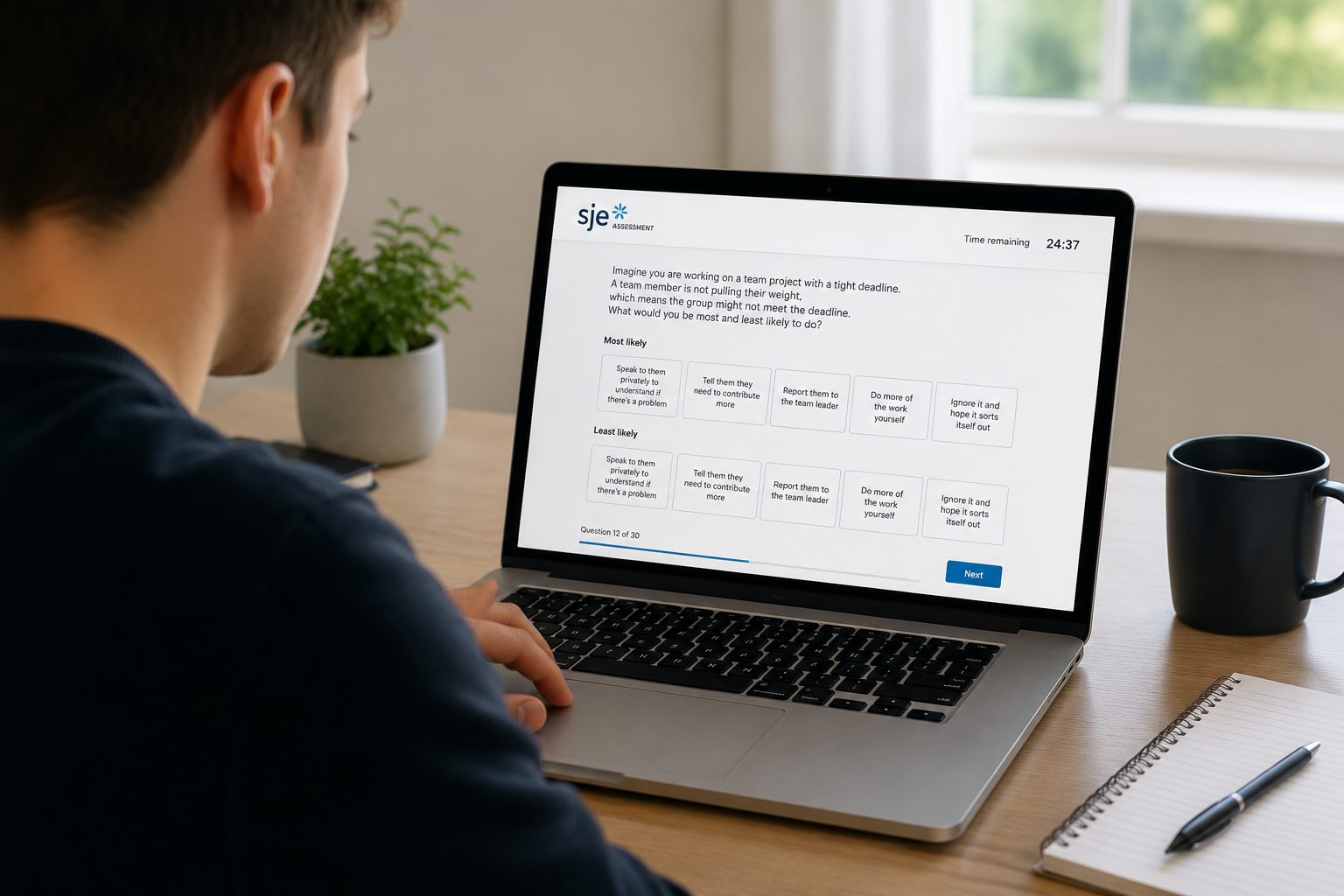
Psychometric assessments used during rail recruitment can examine several related abilities. Depending on the role and recruitment process, these may include concentration, reaction and coordination, memory, visual checking, rule application, numerical reasoning or the ability to manage more than one source of information.
No two Train Operating Companies use precisely the same process, and assessment stages can change. It is better to prepare for the underlying capabilities than to rely on reports of a particular test layout. A candidate who has developed consistent concentration, careful checking and sensible time management is in a stronger position when the instructions or question style differ from previous practice.
Good practice also gives you useful evidence about your own readiness. If accuracy drops sharply when you are timed, for example, that is not a reason to panic or force more speed. It is a signal to review your approach, reduce avoidable errors and build pace gradually.
Best rail aptitude practice methods for lasting progress
Learn the task before you time it
Start every new practice exercise untimed. Read the instructions twice, work through a small number of questions and explain the rule to yourself in plain language. This is particularly valuable for tests involving symbols, sequences, matching rules or changing conditions, where a misunderstanding can create a long run of incorrect answers.
Once you can complete the task accurately, introduce realistic timing. Attempting a test at full pace before you understand it often trains the wrong habit: guessing, skipping instructions or chasing a score without knowing why mistakes occur. In a safety-critical career, accurate rule-following comes before speed.
Use a simple review note after each session. Record the task type, your score or error rate, the time taken and the reason for any mistakes. Common patterns might include misreading a symbol, losing your place, forgetting a rule halfway through, or spending too long on one difficult item. Specific notes turn practice from repetition into improvement.
Build concentration in controlled blocks
Train driving demands sustained attention, so your preparation should not consist only of short, occasional bursts. Set aside focused blocks of 20 to 30 minutes for concentration-based work, with your phone out of reach and notifications switched off. Take a brief break afterwards, then return for another block if your schedule allows.
The aim is not to sit at a screen for hours. Quality matters more than volume. Two well-reviewed sessions each week may be more productive than daily practice completed while tired, distracted or rushing between other commitments.
As your consistency improves, occasionally combine exercises into a longer session. This helps you observe how your accuracy changes when mental fatigue begins to appear. If it falls away, look at practical causes first: poor sleep, an unsuitable study time, too much caffeine or an unrealistic session length. The adjustment may be as simple as practising earlier in the day or taking structured breaks.
Practise accuracy under measured time pressure
Timed assessment practice is essential, but it needs a progression. Begin by setting a generous limit, then narrow it in small steps as accuracy becomes stable. Do not treat the timer as an opponent. It is a way of learning how quickly you can work while still following the instructions correctly.
For visual comparison or checking tasks, develop a consistent scanning pattern. Move left to right, compare the same features in the same order and avoid repeatedly jumping around the page. For numerical or rule-based tasks, write down permitted working where the practice format allows it. A repeatable process reduces the mental effort spent deciding what to do next.
There will be occasions when a question is genuinely difficult. In practice, learn to recognise when you are stuck rather than letting one item consume the available time. The appropriate response depends on the assessment instructions. Some formats may allow you to move on, while others require an answer to every item. Always follow the stated rules rather than applying one strategy to every test.
Use realistic materials, not generic brain games
Crosswords, mobile puzzles and memory games can be enjoyable, but they are not a substitute for role-relevant aptitude practice. They may improve familiarity with puzzles without showing you how you perform against timed instructions, repetitive checking work or multi-stage rules.
Choose practice materials that clearly state which ability they are designed to develop and give you enough questions to spot a pattern in your performance. You should be able to review the logic behind correct answers, not merely see a final score. Materials designed around railway selection expectations are generally more useful than broad ‘IQ test’ collections because they reflect the discipline, concentration and rule application candidates are likely to encounter.
This does not mean trying to recreate confidential assessment content. The purpose is legitimate preparation: becoming familiar with common assessment demands and presenting your own ability consistently. Any resource that promises shortcuts, secret answers or guaranteed results is not aligned with the standards expected in rail recruitment.
Review mistakes with operational thinking
The most useful question after a poor result is not, “How do I get through this next time?” It is, “What failed in my process?” This is where an operational mindset becomes valuable.
Separate mistakes into categories. Knowledge errors happen when you did not understand a rule. Attention errors happen when you understood it but missed a detail. Pace errors occur when you knew what to do but could not complete enough work in time. Pressure errors can appear when your performance changes noticeably once a timer is introduced.
Each category needs a different response. Knowledge errors require slower instruction review. Attention errors may benefit from a fixed checking routine. Pace errors call for repeated accurate practice before increasing the time demand. Pressure errors are often helped by simulated conditions, steady breathing and better familiarity with the task.
Do not hide weak areas by only practising the tasks you enjoy. A balanced plan should include your least comfortable format at least once a week, while retaining enough work in stronger areas to maintain confidence.
Create a practice routine you can sustain
A realistic weekly plan is more effective than a burst of intense work just before an assessment. Start with two or three sessions each week, each with one primary focus. One session could centre on concentration and visual accuracy; another on timed rule application; a third on reviewing errors and repeating the areas that need attention.
Keep one session close to realistic assessment conditions. Work at a desk, remove distractions, use the instructions exactly as given and avoid pausing once the timed section starts. This helps reduce uncertainty on the day without turning preparation into an exhausting daily test.
Balance assessment practice with the wider recruitment journey. Structured interviews, application quality and your understanding of safety-critical responsibilities also matter. Candidates are more credible when their preparation reflects the complete role: disciplined, reflective and able to learn from feedback.
On the assessment day
Your preparation is most useful when it supports a calm routine. Allow adequate travel time, eat normally, bring any requested identification and read each instruction carefully before beginning. If a practice score has varied, do not assume that one disappointing session defines your ability. Focus on applying the process you have built: understand the rule, work methodically, manage the time and maintain concentration.
Train Driver Foundation supports candidates with role-specific preparation because the journey is demanding, not because there is a shortcut around it. The strongest approach is steady and honest: practise the abilities the role requires, review your performance with discipline and give yourself enough time to improve.
Aptitude practice is preparation for a professional standard of work. Treat each session as an opportunity to become more accurate, more composed and more aware of how you perform under pressure.