



A lot of people decide they want to drive trains after years in another job, not straight from school. That matters, because how to become a train driver is less about following one academic route and more about meeting strict standards, understanding the recruitment process, and preparing properly for each stage.
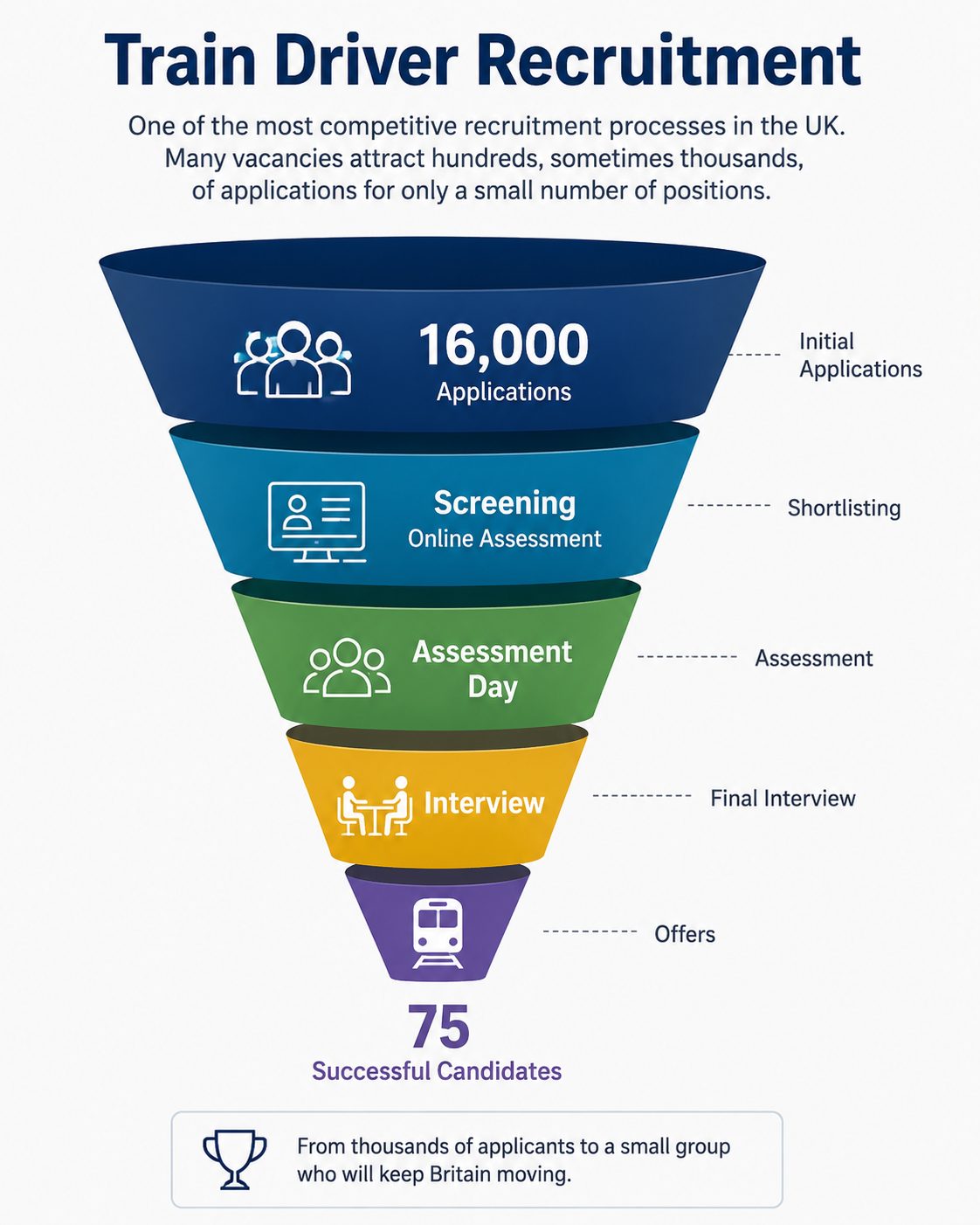
In the UK, trainee train driver vacancies attract very high numbers of applicants. Train Operating Companies, freight operators and other rail employers are not simply looking for someone who likes railways. They are looking for candidates who can work safely, stay focused for long periods, follow rules without cutting corners, and make sound decisions under pressure. If you understand that from the outset, you will approach the process far more effectively.
How to become a train driver: understand the role first
Before you apply anywhere, get clear on what the role actually involves. A train driver is responsible for the safe operation of passenger or freight services, but the job is wider than many people realise. It includes route knowledge, traction knowledge, strict rule compliance, concentration, fault reporting, professional communication and managing disruption calmly.
It is also a shift-based safety critical role. Early starts, late finishes, weekend turns and bank holiday working are normal. Some depots require flexible travel to sign on, especially when public transport is limited. For some people, that is a strong fit. For others, it becomes a sticking point later. Being honest with yourself early saves wasted applications.
Check whether you meet the basic entry requirements
There is no single national set of entry rules that every employer applies in exactly the same way, but most UK operators look for a similar baseline. You will usually need to be of the minimum age required for the role, have the right to work in the UK, pass a railway medical, and meet the employer's standards for safety critical work.
Some operators ask for GCSEs or equivalent, particularly in English and maths, while others place more weight on work history and evidence of relevant behaviours. A clean driving licence is not always essential, but reliable independent travel to the depot often is. If you live too far away or cannot realistically cover shift times, that can affect your suitability.
You do not need previous rail experience to become a trainee train driver. In fact, many successful candidates come from the armed forces, transport, manufacturing, emergency services, logistics or customer-facing operational roles. What matters is whether your background shows discipline, responsibility, adherence to procedures and consistent performance.
The real route in: apply for trainee train driver jobs
If you are wondering how to become a train driver in practical terms, the answer is simple - you apply for trainee train driver vacancies and progress through a competitive selection process. There is no separate public licence you can get first and then use to walk into the job.
Training is normally provided by the employer after you are hired as a trainee. That means your immediate goal is not to learn everything about driving trains before applying. Your goal is to become appointable. You need to show that you meet the entry criteria and have the behaviours, judgement and mindset the operator is looking for.
This is where many applicants go wrong. They focus only on the vacancy advert and ignore the recruitment standards behind it. UK train driver recruitment is heavily filtered through assessments, structured interviews and medical screening. A strong CV alone will not carry you through.
Expect a selective multi-stage recruitment process
The process varies slightly between operators, but most follow a similar pattern. It usually starts with an online application, often including competency-based questions or a supporting statement. If you pass the first sift, you may be invited to online assessments, psychometric testing or an initial interview.
Later stages often include a structured manager interview, enhanced psychometric assessments, a Driver Manager interview, reference checks and a safety critical medical. Some employers also include situational judgement elements or additional screening focused on concentration, vigilance and rule adherence.
This can take months rather than weeks. Delays are common. Talent pools are common too, which means passing a stage does not always lead to an immediate start date. Patience matters, but so does staying organised throughout the process.
Your application needs to show evidence, not enthusiasm
Recruiters see plenty of applications from people who say they are passionate about trains. That is not enough. Your application should show why you are suited to safety critical work.
Strong examples usually demonstrate concentration, following procedures, dealing with pressure, working alone responsibly, communicating clearly and maintaining standards over time. If you have worked in roles involving compliance, public safety, transport, machinery, military service or operational decision making, make that relevant experience visible.
A good train driver application is specific. Rather than saying you are calm under pressure, show it through a real example. Rather than saying you are safety conscious, explain a time you followed a process correctly even when it was inconvenient. Recruiters are looking for behavioural evidence they can trust.
Psychometric tests are a major hurdle
For many candidates, psychometric tests are the stage that determines whether they progress. These assessments are used because train driving depends on specific cognitive and behavioural capabilities. Depending on the operator and test battery, you may be assessed on concentration, attention, memory, reaction, rule following, hand-eye co-ordination and aspects of personality linked to safe performance.
This is not a stage to take lightly. Good candidates are often rejected because they underestimated the format, worked too slowly, rushed inaccurately or simply had no idea what to expect. Preparation helps, not because it lets you cheat the test, but because it reduces avoidable errors and improves familiarity with the demands.
There is also a practical point here. Some psychometric assessments have industry-recognised pass standards and retake restrictions. Failing can affect when you are allowed to test again, depending on the assessment and employer context. That makes first-time readiness especially important.
Interviews are more structured than many applicants expect
A train driver interview is not usually a casual conversation about your interest in rail. It is normally structured and evidence based. Interviewers want clear examples that prove you can operate safely, follow rules, manage workload, communicate effectively and remain composed when conditions are difficult.
The strongest candidates prepare a bank of examples from previous work and can explain them in a disciplined way. That means setting out the situation, what was required, what action you personally took and what the outcome was. It also means choosing examples that match the train driver role rather than repeating generic customer service stories that do not show operational judgement.
You should also be ready to explain why you want this role specifically, why the shift pattern suits you, what you understand about safety critical responsibilities and how your current background prepares you for trainee train driver standards.
Medical and background checks are part of the process
Passing the assessments and interviews does not end the selection process. Train drivers must meet medical standards for safety critical rail work. This can include eyesight, hearing, general health, drug and alcohol screening and broader fitness to undertake the duties of the role.
Background checks and references also matter. Any issues around honesty, previous dismissals or discrepancies in your application can cause problems. The safest approach is straightforwardness from the beginning. If something needs explaining, explain it clearly rather than hoping it will be overlooked.
Preparation makes the difference
Because the process is competitive, there is a big difference between being eligible and being ready. Plenty of applicants meet the basic criteria. Fewer present a well-targeted application, understand the psychometric stage, prepare for structured interviews and build relevant rail-focused knowledge in advance.
That is why focused preparation matters. Role-specific support, psychometric practice, CV review and structured interview preparation can help candidates present themselves far more effectively. Train Driver Foundation exists for exactly that reason - to help aspiring drivers prepare in a way that matches the standards used by UK employers.
There is still no guarantee, and that is worth saying clearly. Recruitment volumes, depot location, operator preferences and timing all play a part. But informed preparation gives you a genuine competitive advantage.
How long does it take?
It depends on both recruitment timing and your starting point. Some people spend months waiting for the right vacancy near a realistic depot. Others get into a process quickly but then face a long gap between stages. Once appointed, trainee train driver training itself is substantial and can take many months before you are fully qualified and signed off.
So if you are planning a career change, think in terms of a process rather than a quick switch. That does not mean the route is closed off. It means you should approach it professionally, with realistic expectations and a plan.
Final thought
If you want to know how to become a train driver, start by shifting your mindset from hopeful applicant to prepared candidate. The role is achievable for people from many backgrounds, but it rewards those who treat the recruitment process with the same seriousness the job itself demands.