




A psychometric assessment can feel very different from ordinary revision. You may understand the instructions, have practised similar question types and still find your attention slipping halfway through. Learning how to improve concentration for assessments is therefore not about forcing yourself to stare at a screen for longer. It is about building the conditions in which you can take in information accurately, sustain effort and make considered decisions under time pressure.
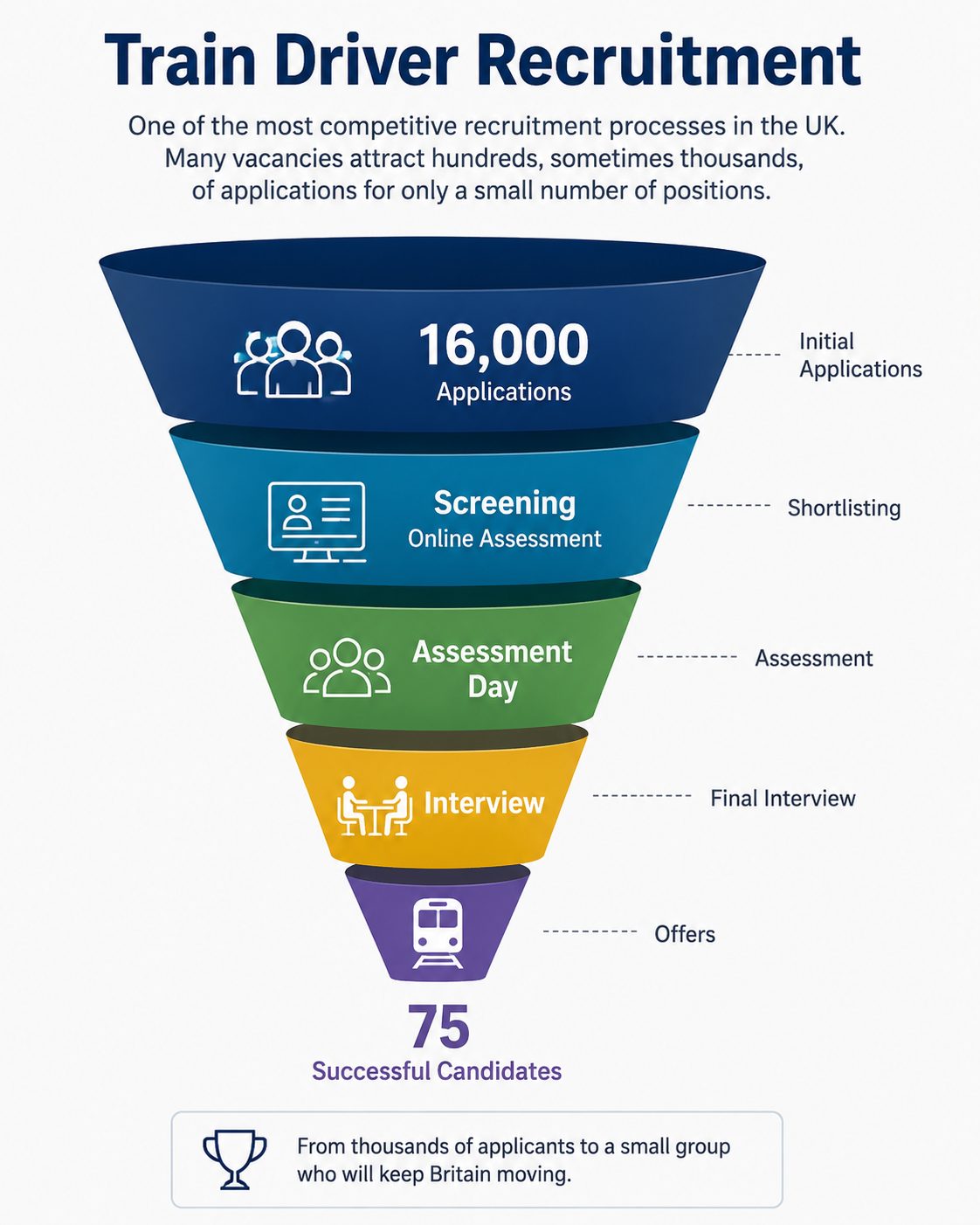
For aspiring trainee train drivers and candidates for other safety-critical railway roles, concentration matters beyond the assessment stage. Recruitment exercises are designed to explore qualities linked to careful working, rule-based decision making and consistent attention. Preparation should be professional and honest: the aim is to present your genuine capability at its best, not to find a shortcut around the process.
Why concentration drops during assessments
Concentration is not a fixed personality trait. It changes according to sleep, stress, the task in front of you and the environment around you. A candidate can be highly focused at work but struggle during an unfamiliar online test because the format creates pressure and uncertainty.
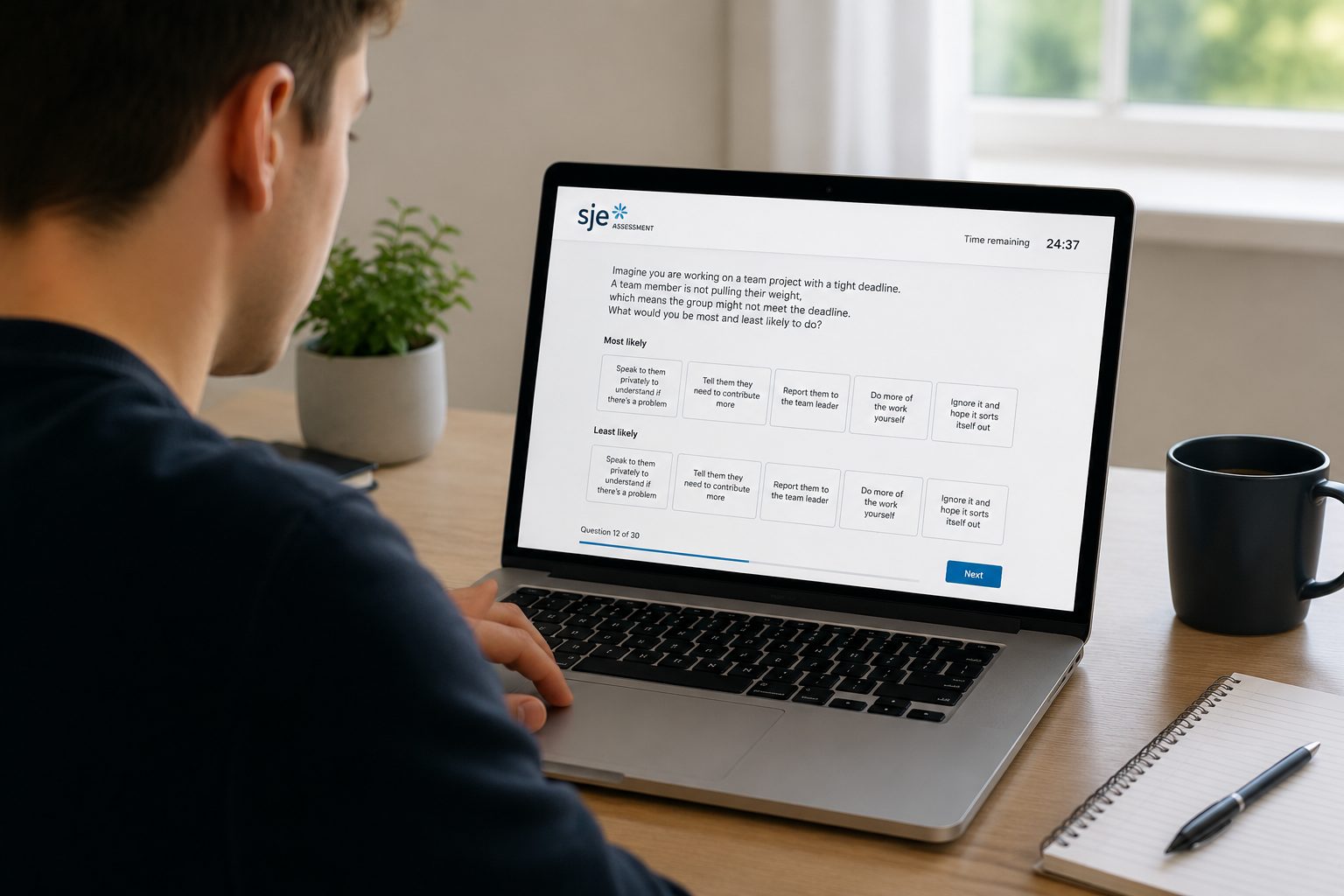
Psychometric tests can place particular demands on attention. Some require you to process detailed information quickly. Others ask you to maintain accuracy through repetitive tasks, follow changing instructions or balance speed with care. When you begin worrying about the clock, a previous answer or the importance of the opportunity, your working attention is pulled away from the next question.
Trying to concentrate harder is rarely the answer. A better approach is to reduce avoidable demands before the assessment and use a repeatable process during it.
Build concentration before you begin
Practise in focused, realistic blocks
Long, unfocused revision sessions can create the impression of preparation without producing much useful learning. Instead, practise in blocks that reflect the concentration required by the assessment. Start with 25 to 30 minutes of single-task practice, followed by a short break. As your comfort grows, extend selected sessions where appropriate.
The quality of the block matters more than the length. Put your phone out of reach, close unrelated browser tabs and tell people around you when you need not to be interrupted. If you use practice materials, treat them as an opportunity to understand the demands of the task, including instructions, timing and accuracy, rather than simply chasing a score.
After each block, spend a few minutes identifying what affected your attention. Did you rush when a question looked unfamiliar? Did you lose time rereading instructions? Did your accuracy fall near the end? This review turns practice into targeted preparation.
Train the skill of returning attention
Even well-prepared candidates lose focus occasionally. The useful skill is noticing it quickly and returning to the task without panic. When you catch yourself thinking about an earlier mistake, use a short reset: pause, take one steady breath, look at the instruction or question in front of you and identify the next action only.
Do not turn a brief lapse into a judgement about your ability. In timed assessments, dwelling on it costs more attention. Calmly returning to the process is a more effective response.
Protect sleep in the days before the test
Sleep is preparation, not an optional extra. Poor sleep can affect sustained attention, reaction speed, memory and emotional control - all areas that may influence assessment performance. A last-minute late-night practice session often delivers less value than a normal bedtime.
Aim for a consistent sleep routine in the week leading up to an assessment, particularly over the final two nights. Avoid making major changes to caffeine intake, meal timings or exercise on the day itself. Predictable routines reduce the number of variables you need to manage.
How to improve concentration for assessments on the day
Your concentration begins before the first question appears. Rushing to log in, searching for identification or dealing with a weak internet connection uses mental energy that should be available for the assessment.
Prepare your space in advance. Choose a quiet, well-lit area with a suitable chair and desk. Check that your device is charged, your connection is stable and any permitted materials are ready. Follow the invitation instructions carefully, including requirements about the testing environment. If you are taking an assessment at a centre, plan your journey with time to spare and arrive settled rather than hurried.
Eat and drink normally. Avoid relying on excessive caffeine or energy drinks to manufacture focus. They can increase physical tension, make it harder to read calmly and lead to an avoidable dip later. If caffeine is already part of your normal routine, keep it moderate and familiar.
Just before you start, avoid cramming. A final glance at notes may feel reassuring, but it can also add noise to your thinking. Use the final few minutes to settle your breathing, read the instructions and remind yourself of the process you have practised.
Read for accuracy before you work for speed
Many concentration problems are actually instruction problems. Candidates can become absorbed in answering quickly before they have fully understood what is being measured or how responses should be recorded. That creates errors, frustration and further loss of focus.
Give instructions your full attention. Identify the task, any time limit, whether accuracy or speed is emphasised, and what you should do if an item feels difficult. In a multi-part exercise, check whether the rules remain the same throughout. A few seconds spent orientating yourself can prevent repeated mistakes.
Then work in small units. Read the item in front of you, apply the relevant rule or method, record your answer and move on. Resist the urge to mentally carry several unanswered questions at once. Concentration is easier to maintain when the next step is clear.
There is a trade-off between pace and checking. Checking every response repeatedly may damage your timing, while rushing can reduce accuracy. Practice helps you find a controlled pace for each type of exercise. During the live assessment, use the stated instructions rather than assumptions made from a practice version.
Manage pressure without trying to eliminate it
A degree of pressure is normal when applying for a competitive railway role. The goal is not to feel completely relaxed. It is to stay functional when the assessment matters.
Replace outcome-focused thoughts such as “I cannot afford to fail this” with process-focused prompts: “Read the rule”, “Answer the current item” or “Keep a steady pace”. These prompts are deliberately simple. Under pressure, complicated self-talk often becomes another distraction.
If you notice physical tension, lower your shoulders, place both feet on the floor and take a slow breath out. This is not a performance trick. It is a practical way to interrupt escalating stress and return attention to the task. If an assessment includes scheduled breaks, use them properly. Stand up, stretch, drink water and avoid immediately analysing how you think you performed.
Use practice to identify your personal concentration risks
Generic advice can help, but your preparation becomes stronger when you understand your own patterns. Some candidates are distracted by time limits; others lose focus in repetitive exercises or when working on a laptop for longer periods. Career changers may also be returning to formal assessments after many years, which can make the setting itself unfamiliar.
Keep a brief practice record. Note the type of task, duration, accuracy where available, energy level and the point at which concentration changed. Over several sessions, you may see a clear pattern. Perhaps you perform better in the morning, need a five-minute reset after numerical work or become less accurate when practising after a long shift.
Use those findings sensibly. You may not be able to choose the time of a real assessment, but you can shape your practice and pre-assessment routine around what supports your best work. If fatigue is a recurring issue, address the cause through sleep, workload planning and realistic scheduling rather than simply adding more practice.
Keep preparation aligned with a safety-critical mindset
Train driver recruitment assesses more than knowledge of rail. It looks for candidates who can approach demanding tasks with care, consistency and sound judgement. Concentration preparation should reflect that standard.
This means following assessment instructions precisely, using legitimate practice resources and being honest about where you need development. It also means avoiding the temptation to interpret one difficult session as proof that you are unsuitable. Performance varies, and structured practice can improve familiarity, confidence and control.
Train Driver Foundation's assessment preparation is designed to help candidates understand common recruitment demands and prepare in a structured way. The strongest results come from combining that preparation with sensible routines, reflective practice and a professional approach to every stage.
On assessment day, you do not need to feel perfect to perform well. You need a calm environment, a clear process and the discipline to return your attention to the next task whenever it wanders.