

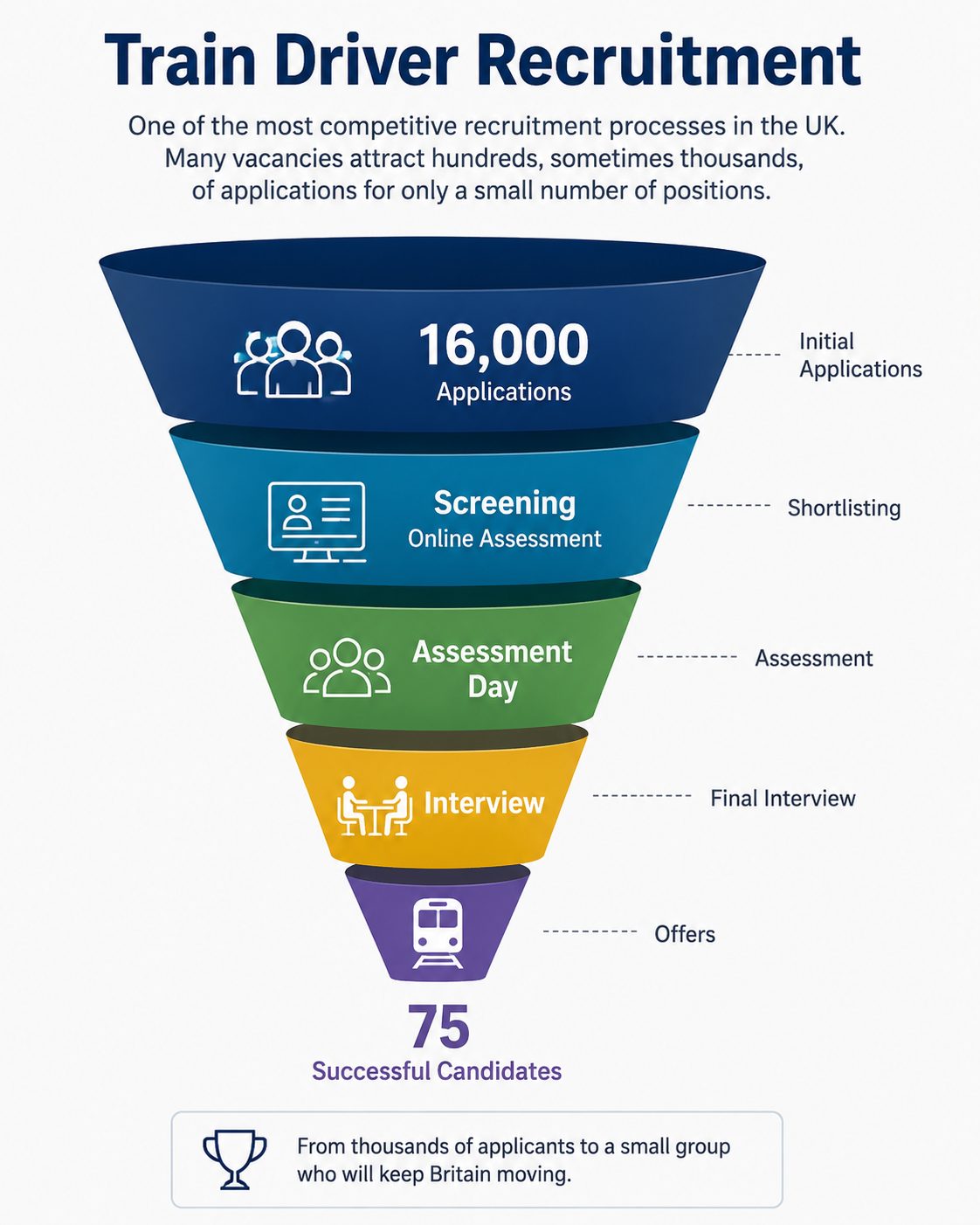




If you are searching for how to pass train driver assessments, the first thing to understand is this: success usually comes from controlled preparation, not last-minute revision. Train driver recruitment is designed to identify candidates who can work safely, follow rules, maintain concentration and make sound decisions under pressure. That means your approach needs to be disciplined from the start.
Many applicants underestimate the process because they focus only on getting an interview. In reality, the assessment stage is often where strong candidates are separated from well-meaning but underprepared ones. The standard is high because the role is safety-critical, and TOCs need evidence that you can meet that standard consistently.
What train driver assessments are really measuring
A common mistake is to treat assessments as a set of tricks to beat. That is the wrong mindset. The recruitment process is not looking for clever shortcuts. It is testing whether your natural behaviours, thinking style and preparation level are suitable for a demanding operational role.
Most train driver assessments are designed to measure concentration, rule adherence, attention to detail, memory, vigilance, reactions and the ability to process information accurately over time. Structured interviews then examine whether your previous behaviour shows the level of responsibility, composure and professionalism expected in a cab.
This is why generic interview advice or broad aptitude test practice often falls short. Train driver recruitment is role-specific. You need preparation that reflects railway standards, not general employability tips.
How to pass train driver assessments by preparing in stages
The best way to prepare is to break the process into stages rather than trying to do everything at once. If you prepare in an organised way, you reduce stress and improve consistency.
Start by understanding the vacancy and entry requirements. Different TOCs may present their process slightly differently, but the core standards remain focused on safety, concentration and professional judgement. Check whether you meet the eligibility criteria, then map out the likely stages: application, online assessments, psychometric testing, structured interview and medical.
Once you know the likely process, focus on building familiarity with the test environment. Candidates often perform below their actual ability because the format feels unfamiliar. Timed psychometric tasks can feel intense if you have never practised working accurately under that kind of pressure. Familiarity will not replace ability, but it can help you present your ability more reliably.
After that, move on to interview preparation. Leave this too late and your examples may sound vague, rushed or poorly matched to the role. A strong candidate can usually explain, with evidence, how they have followed procedures, managed fatigue, maintained standards, dealt with disruption and stayed calm when responsibility mattered.
Build the right approach to psychometric tests
When people ask how to pass train driver assessments, they are often most worried about psychometric tests. That is understandable. These assessments can feel technical and unforgiving, especially when you are being timed.
The key is to respect both speed and accuracy. Some candidates go too slowly because they are afraid of making mistakes. Others rush and lose control. In practice, you need a balanced tempo. You are aiming to show that you can maintain attention, follow instructions exactly and keep performance stable.
Good preparation usually includes repeated practice under realistic conditions. That means sitting in a quiet space, limiting distractions, timing yourself properly and reviewing where your concentration drops. If you only practise casually on your phone while watching television, you are not preparing for the demands of the real thing.
It also helps to train your mental stamina. Some applicants can perform well for five minutes but fade when a task becomes repetitive. That matters because train driving itself demands sustained attention, not just short bursts of focus. Build up your tolerance for repetitive but precise tasks and learn how your concentration changes over time.
Treat the structured interview as an operational test
The interview stage is often misunderstood. Candidates sometimes think they simply need to sound keen, friendly and motivated. Motivation matters, but on its own it is not enough. The structured interview is there to test evidence, not enthusiasm.
Expect questions that explore rule compliance, safety awareness, communication, independent working, dealing with routine, handling pressure and taking responsibility for standards. Interviewers want specific examples from your past, not broad claims about what you would probably do.
This means your examples must be relevant and properly developed. A weak answer often starts with a decent scenario but stays too general. A stronger answer explains the situation, your exact actions, the standards you followed, the risks involved and the result. If you can also show what you learned from the experience, that usually strengthens the answer.
Candidates from military, transport, logistics, emergency response or operational backgrounds often have suitable examples, but first-time rail applicants can still perform well. The important point is not where you worked. It is whether your example shows dependable behaviour in a structured, responsible environment.
Improve your concentration before assessment day
Concentration is not only tested on the day. It is affected by your habits in the weeks before the assessment as well. Sleep, routine and mental clutter all influence performance.
If your schedule is chaotic, start tightening it up early. Go to bed and get up at more consistent times. Reduce heavy screen use late at night. Practise focused tasks without checking your phone every few minutes. These changes sound basic, but they directly affect attention control.
It is also worth being honest about your weak points. Some people struggle more with memory-based tasks. Others lose marks because they misread instructions. Some become anxious and start second-guessing themselves. Once you know your pattern, you can prepare more effectively. There is no value in pretending every part of the process feels comfortable.
Avoid the mistakes that cost good candidates a place
A lot of candidates fail not because they lack potential, but because their preparation is too broad, too late or too casual. One common error is relying on forum rumours or recycled advice from people who do not understand current train driver recruitment standards. Another is assuming that a strong CV or good work history will carry them through the assessments. It will not.
There is also a tendency to overprepare in the wrong way. For example, trying to memorise perfect interview scripts can make answers sound rigid and unnatural. Practising is essential, but you still need to sound like you understand your own examples. Interviewers can usually tell when a candidate is reciting rather than explaining.
A further mistake is ignoring the operational side of the role. Train driving appeals to people for good reasons - responsibility, structure, long-term career prospects and professional pride. But it also involves routine, strict compliance, lone working and sustained vigilance. If your preparation does not reflect that reality, your answers may lack credibility.
Use preparation that matches the role
The most effective preparation is specific. That means understanding the standards of safety-critical recruitment and aligning your practice to them. It may include psychometric test familiarisation, interview coaching, CV review and broader CPD to strengthen your operational thinking.
This is where specialist support can be useful, especially if you are applying for the first time or returning after an earlier setback. Train Driver Foundation focuses on this exact recruitment pathway, helping candidates prepare in a way that reflects the expectations of the role rather than generic job search advice.
That said, support is only valuable if you use it properly. No course or practice resource can replace your own effort. The strongest candidates use guidance to sharpen their preparation, not to avoid doing the work.
How to pass train driver assessments with the right mindset
The right mindset is professional, realistic and steady. You do not need to be perfect, but you do need to be prepared. Think less about impressing and more about demonstrating suitability. Every stage of the process is asking a similar question: can this person be trusted to operate safely, consistently and responsibly?
If you approach the assessments with that in mind, your preparation becomes much clearer. You stop chasing shortcuts and start building evidence. You practise concentration because it matters. You improve interview examples because they need to stand up to scrutiny. You prepare early because safety-critical recruitment rewards consistency, not panic.
That is the standard to aim for. Not a performance on the day, but a level of readiness that shows you understand what the role demands and are prepared to meet it.