

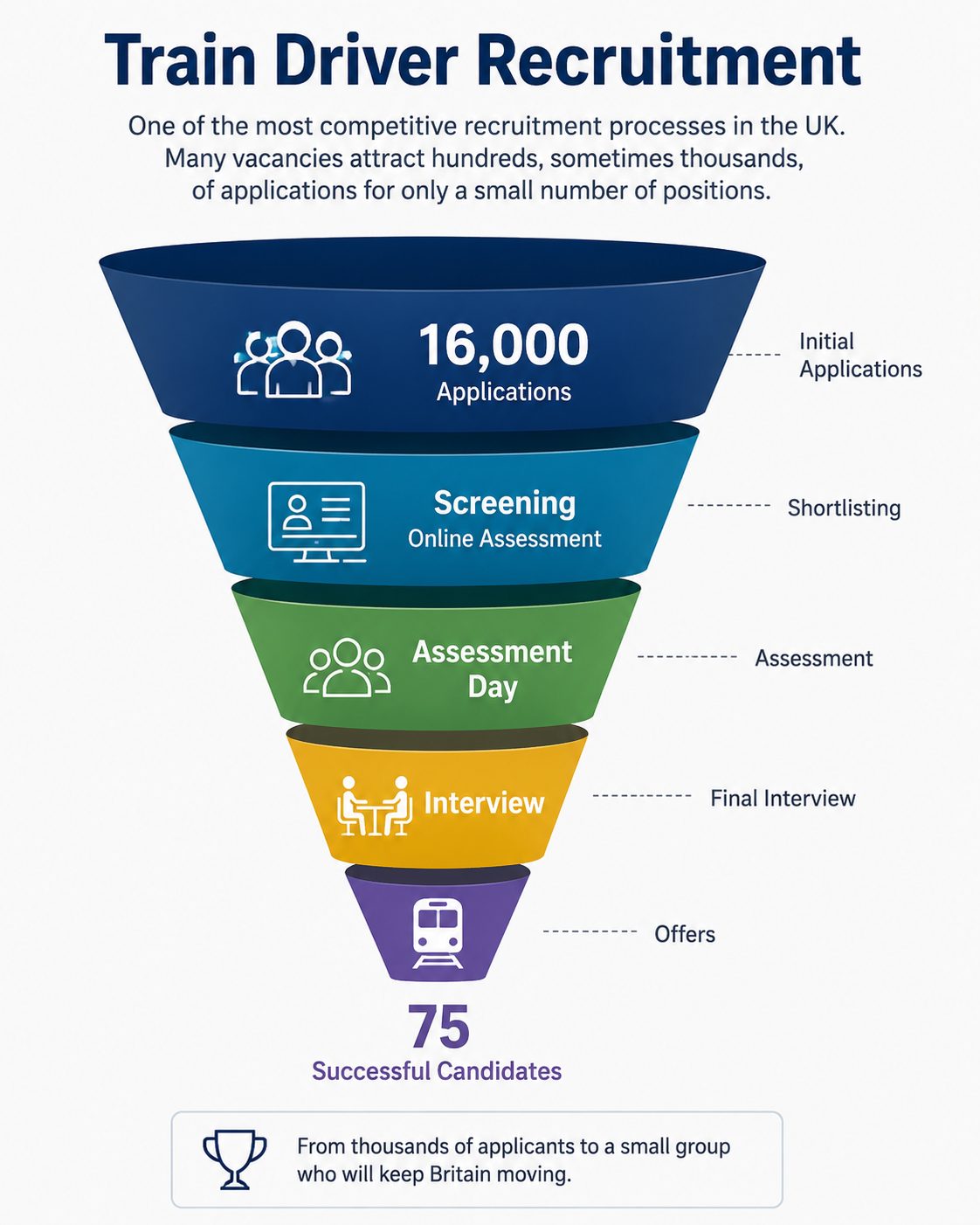



A train driver sift can remove a large proportion of applicants before an interview is even offered. That is not designed to catch people out. It is how Train Operating Companies identify candidates whose application, judgement and working approach are suited to a safety-critical role. If you are asking how to pass train driver SIFT, the most useful approach is not to search for shortcuts. It is to prepare methodically, understand what is being assessed and give clear, consistent evidence of your suitability.
The exact process varies between TOCs and recruitment campaigns. A sift may include an application review, online screening questions, situational judgement questions, timed assessments or an early structured assessment. Read every instruction issued for your particular campaign carefully. The principles below will help you prepare without making assumptions about a TOC's confidential assessment content.
What the train driver sift is looking for
Train driving is a role where routine, concentration and professional judgement matter every day. Recruiters are not only looking for enthusiasm for the railway. They need confidence that you can follow rules, maintain attention over long periods, respond appropriately when conditions change and communicate clearly within an operational environment.
Your sift is therefore likely to assess evidence of behaviours such as safety awareness, conscientiousness, rule compliance, situational judgement, reliability and personal responsibility. It may also consider whether you meet stated eligibility requirements, including location, shift availability, right to work and previous application rules.
A strong candidate does not simply say that safety is important. They describe actions that show it. For example, they may explain how they stopped a task when information was unclear, used a defined process rather than relying on memory, reported a concern promptly or maintained standards during repetitive work. These are credible signals of operational maturity.
Start with the vacancy criteria, not generic advice
Before preparing answers or practising tests, print or save the job description and person specification. Separate the requirements into three groups: essential eligibility, work-pattern expectations and behavioural criteria. This prevents a common mistake - spending hours preparing for assessment questions while overlooking a basic requirement in the application.
Be particularly realistic about rostered shift work. Trainee driver roles can involve early starts, nights, weekends and public holidays. Recruitment teams will expect you to have considered the effect on childcare, travel, sleep and other commitments. A vague statement that you are “flexible” carries less weight than a practical explanation of how you will manage variable hours reliably.
Check your application for consistency too. Dates, job titles and examples should align across your CV, application form and any later interview answers. In a structured process, contradictions can raise questions about accuracy and attention to detail.
Build evidence from your own experience
You do not need previous railway employment to produce relevant examples. Experience from the Armed Forces, logistics, manufacturing, driving, emergency services, customer operations, engineering, retail supervision and many other settings can demonstrate the required behaviours.
Choose examples where the consequences mattered. Perhaps you followed a safety procedure under time pressure, identified an error before it became a problem, dealt with an unexpected disruption, or handed over important information accurately. The setting matters less than the standard of your decision-making.
Use a simple structure when recording each example: explain the situation, your responsibility, the action you took and the result. Then add the learning point. The final element is often what separates a competent answer from a thoughtful one. It shows that you reflect on your performance and improve your approach.
How to pass train driver SIFT assessment questions
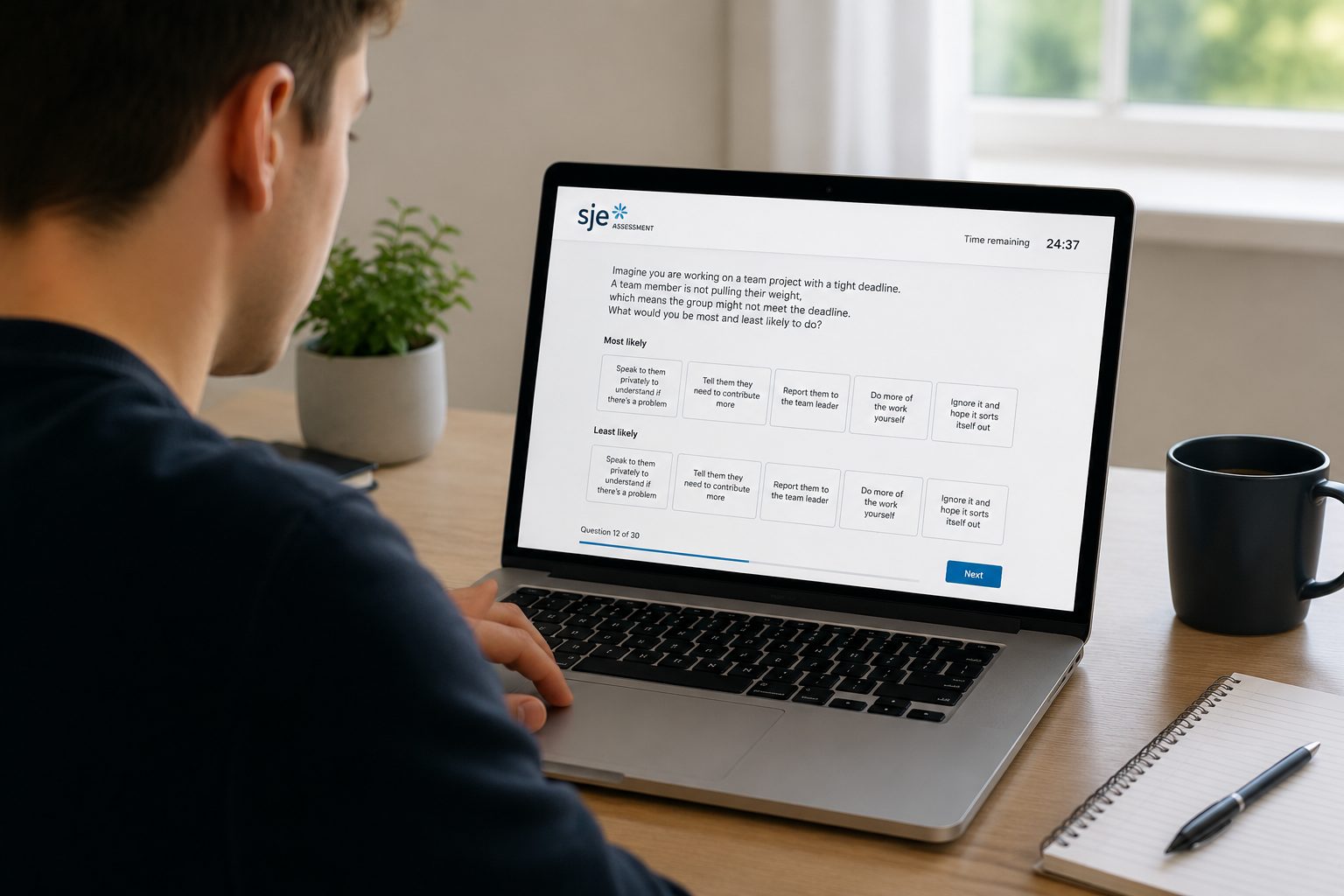
Where a sift includes situational or behavioural questions, answer from the perspective of a safety-critical employee rather than the perspective of someone trying to finish work quickly. That does not mean choosing an unrealistic response, such as escalating every minor issue. It means considering the risk, following the appropriate process, communicating with the right person and avoiding assumptions.
When two answers seem plausible, look for the one that is proportionate and evidence-based. A strong response usually protects safety, complies with instructions and keeps relevant colleagues informed. A weaker response may prioritise convenience, conceal uncertainty, improvise outside your authority or delay reporting a concern.
Avoid trying to guess a hidden pattern in personality or judgement questionnaires. These assessments are designed to examine consistency as well as individual responses. Answer honestly, but with a clear understanding of the standards expected in a role that demands calmness, responsibility and respect for procedure.
If you are given timed online exercises, practise working accurately within a time limit before test day. The purpose of practice is to become familiar with instructions, pacing and concentration, not to memorise answers. Review errors carefully. Ask whether you misread a rule, rushed a calculation, lost your place or changed a correct answer without good reason. That diagnosis makes your next practice session more useful.
Prepare for concentration and test-day performance
Good preparation is often undermined by poor test-day habits. Online assessments may look straightforward, but distractions, fatigue and technical problems can affect performance. Treat the session as a formal part of recruitment.
In the days beforehand, establish a sensible sleep routine and avoid cramming late into the evening. Complete any system checks early, charge your device and arrange a quiet room where you will not be interrupted. If the assessment instructions permit rough paper, have it ready before you begin. Do not use unauthorised help, share content or attempt to work around assessment conditions. Integrity is part of your suitability for a safety-critical career.
During the assessment, read the instructions twice before answering the first question. Pay attention to what the question actually asks, including qualifiers such as “most”, “least”, “first” or “best”. If you make an error, do not let it disrupt the next item. Reset your focus and continue. Sustained concentration includes recovering quickly from a minor setback.
Show motivation that is grounded in the role
Many applicants are attracted by the stability, responsibility and long-term progression associated with train driving. Those are valid reasons, but they should not be your entire answer. A sift response is stronger when it shows that you understand the daily reality of the role.
Explain why you are suited to independent, disciplined work where standards must be maintained even when nobody is directly supervising you. Refer to your respect for safety, your ability to remain focused during routine tasks and your willingness to learn operational rules thoroughly. Be positive about the career, but avoid claiming that you already know what the job is like if you have not experienced it.
Recruiters can distinguish between a candidate who wants the title and a candidate who is ready for the responsibility. Your preparation should help you communicate the second position clearly.
Common mistakes that weaken an otherwise good application
The most avoidable mistakes usually come from rushing. Candidates submit generic statements, repeat the wording of the job advert without evidence, or provide examples that focus on what a team did rather than their own contribution. Others underestimate practical eligibility, particularly travel arrangements for very early shifts.
Be cautious with answers that present you as a lone problem-solver. Initiative is valuable, but in rail and other regulated environments it must sit alongside escalation, communication and adherence to authority. Equally, do not make yourself sound passive. Explain how you identify an issue, take the correct immediate action within your role and ensure it is reported or handed over properly.
A final check before submission should cover four areas:
- Every mandatory field is complete and dates are accurate.
- Your examples show your own actions, not only team outcomes.
- Your availability and travel plans are realistic for the depot or location.
- Your written answers are clear, specific and free from avoidable spelling or grammar errors.
Use practice to improve judgement, not to perform a script
Targeted preparation can make the recruitment process far less opaque. Psychometric practice can build familiarity with timed working and structured interview preparation can help you organise relevant evidence. However, rehearsed answers should still sound like you. If every response follows the same polished script, you risk missing the question or appearing unable to adapt.
Train Driver Foundation preparation resources are designed to help applicants understand the standards behind train driver recruitment and practise presenting their experience professionally. The aim is readiness: better awareness of the process, stronger examples and a more disciplined approach to each stage.
The sift is one stage in a demanding selection journey, not a verdict on your potential. Prepare early, be exact in your application and approach every question with the calm, accountable mindset the role requires. That is the strongest foundation you can take into a trainee train driver recruitment process.