





A safety-critical railway role is not simply a job where you follow rules. It is a role where your decisions, concentration and communication can affect passengers, colleagues and the wider operation. Learning how to prepare for safety critical work means developing the habits that allow you to perform consistently when the work is routine, disrupted, tiring or demanding.
For aspiring trainee train drivers and other operational applicants, this preparation starts well before an assessment or interview. Train Operating Companies (TOCs) look for evidence of a professional mindset: personal responsibility, sound judgement, procedural discipline and the ability to remain composed. These qualities cannot be switched on for a selection day. They need to be understood, practised and demonstrated through credible examples.
Understand what safety-critical responsibility means
Safety-critical work requires you to recognise that standards exist for a reason. Procedures, checks, limits and reporting arrangements are not obstacles to getting the job done. They are the framework that makes dependable performance possible.
In rail, this means being prepared to follow instructions accurately even when you are under time pressure or when a task feels familiar. Familiarity can create risk if it leads to assumptions, skipped steps or divided attention. A strong candidate understands that consistency matters more than speed when safety is involved.
It also means knowing when to stop and seek clarification. There is a common misconception that capable operational staff should always have an immediate answer. In reality, mature decision-making includes recognising the boundary of your knowledge. If information is unclear, conditions have changed or you are unsure of the correct action, asking the right question is a professional response.
Build the habits that support safe performance
The best preparation is practical. Look closely at how you already approach responsibilities at work, at home and in previous roles. Do you plan ahead? Do you check details before confirming a task is complete? Do you communicate concerns early, rather than hoping they will resolve themselves?
Safety-critical employers are interested in behaviour, not slogans. Saying that you are safety-conscious has limited value unless you can explain what you actually do. For example, a warehouse supervisor may describe checking that a loading area is clear before movement begins. A member of the Armed Forces may explain how they maintained standards during a handover. A bus driver may discuss managing distractions while keeping to required checks and reporting procedures.
The sector you come from matters less than the quality of your thinking. The strongest examples show that you identified a risk, followed the appropriate process, communicated clearly and reflected on the outcome. Avoid presenting yourself as someone who takes unnecessary risks to solve a problem quickly. In a safety-critical environment, the correct outcome must be achieved in the correct way.
A useful personal routine is to practise four behaviours consistently: prepare before a task, focus fully while completing it, check the outcome, and report anything that is not as it should be. This does not mean becoming rigid in every part of life. It means creating reliable habits where accuracy and responsibility matter.
Prepare for safety critical work under pressure
Pressure is part of operational work, but it does not remove the need for good judgement. Delays, conflicting demands, unexpected changes and communication issues can all test concentration. The question is not whether you will face pressure. It is how you will respond without allowing it to reduce your standards.
Start by identifying your own pressure signals. You may rush, become overly quiet, lose track of small details or focus too heavily on the immediate task. Being aware of these tendencies gives you a chance to manage them. Simple techniques such as pausing before acting, using a clear sequence, checking your understanding and prioritising one task at a time can help maintain control.
Recruitment processes often explore this area through structured interview questions. You may be asked for an example of a time you made a decision with limited information, challenged an unsafe situation, dealt with a mistake, or maintained concentration during a repetitive task. Your answer should be specific and honest. Explain the situation, your responsibility, the actions you took and the result, but give proper attention to your reasoning.
Do not force an example into a dramatic story. A credible account of noticing an error in paperwork, correcting it through the proper channel and preventing a repeat can be more valuable than an exaggerated incident. TOCs are assessing whether your approach is dependable, not whether your experience sounds exciting.
Treat fatigue, health and wellbeing as operational issues
Fitness for safety-critical work includes more than technical knowledge. Sleep, concentration, emotional wellbeing, medication, alcohol and general health can all influence performance. This is particularly relevant for roles with early starts, late finishes, shift patterns and sustained periods of focused work.
Preparing properly means taking an honest view of whether your current routine supports the demands of the role. If you are used to irregular sleep, frequent late nights or relying on stimulants to get through the day, begin improving your routine now. Stable sleep patterns, regular meals, hydration and manageable exercise support alertness far better than last-minute fixes before an assessment.
You should also be prepared to engage openly with occupational health requirements where relevant. This is not about presenting an unrealistic image of perfection. It is about understanding that safety depends on people being fit, focused and responsible enough to raise concerns when something may affect their work.
For candidates changing careers, consider the practical effects on your household as well. Shift work can affect travel arrangements, childcare, social routines and recovery time. Planning for these realities shows maturity. It also reduces the risk of entering a demanding role with avoidable pressures already competing for your attention.
Develop operational communication
Clear communication is a safety tool. In operational settings, vague language, assumptions and incomplete handovers can create confusion. You do not need to use complicated terminology to communicate well. You need to listen carefully, provide relevant information and confirm understanding when it matters.
Practise being concise. Before speaking, consider what the other person needs to know, what action is required, and whether there is anything that needs to be checked or recorded. This is useful in interviews too. Candidates sometimes weaken good answers by adding unnecessary detail or losing the sequence of events. A structured answer demonstrates organised thinking.
Communication also includes speaking up. If you see a concern, do not assume someone else has dealt with it. Raise it through the appropriate route. Equally, be willing to receive feedback without becoming defensive. A professional safety culture depends on people being able to question, clarify and learn.
Prepare for recruitment with integrity
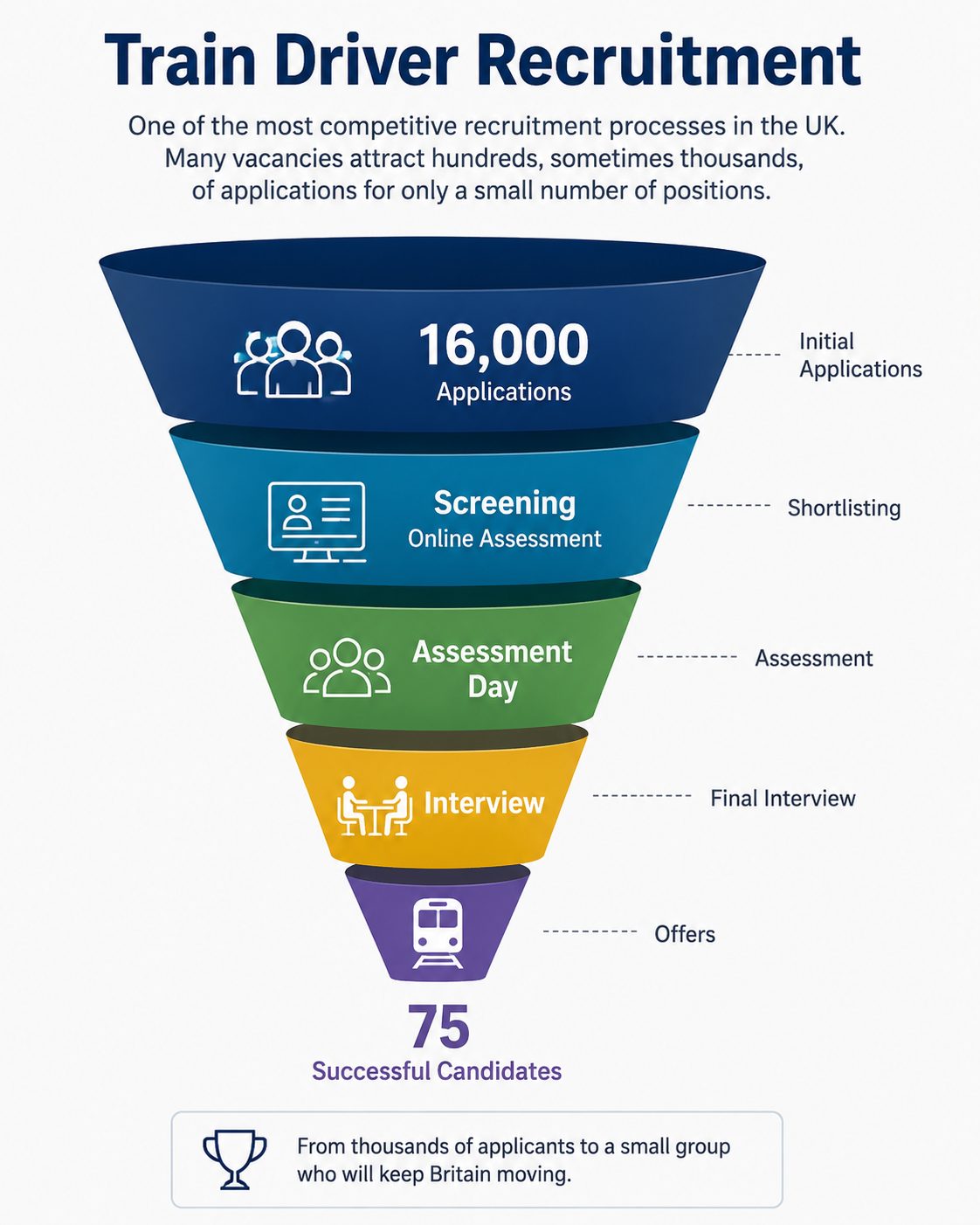
Train driver recruitment is competitive because the role carries significant responsibility. Psychometric tests, application forms, structured interviews and assessment activities are designed to help employers evaluate suitability. Your preparation should improve your understanding, familiarity and confidence, not attempt to bypass the purpose of the process.
Start with the essentials. Read vacancy information carefully, check that you meet the stated eligibility requirements and understand the commitment involved. Research the role in realistic terms, including shift work, training demands and the expected standard of conduct. Then review your employment history for examples that demonstrate concentration, rule-following, risk awareness, communication and accountability.
For psychometric assessments, practise the types of task that may be used so that the format is less unfamiliar on the day. Work carefully rather than chasing speed at the expense of accuracy. If a test identifies an area for development, treat that information constructively. The purpose is to establish a reliable fit between the individual and the role.
Interview preparation should be equally focused. Build a bank of genuine examples from work, volunteering, study or service. Rehearse them enough to communicate clearly, but do not memorise a script. Interviewers need to understand your real experience and how you think, especially when standards, pressure or uncertainty are involved.
Keep developing before and after application
Preparation for a rail career is not a one-off exercise completed when you submit an application. Developing your operational awareness, decision-making and knowledge of the railway environment can help you make a more informed career choice and become a stronger candidate.
Relevant CPD can be useful where it builds genuine understanding rather than simply adding certificates to a CV. Courses in operational thinking, risk-based decision-making, personal track safety, traction and rolling stock can help candidates connect their existing experience to the realities of railway work. Train Driver Foundation’s preparation and CPD options are designed around that practical focus: understanding the standard required and preparing to meet it professionally.
Keep a record of what you learn and where you apply it. A short reflection after a challenging shift, a training course or a workplace incident can strengthen your self-awareness. Over time, you will build clearer evidence of the way you assess risk, respond to feedback and maintain standards.
The right preparation will not make safety-critical work effortless, nor should it. It will help you approach the opportunity with the discipline, self-awareness and respect for responsibility that the railway expects.