

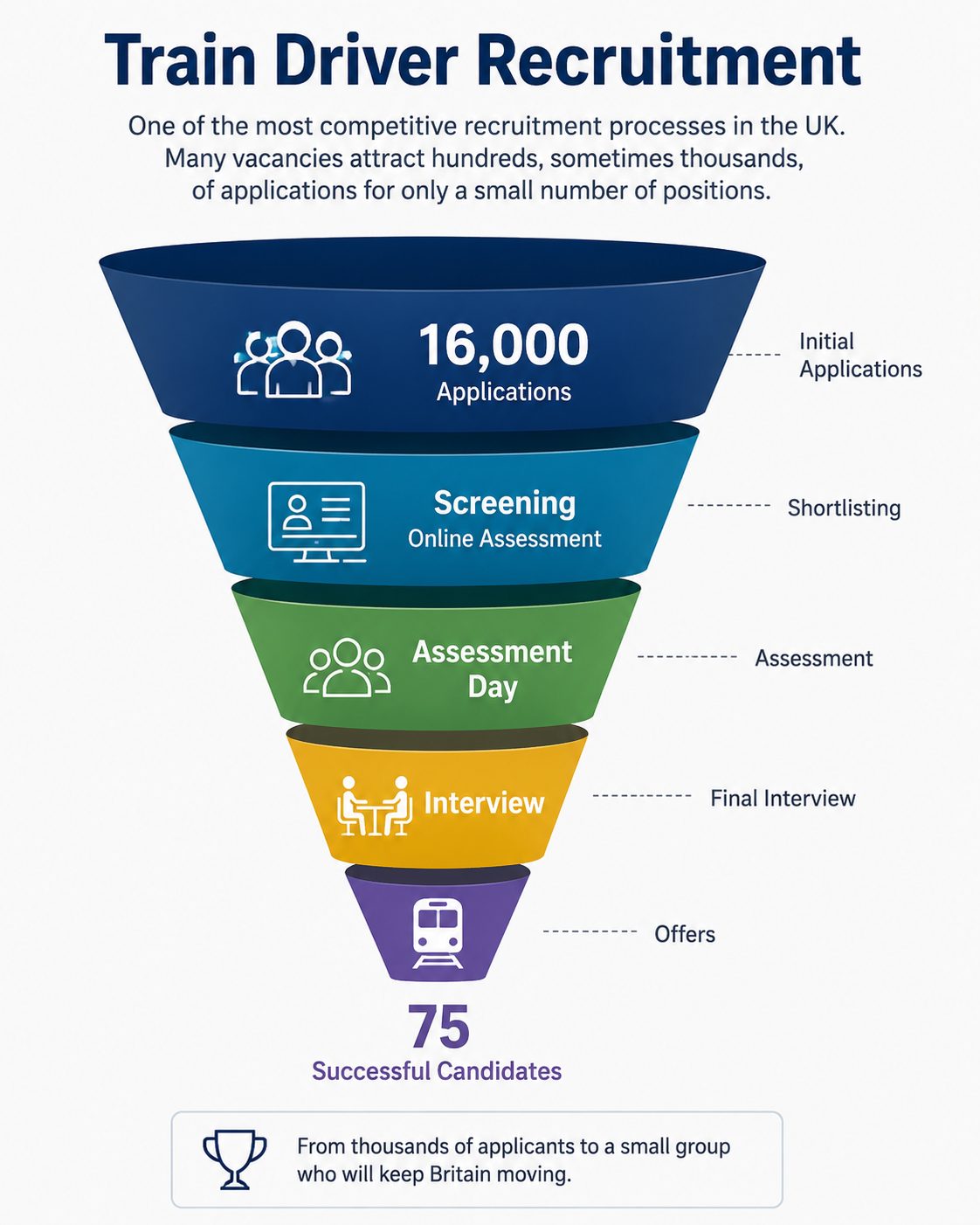




A trainee train driver vacancy can attract a high volume of applications before the closing date has even passed. That is why people ask, is train driving hard to get into? The honest answer is yes: it is competitive, selective and designed to be so. Train driving is a safety-critical role, and Train Operating Companies (TOCs) need evidence that candidates can work reliably, follow rules, manage sustained concentration and make sound decisions when conditions are not routine.
Hard, however, does not mean inaccessible. The process is more structured than many applicants first realise. Candidates who understand the standards, check their suitability early and prepare professionally are in a far stronger position than those who treat an application as a quick career move.
Why train driving is difficult to enter
The attraction of the role is understandable. Train driving offers meaningful operational responsibility, structured training and the chance to build a long-term career in rail. It also appeals to people from varied backgrounds, including logistics, the Armed Forces, customer operations, engineering, emergency services and other environments where procedure and accountability matter.
That broad appeal creates competition. A TOC may need to identify a relatively small number of trainees from a much larger pool of applicants. Recruitment therefore looks beyond enthusiasm for trains. Hiring teams assess whether a person has the behaviours and aptitudes required to complete demanding training and perform safely over time.
The role itself is also less straightforward than it can appear from the outside. Drivers work shifts, including early starts, nights, weekends and public holidays. They may spend long periods working independently, maintain concentration across repetitive or changing conditions, communicate accurately and respond calmly to disruption. Recruitment is intended to test readiness for that reality, not simply interest in the job title.
Is train driving hard to get into at every TOC?
The level of competition and the exact process vary between TOCs, locations and recruitment campaigns. A vacancy near a major population centre may receive particularly strong interest, while eligibility rules can differ depending on the depot, route knowledge requirements and local operational needs.
You should therefore read each job advert carefully rather than relying on general advice from forums or social media. Check the stated residence or travel-time expectations, shift availability, right-to-work requirements, education criteria and any previous application restrictions. Some campaigns may ask for evidence of specific experience, while others focus more heavily on transferable behaviours.
Being eligible is not the same as being competitive. If an advert requires applicants to live within a reasonable travelling distance of a depot, meeting that condition gets your application considered. It does not demonstrate the concentration, rule adherence or personal resilience required for the role. Your written application must still show why your working background is relevant.
The recruitment stages are deliberately demanding
Although the sequence differs by employer, trainee train driver recruitment commonly includes an initial application, online assessments, psychometric testing, interviews and medical or occupational health checks. There may also be role-specific screening or assessment-centre activities.
Each stage examines a different part of your suitability. Application forms and CVs establish whether you meet the stated criteria and can present relevant experience clearly. Assessments may examine areas such as concentration, information processing, attention to detail and following instructions. Structured interviews explore past behaviour, motivation and how you approach safety, responsibility and operational discipline.
No single stage should be viewed in isolation. A strong candidate needs a credible overall profile. For example, good assessment performance does not compensate for an application that gives vague examples, and a polished interview cannot replace the underlying ability to meet the required assessment standard.
What a competitive applicant looks like
TOCs are not looking for one narrow employment background. They are looking for evidence that a candidate can operate consistently in a safety-critical, rules-based environment. Someone who has worked in warehousing, aviation, the military, bus operations, manufacturing, utilities or a regulated customer-facing role may have relevant examples, provided they explain them properly.
Your evidence should be specific. Rather than saying that you are “safety conscious”, describe a time you followed a process precisely, identified a risk, escalated a concern or maintained standards under pressure. Rather than claiming that you work well alone, explain how you planned a task, stayed focused and knew when to seek support.
A competitive application usually demonstrates four connected qualities: dependable attendance and timekeeping, respect for procedure, calm decision-making and clear communication. It should also show realistic motivation. Employers want candidates who understand the demands of shift work and personal responsibility, not applicants who have focused only on the perceived benefits of the career.
Common reasons good candidates fall short
Many applicants underestimate how much preparation is needed before submitting an application. Generic CVs are a frequent problem. A broad employment history may contain excellent evidence, but it will not be obvious to a recruiter if the candidate has not linked it to the requirements in the advert.
Another issue is treating psychometric tests as a hurdle to rush through. These assessments should be approached with care and integrity. Familiarity with legitimate practice formats can help you understand instructions, manage timing and identify areas that need improvement. It cannot replace the aptitude and consistent approach the assessments are designed to measure.
Interview preparation also matters. Structured interviews reward clear, relevant examples rather than lengthy stories or rehearsed slogans. Candidates should be able to explain what they did, why they did it, the outcome and what they learned. They must also show that they would act appropriately where safety, procedure or communication is concerned.
Finally, some people apply before considering the practical demands of the role. Travelling to a depot for an early shift, managing fatigue responsibly and accommodating rostered work are not minor details. Being honest with yourself about these factors is part of professional preparation.
How to make the process more manageable
Start by building a realistic picture of the role. Review vacancy criteria carefully and compare them with your work history, availability and location. If you identify a gap, do not assume it rules you out. Consider whether you have transferable evidence from another setting, or whether targeted learning could help you understand rail operations and safety-critical working more clearly.
Next, organise your examples before applications open. Create a record of situations where you followed rules, dealt with an unexpected problem, worked independently, communicated important information or maintained concentration during routine tasks. Use factual examples with clear outcomes. This makes it easier to tailor future applications without overstating your experience.
Preparation should then be stage-specific. A CV review can help make your relevant experience visible. Practice materials can help you become familiar with the format and discipline of online assessments. Interview preparation can help you turn real experience into concise, structured answers. Train Driver Foundation’s preparation resources are designed around these distinct stages, because a one-size-fits-all approach rarely reflects the actual recruitment process.
The right mindset for a long recruitment journey
Train driver recruitment can take time, and not every suitable candidate succeeds on a first attempt. Campaigns close, assessment dates move and competition remains high. A rejection is disappointing, but it can also identify where a more focused approach is needed, particularly if you have applied with limited preparation or unclear evidence.
The strongest approach is patient and professional. Keep your employment record current, continue developing safety and operational awareness, and apply only when you can meet the practical requirements of the post. Avoid relying on rumours about recruitment campaigns or trying to copy someone else’s route into rail.
Train driving is hard to get into because the standards are high and the responsibility is real. For candidates willing to prepare systematically, present honest evidence and respect the process, it remains a demanding but achievable career direction.