



Leaving the Armed Forces often means looking for a career that retains the standards that mattered during service: responsibility, clear procedures, teamwork and a genuine safety focus. Military to rail careers can offer that continuity, particularly for those considering trainee train driver and other safety-critical operational roles. However, rail recruitment is competitive, and transferable experience must be translated clearly into the evidence a Train Operating Company, or TOC, needs to see.
A military background can be highly relevant. It is not, however, an automatic route into the railway. The strongest applicants understand the job they are applying for, meet the practical requirements and prepare methodically for each stage of selection.
Military to rail careers: start with role fit
Train driving appeals to many service leavers because it is disciplined, rule-based and operationally important. Drivers work independently for significant periods, make safety-led decisions and must maintain concentration across long shifts. The role also involves irregular hours, early starts, night work, weekends and public holidays. That lifestyle suits some people very well and is less suitable for others.
Before focusing on an application, assess whether the reality of the role fits your circumstances. TOCs may set location or travelling-time expectations for a depot, and these can be important because of the shift patterns involved. Consider your ability to travel reliably, manage fatigue responsibly and maintain a consistent routine around changing start times.
Rail also offers other operational routes, including station, fleet, maintenance, conductor and control-related positions. These can be worthwhile careers in their own right. They may also build useful industry knowledge, but candidates should not treat them as guaranteed stepping stones to a driving post. Each vacancy has its own standards and recruitment process.
The strengths your service experience may demonstrate
Military experience often provides sound evidence of the behaviours sought in safety-critical recruitment. Examples may include following procedures accurately, communicating clearly under pressure, reporting concerns, working within a chain of command and taking ownership of personal standards.
The key is specificity. A statement that you are disciplined or good under pressure is not enough on its own. A recruiter needs to understand what you did, how you assessed the situation, which procedure or instruction you followed, how you communicated and what safe outcome you helped achieve.
For example, experience of checking equipment before use can demonstrate attention to detail. Briefing colleagues can evidence concise communication. Raising a concern when something did not look right can show confidence to challenge appropriately. These examples become stronger when they show calm judgement rather than drama.
Avoid assuming that military terminology will speak for itself. Most rail recruiters will understand the value of service, but they still need plain-English evidence that relates directly to the role. Explain acronyms, reduce jargon and focus on behaviours that transfer.
What rail employers assess beyond your background
A trainee train driver application is not simply a review of employment history. TOCs are selecting people for a role where safe, consistent performance matters every day. Recruitment commonly examines eligibility, application quality, online assessments, psychometric tests, structured interviews and medical standards. The exact sequence and requirements vary between employers and vacancies.
Psychometric assessments are designed to assess relevant capabilities and working preferences in a standardised way. They are not a test of whether someone has served in the military, nor are they something to approach as a hurdle to outsmart. Effective preparation means becoming familiar with the format, practising concentration and accuracy, and learning how to work carefully within time limits.
Structured interviews require the same professional approach. You may be asked for examples connected to safety, rules, communication, customer impact, motivation, concentration or responding to a problem. A clear structure helps: set the context briefly, explain your specific responsibility, describe the action you took and state the result or learning. Keep the emphasis on your own contribution without overstating it.
Motivation also matters. A recruiter will want to know why you want rail and why you understand train driving specifically. Saying that you want stability after service may be honest, but it is rarely enough on its own. Connect your motivation to the operational realities of the job: safety, responsibility, procedures, independent working and the need to provide a reliable service for passengers and freight customers.
Preparing for military to rail careers recruitment
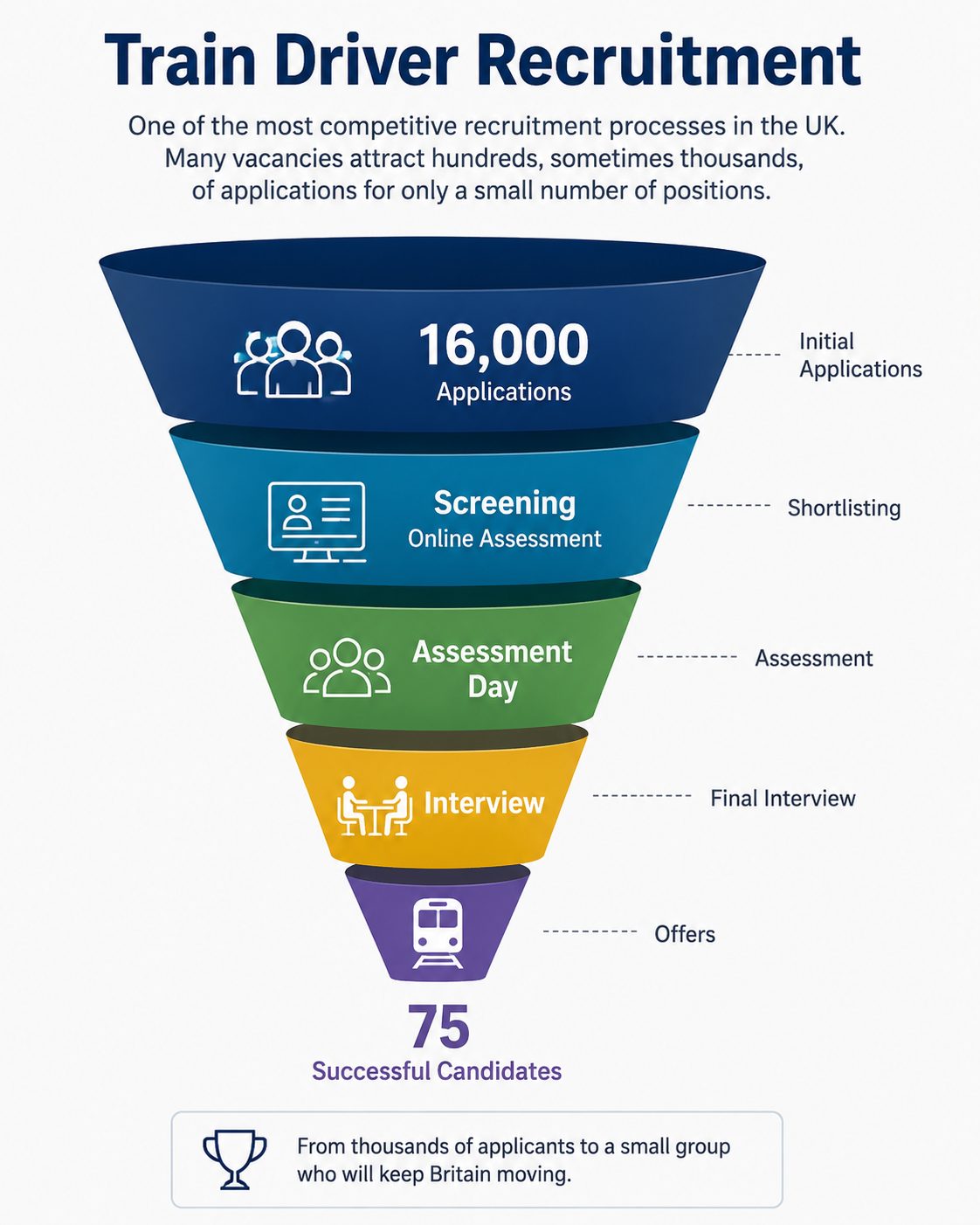
Your preparation should begin before a vacancy appears. Train driver recruitment campaigns can attract high numbers of applicants, so rushing an application after it opens can leave avoidable gaps in your evidence.
Start by reviewing your employment history and identifying examples that show safety awareness, rule compliance, situational awareness, teamwork and personal accountability. Build a bank of examples from service, but include any relevant civilian work, volunteering or study as well. The best example is the one that answers the question clearly, not necessarily the most dramatic one.
Next, create a CV that is concise, accurate and tailored to operational work. Place emphasis on responsibilities, standards and outcomes rather than rank alone. If you held a role requiring checks, authorisations, equipment care, incident reporting or shift working, explain it in terms that a civilian recruiter can understand. Dates, qualifications and employment history should be consistent and easy to verify.
Then develop your railway knowledge through credible introductory learning. You do not need to claim expertise before entering the industry, and you should never present learning as a substitute for formal employer training. What it can demonstrate is commitment, realistic awareness and the ability to engage with safety-critical concepts. CPD courses covering operational thinking, risk-based decision making, personal track safety, traction and rolling stock can help build that foundation when selected carefully.
Service leavers may be able to use Standard Learning Credits for eligible learning pathways. Check the current rules, provider eligibility and evidence requirements before committing funds. The most useful course is one that supports your career plan and gives you knowledge you can discuss honestly at application and interview stage.
Prepare without compromising assessment integrity
There is a clear difference between preparation and trying to circumvent an assessment. Preparation means practising relevant question formats, improving your understanding of the role, refining your interview examples and approaching every stage well rested and organised. It does not mean seeking restricted material, memorising purported answers or trying to second-guess personality questions.
Railway recruitment depends on fair, valid assessment. Candidates are better served by building the habits the role requires: reading instructions carefully, managing time, staying composed and giving truthful answers. If an assessment identifies an area for development or a result does not go your way, treat it professionally. Recruitment outcomes can depend on the vacancy, assessment standards and the competition at that time.
Common transition mistakes to avoid
One common mistake is applying with a generic leaving-forces CV. A document that works for broad civilian employment may not make the link to train driving clear enough. Another is focusing entirely on technical experience while overlooking behaviours such as concentration, communication and procedural discipline.
Some applicants also underestimate the research needed before interview. Learn about the employer, the depot location, the type of service it operates and the practical demands of the advertised role. Do not rely on salary figures, social media discussion or rumours as your main motivation. A credible candidate shows an informed interest in the work itself.
Finally, do not let a rejection define the whole transition. It may mean a particular process was not the right outcome at that point, not that your experience lacks value. Review feedback where it is available, strengthen the part of your preparation that needs work and remain selective about roles that genuinely fit your circumstances.
Build a credible route, not just an application
The most effective transition plan combines timing, self-awareness and focused preparation. Give yourself enough time to convert military experience into relevant evidence, practise assessments ethically and understand the expectations of a safety-critical railway career. Specialist support, such as the preparation resources offered by Train Driver Foundation, can help candidates structure that work around the standards commonly used in trainee driver recruitment.
Your service has already developed habits that can carry real weight in rail. The next step is to show, with clarity and evidence, that you are ready to apply those habits in a new operational environment.