



If you have reached the online assessment for train driver jobs, you are already past the stage of simply expressing interest. At this point, employers are looking for evidence that you can think clearly, follow rules, stay focused and respond in a way that fits a safety-critical role. That is why many applicants find this stage challenging. It is not just about being keen to join the railway. It is about showing the underlying behaviours and cognitive standards needed for train driving.
For many candidates, the pressure comes from not knowing what to expect. The online format can make the process feel remote and difficult to judge. You may be completing tests alone at home, with timed sections, unfamiliar question styles and little room to pause and reset. A calm, structured approach matters far more than guesswork.
What an online assessment for train driver jobs is designed to measure
An online assessment for train driver jobs is usually not there to test railway knowledge. In most cases, employers are not asking whether you already know route details, traction systems or operational rules. They are assessing whether you have the core aptitude and judgement to progress in recruitment for a safety-critical position.
That often includes concentration, attention to detail, rule adherence, decision making, memory, verbal understanding and the ability to work accurately under pressure. Some employers will also use behavioural or situational judgement style questions to explore how you approach responsibility, teamwork, safety and professional standards.
This is a key point that many applicants miss. The tests are not only about raw intelligence. They are about suitability for a highly procedural environment where distraction, carelessness or poor discipline can have serious consequences. A strong candidate is usually someone who balances speed with control, not someone who rushes for the sake of finishing first.
Why employers use online screening early
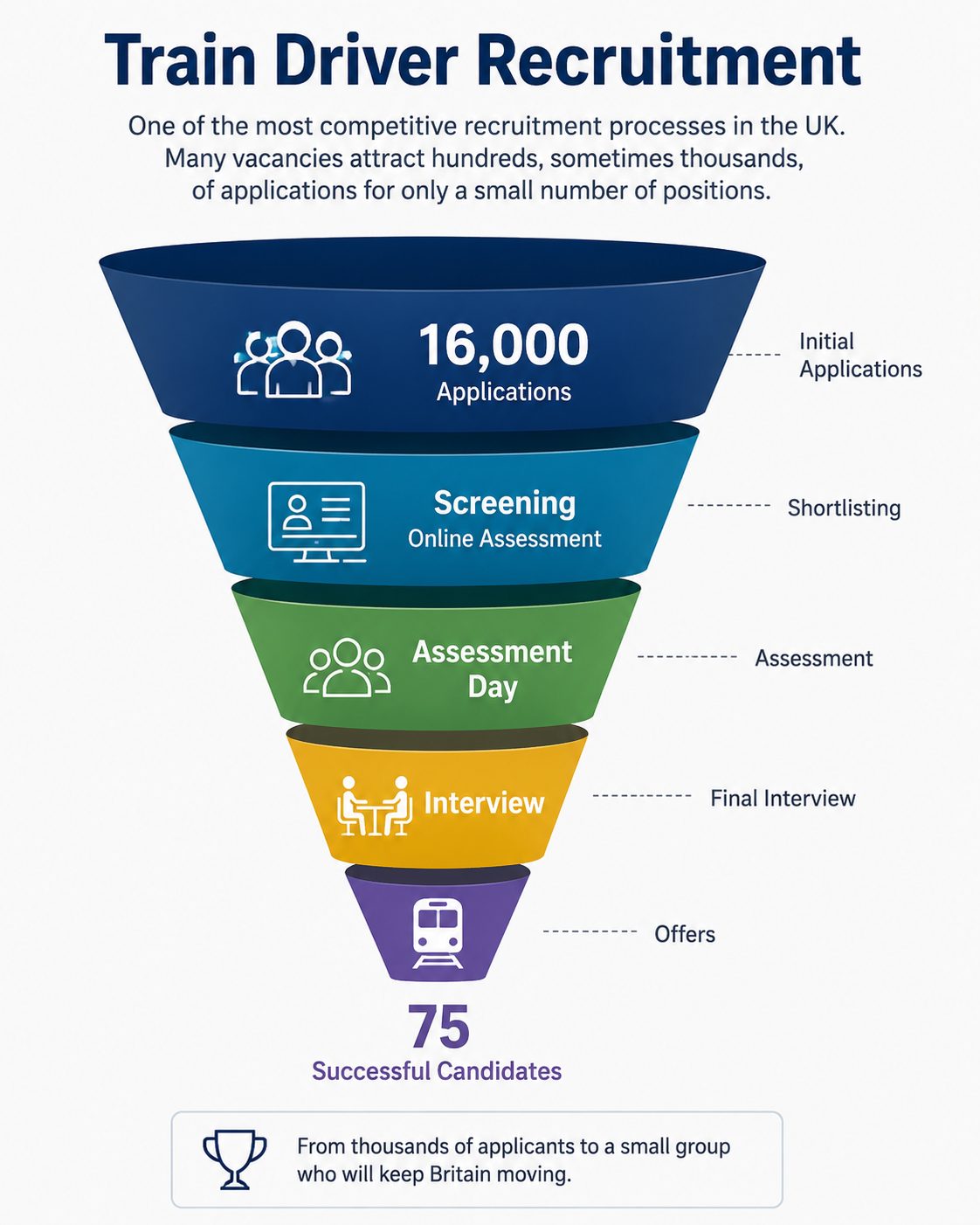
Train driver recruitment attracts a high volume of applicants, including many people with strong general work histories. Online assessment helps employers screen fairly and consistently before inviting candidates to the next stage. It also allows them to compare applicants against the standards expected for trainee drivers and other safety-critical roles.
From the employer's point of view, this stage is practical. It saves time, creates a standard testing environment and helps identify who is likely to cope well with the demands of later assessment and training. From the candidate's point of view, it means preparation has to start earlier than many people expect.
Some applicants assume they can rely on interview performance later. That is not how this process works. If you fall short at online assessment stage, you may not get the opportunity to explain your motivation or transferable experience face-to-face.
What the format can look like
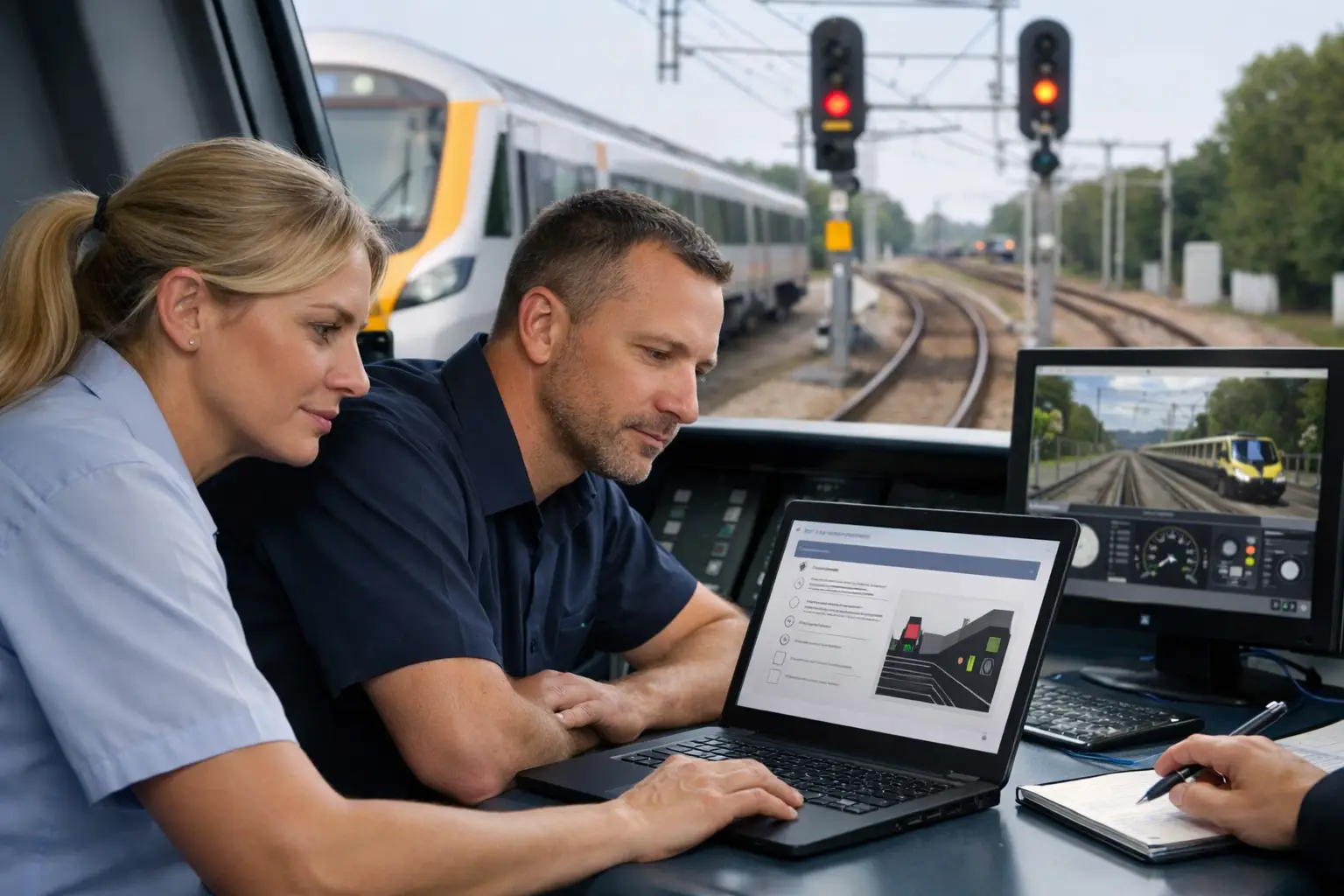
The exact structure varies between employers and assessment providers, but most online screening follows a similar logic. You may be asked to complete timed psychometric exercises, reading-based tasks, concentration tests or work-style questionnaires. Some are straightforward in layout but demanding in pace. Others look simple at first and become difficult because they require consistent accuracy over time.
This is where candidates can make poor assumptions. A test may appear basic, yet still be highly selective because it measures sustained attention, discipline and error control. In train driver recruitment, these qualities matter. Doing well is often less about flashy performance and more about steady, reliable execution.
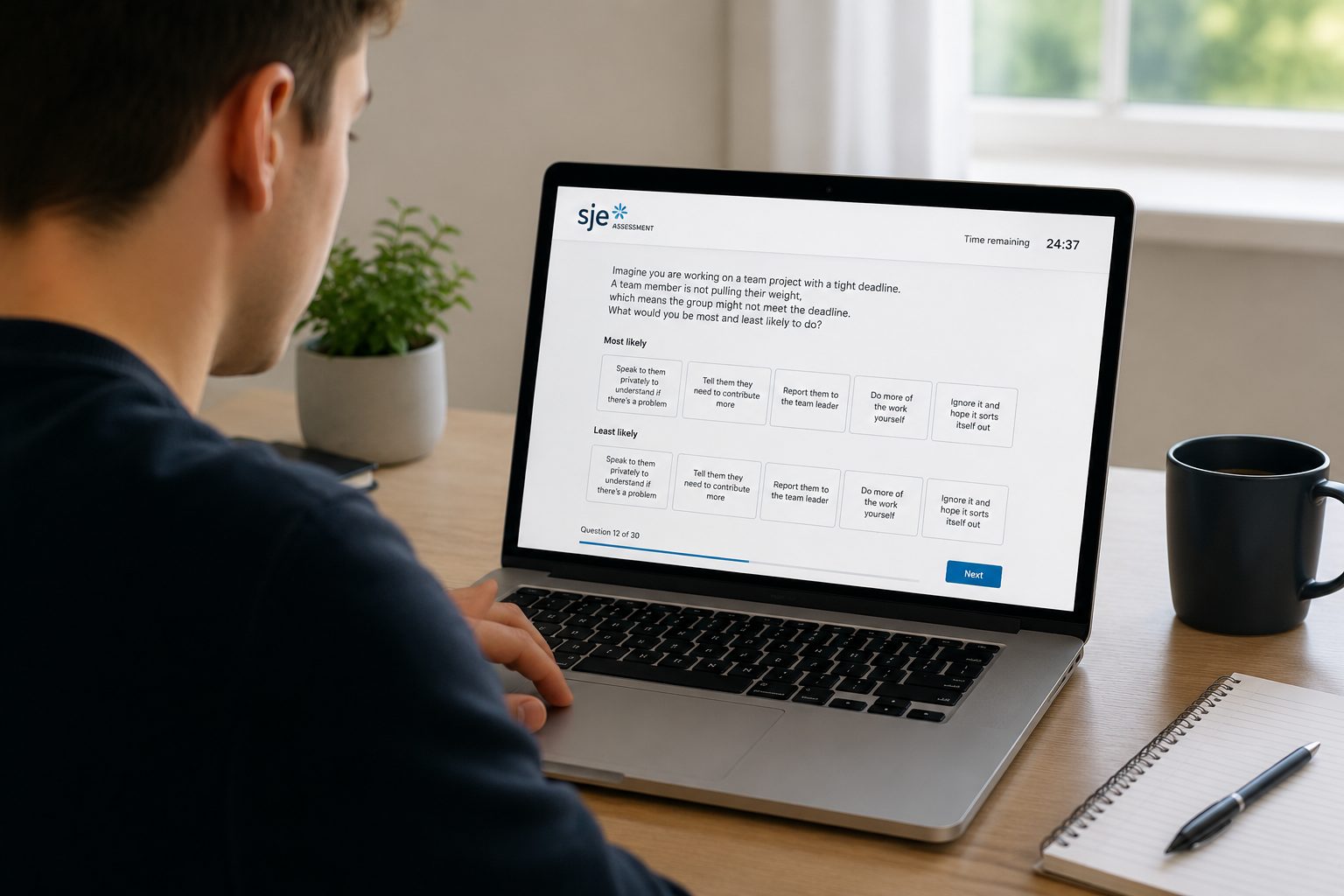
You may also face an online situational exercise. These questions typically present workplace scenarios and ask you to choose or rank responses. The strongest answer is not always the most friendly or the most assertive. It is usually the one that best reflects safety, procedure, responsibility and sound judgement.
Common mistakes candidates make
One of the biggest mistakes is underestimating the standard. Candidates with good careers in the military, logistics, driving, engineering or operations sometimes assume their background alone will carry them through. Relevant experience helps, but assessments still need specific preparation.
Another mistake is practising in an unfocused way. Doing random online puzzles or generic aptitude tests can create activity without real progress. Preparation should match the type of thinking the role demands - concentration, rule application, memory discipline and careful decision making under time pressure.
A third issue is poor test conditions. Completing an assessment while tired, distracted or interrupted can undermine performance. In a competitive process, small lapses matter. If the assessment window allows choice, select a time when you are alert and unlikely to be disturbed.
There is also a more subtle problem. Some candidates try to second-guess personality or situational questions by choosing what seems superficially impressive. In safety-critical recruitment, exaggerated confidence is rarely the goal. Employers are often looking for consistency, professionalism, composure and respect for process.
How to prepare properly
Good preparation starts with understanding the role, not just the test. A trainee train driver is expected to operate within rules, maintain concentration over long periods, manage routine without complacency and respond appropriately when conditions change. If your preparation does not reflect that operational reality, it may remain too generic.
Start by getting familiar with timed assessment conditions. Practise working accurately while the clock is running. The aim is not simply to go faster each time. The aim is to become comfortable enough with pressure that your accuracy stays controlled.
It also helps to build mental stamina. Many applicants are unused to formal testing after years in employment. Short bursts of practice can help at first, but serious preparation usually means developing the ability to stay focused for longer periods without becoming careless.
Reviewing your own habits matters as well. Do you rush when time is tight? Do you lose concentration after a small mistake? Do you re-read instructions properly, or assume you know the pattern? Self-awareness can improve performance because many errors come from behaviour rather than ability.
Candidates who prepare well also spend time understanding the professional expectations behind the assessment. Read the role carefully. Think about why concentration, rules, communication and judgement matter in train driving. That context can help you answer behavioural elements with more maturity and relevance.
The balance between practice and overpractice
Practice is useful, but it has to stay purposeful. Repeating similar questions again and again without reviewing errors can create false confidence. You may feel busy, yet still repeat the same weaknesses under timed pressure.
The better approach is to practise, review and adjust. If you are making mistakes because you panic on timed sections, work on pacing. If your accuracy drops late in a session, work on concentration endurance. If behavioural questions feel unclear, spend time thinking about how safety-critical employers value procedure, accountability and calm decision making.
It also depends on where you are in the process. If you are applying widely and expect online testing soon, early preparation makes sense. If you already have an assessment date, your focus should shift towards realistic timed practice and stable routine rather than cramming as much as possible in the final day or two.
What employers are really looking for
Although each employer has its own process, the broad picture is consistent. They want candidates who can maintain standards, process information carefully and behave responsibly in a regulated environment. They are not looking for shortcuts. They are looking for suitability.
That is why your broader application should match the same standard. If your CV, application answers and assessment approach all show discipline, safety awareness and professionalism, you present as a more coherent candidate. If your paperwork says one thing and your assessment behaviour suggests another, the mismatch can be costly.
This is also where specialist preparation can help. Support that is tailored to train driver recruitment is usually more useful than broad employability advice, because it reflects the actual expectations of the role rather than general office-based hiring norms. Train Driver Foundation focuses on that kind of role-specific preparation, which is often what candidates need once the process becomes more technical.
How to approach the day itself
Treat the assessment as part of a professional selection process, not a casual online task. Read every instruction carefully. Check your device, internet connection and environment in advance. Have water nearby, silence notifications and remove obvious distractions.
Just as importantly, manage your mindset. One difficult section does not mean the whole assessment has gone badly. Many candidates lose marks by becoming flustered after a shaky start. Reset between tasks where possible and keep your focus on the question in front of you.
If you are unsuccessful, that does not automatically mean you are unsuitable for the railway long term. It may mean your preparation was not yet aligned to the standard being tested, or that this attempt did not reflect your best performance. The useful response is to review the process honestly and prepare more effectively for future opportunities.
A strong result in an online assessment rarely comes from luck. It usually comes from understanding the role, respecting the standard and preparing with the same discipline the job itself demands.