

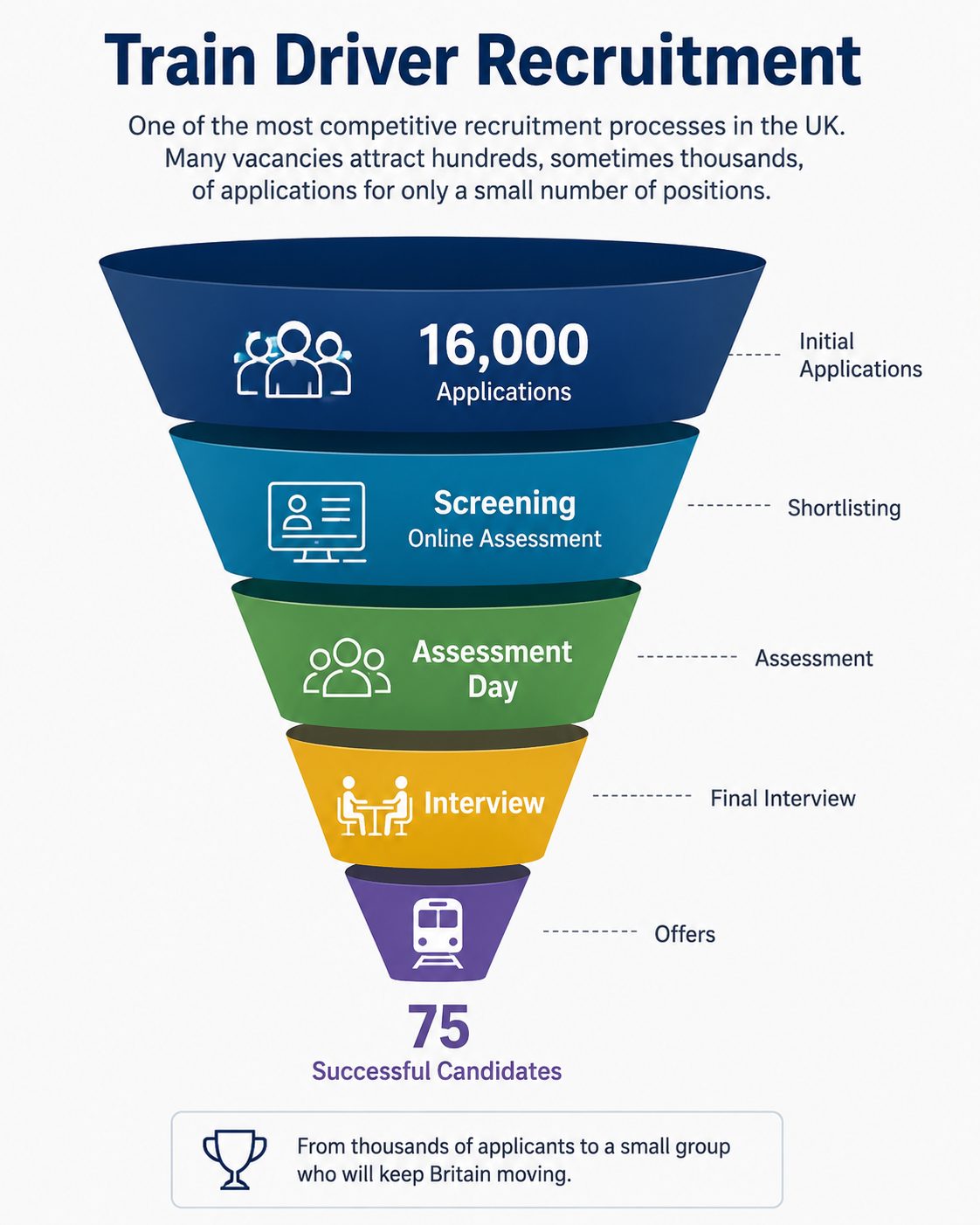




A useful online psychometric course review should answer one practical question: will this course help you prepare professionally for the type of assessment used in a safety-critical train driver selection process? The answer is rarely found in a bold pass-rate claim or a large bank of unexplained questions. It comes from the quality of the practice, the relevance to the role and the way the course builds disciplined, repeatable preparation.
For aspiring trainee train drivers, psychometric testing is not an obstacle to rush through. It is one part of a wider assessment of whether you can work accurately, remain focused, follow rules and make sound decisions in an operational environment. A course should reflect that reality.
What an Online Psychometric Course Should Cover
Psychometric preparation for train driver recruitment needs to be more specific than generic aptitude practice. While exact assessment stages can vary between Train Operating Companies (TOCs) and campaigns, candidates are commonly expected to demonstrate concentration, accuracy, memory, rule application and the ability to work methodically under time pressure.
A worthwhile course usually includes timed practice in these core areas, but the explanations matter as much as the exercises. You need to understand why an answer was correct, where an error occurred and how to approach a similar task with greater control next time. Simply repeating questions without reviewing your method can reinforce unhelpful habits.
Look for practice that develops sustained attention rather than encouraging frantic speed. In a safety-critical role, accuracy and consistency are central. A good course should therefore help you manage pace, maintain focus across a full exercise and recognise when you are making avoidable errors.
Practice Needs to Be Relevant, Not Secretive
Relevant preparation does not mean attempting to reproduce confidential live assessments or offering methods to bypass assessment standards. It means practising the underlying skills in an honest and structured way.
For example, concentration exercises can help you become more comfortable identifying detail under time pressure. Rule-based tasks can develop your ability to apply instructions consistently. Memory activities can help you practise retaining information while responding accurately. These are transferable capabilities that have a clear connection to operational work and structured selection.
Be cautious of any provider that suggests it has a shortcut, guaranteed result or special access to a TOC's assessment process. Train driver recruitment is designed to be demanding because the role carries serious responsibility. The right preparation supports genuine readiness, not a way around the standard.
How to Review an Online Psychometric Course
When comparing courses, assess the learning experience rather than relying only on the number of tests included. A library of hundreds of questions may be useful, but only if it is organised into a pathway that helps you improve.
Start with the course structure. It should make clear which skills are being practised, how sessions progress and when to introduce timed conditions. Candidates new to psychometric testing often benefit from beginning untimed, learning the rules of each exercise and then building speed gradually. Someone who has already practised extensively may need more realistic timing, error analysis and consistency work instead.
Next, consider feedback. The strongest courses do not merely score your performance. They show whether a mistake came from misunderstanding an instruction, losing concentration, working too quickly or failing to manage the time available. That distinction allows you to adjust your preparation with purpose.
Also review the quality of the instructions. Recruitment assessments can involve detailed rules, so practice material should be written clearly and checked carefully. Ambiguous wording, inconsistent answers or poorly designed exercises can waste time and create false confidence. A professional course should feel controlled, accurate and straightforward to use.
Signs of a Course Built for Train Driver Applicants
A generic psychometric platform may improve familiarity with timed testing, but it may not address the wider context of a trainee train driver application. A more suitable course recognises that selection preparation sits alongside eligibility, CV quality, structured interview performance and an understanding of safety-critical expectations.
It should use language that is appropriate to railway recruitment and explain why behaviours such as concentration, conscientiousness and rule adherence matter. It should also encourage candidates to work in a calm, organised manner. This is not about presenting a rehearsed personality. It is about preparing to show your genuine approach to responsibility and disciplined work.
Courses designed for rail applicants may also be more helpful when they place psychometric practice within a broader preparation plan. You may need to improve one assessment area while also preparing examples for a structured interview or reviewing whether your employment history demonstrates reliability, safety awareness and the ability to follow process.
The Value of Timed Practice and Review
Time pressure changes performance. A task that feels simple when completed slowly can become difficult when you must sustain concentration and make decisions at pace. Timed practice is therefore essential, but it should not be the first or only method you use.
Begin by understanding the task. Work through a short set of questions and identify the rule or pattern before increasing your pace. Once your method is sound, introduce realistic timing. After each session, review the result with honesty. If you made mistakes, do not only ask whether you were too slow. Ask whether you lost your place, misread a condition, changed a correct answer unnecessarily or became distracted.
This review process is where progress happens. Many candidates focus solely on their score, yet a score is only a snapshot. Your error pattern tells you what to practise next.
An online course is especially useful when it allows repeated sessions, clear performance tracking and enough variety to prevent you from memorising the exercise rather than developing the skill. However, more practice is not always better. Short, focused sessions completed consistently are generally more productive than occasional hours of rushed testing.
What a Course Cannot Do for You
Even a well-designed course cannot replace the behaviours needed during recruitment. It cannot make up for inadequate rest, poor time management or an approach that treats the process casually. It also cannot guarantee an outcome, because final selection depends on your overall performance and the requirements of the recruiting TOC.
Candidates should use online preparation as one part of a wider plan. Read the application information carefully, protect time for practice, prepare for interviews and reflect on the operational standards expected in the role. If you are balancing work, family commitments or a career change, a structured schedule can prevent preparation from becoming inconsistent.
The course should support confidence, but confidence needs to be grounded in evidence. You want to reach assessment day knowing that you have practised relevant skills, learnt from mistakes and developed a reliable method for working under pressure.
Is a Paid Course Always Necessary?
Not necessarily. The best option depends on your starting point, the time available and how much structure you need. Free practice can provide a useful introduction and help you identify weaker areas. A paid course may be more worthwhile when it offers a clear learning pathway, detailed feedback, quality timed exercises and preparation tailored to train driver recruitment.
Before enrolling, consider whether you are paying for meaningful guidance or simply for a larger quantity of questions. If you are unsure where to begin, a specialist provider such as Train Driver Foundation can help candidates approach preparation as part of a complete recruitment journey rather than an isolated test session.
Choose a course that asks you to prepare with care, work honestly and improve systematically. Those habits will serve you far better than searching for a quick result, both in selection and in the professional responsibility that follows.