



When candidates struggle at interview for trainee train driver roles, it is often not because they lack enthusiasm for rail. It is because they have not yet learned how to think and respond with the level of judgement expected in a safety-critical environment. An operational maturity training course is designed to address that gap by developing the behaviours, decision-making habits and professional awareness that employers look for.
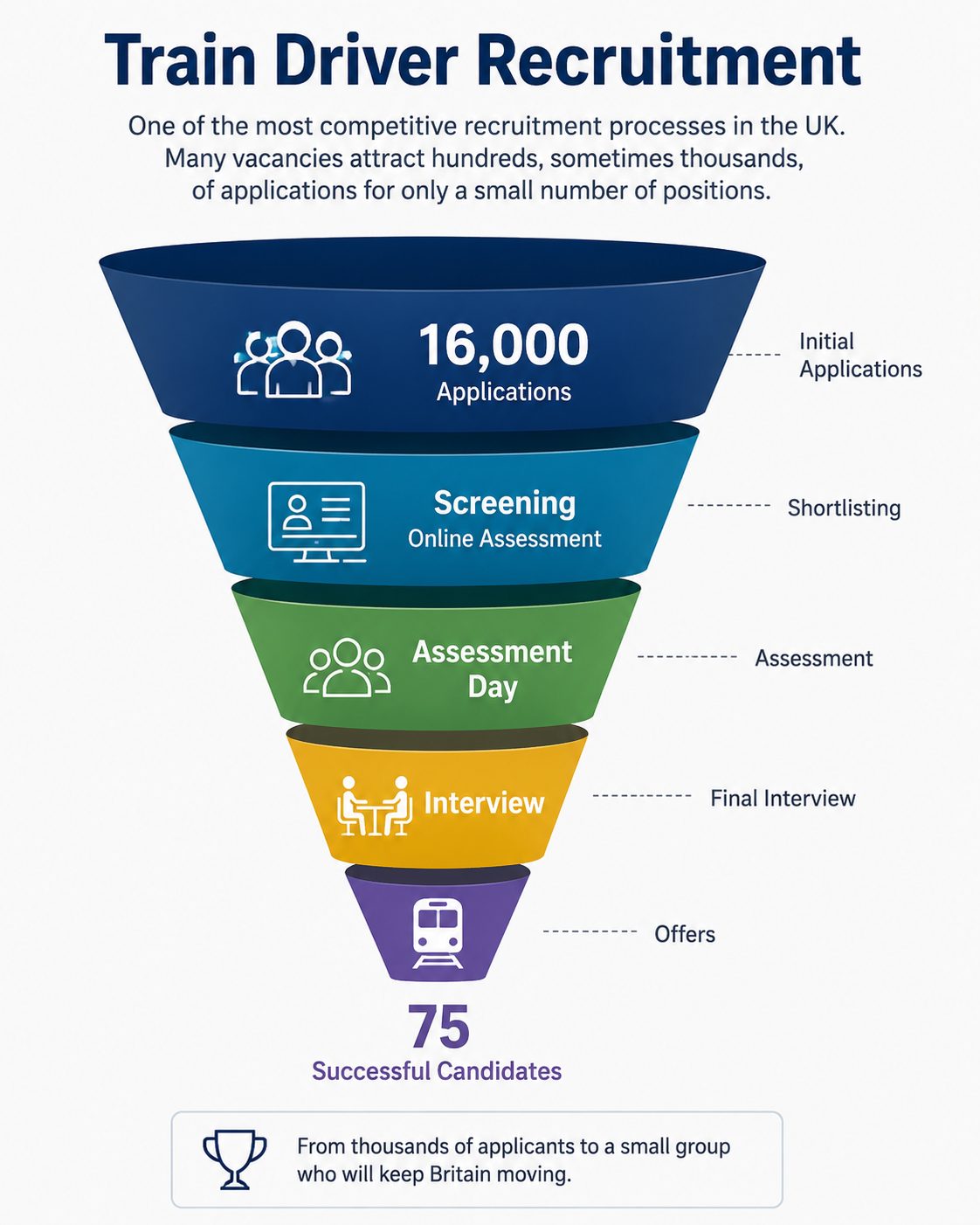
This matters because train driver recruitment is not simply a test of motivation. TOCs are assessing whether you can operate within rules, manage pressure, remain disciplined and make sound decisions when conditions are less than ideal. Those qualities are difficult to demonstrate if you have never worked in a tightly controlled operational setting before. That is where targeted CPD can make a genuine difference.
What is an operational maturity training course?
An operational maturity training course focuses on the mindset and professional behaviours needed in safety-critical work. It is less about technical route knowledge and more about how you think, communicate and act when standards matter.
For aspiring train drivers, operational maturity sits at the centre of employability. Recruitment processes regularly test for concentration, rule adherence, consistency, calmness under pressure and accountability. A candidate may be highly capable in everyday work but still find it difficult to evidence these traits in a railway context without structured preparation.
In practical terms, the course usually explores how mature operational staff approach routine tasks, unexpected changes, time pressure, fatigue awareness, escalation, personal responsibility and safe decision-making. The aim is not to rehearse idealised answers. The aim is to help you understand what good operational judgement actually looks like.
Why operational maturity matters in train driver recruitment
Train driving is a role with very little margin for casual thinking. The public often see the independence of the role, but employers are looking just as closely at discipline, consistency and compliance. That is why operational maturity is such a useful concept for applicants.
A strong candidate does not present themselves as a risk-taker or a natural rule-bender who can improvise their way through problems. In rail, maturity is shown in a different way. It is seen in someone who understands procedures, respects limits, manages distractions and knows when to stop, check and escalate.
This also explains why some otherwise experienced applicants are unsuccessful. Experience alone does not always translate into railway-ready behaviour. Someone may have managed teams, worked shifts or dealt with responsibility, but still struggle to frame their examples in a way that reflects safety-critical expectations. An operational maturity training course helps bridge that gap.
What you should expect to learn
The most useful courses are grounded in operational realism rather than vague employability advice. They should help you understand the standard of behaviour expected in disciplined transport environments and how to express that clearly during selection.
Decision-making under control
One major theme is learning how to make decisions within rules, not around them. In many workplaces, speed and initiative are praised above all else. In train driving, the better question is whether your actions remain controlled, proportionate and compliant.
That means recognising when to pause, when to seek clarification and when to escalate rather than assume. Candidates who understand this tend to come across more credibly in structured interviews because their examples show restraint as well as responsibility.
Situational awareness and risk recognition
Operational maturity also involves seeing risk before it becomes a problem. That includes noticing distractions, identifying small deviations, understanding cumulative pressure and appreciating how one poor decision can affect a wider operation.
For applicants from non-rail backgrounds, this can be one of the most valuable parts of training. It gives context to how safety-critical roles differ from general customer service or office work. You begin to think less in terms of convenience and more in terms of safe, repeatable performance.
Communication and escalation
Mature operators communicate clearly, factually and at the right time. They do not hide errors, delay reporting or soften important information to avoid discomfort. In rail, poor communication can create operational and safety consequences very quickly.
A good course should therefore examine when and how to raise concerns, how to report issues accurately and why escalation is a strength rather than a weakness. This is especially useful in interview preparation, where candidates are often asked about mistakes, pressure or conflict.
Personal discipline and consistency
Many applicants underestimate how much train driver selection focuses on consistency. Employers need people who can follow standards every day, not only when being observed. Operational maturity includes punctuality, preparation, focus, record-keeping, emotional control and taking ownership of your actions.
These are not glamorous qualities, but they are central to the role. A course that develops this understanding can help candidates present themselves more effectively and assess whether the career genuinely suits them.
Who should take an operational maturity training course?
This type of training is particularly useful for first-time rail applicants, career changers and anyone moving from a less regulated sector into a safety-critical one. If you are serious about trainee train driver vacancies but are not yet confident in the language and expectations of operational work, it can provide useful structure.
It may also benefit applicants with strong experience in the Armed Forces, logistics, emergency services, transport or manufacturing. Those backgrounds often contain relevant behaviours, but candidates do not always know how to translate them into examples that align with train driver selection standards.
That said, the value depends on where you are in your journey. If you already have significant railway operational experience, you may need something more targeted around psychometric preparation or structured interview performance instead. Operational maturity training is most effective when the core issue is behavioural readiness rather than technical familiarity.
How an operational maturity training course supports interview performance
One of the clearest benefits of this training is that it improves the quality of your evidence. Many candidates attend interviews with broad statements about being calm, responsible or safety-conscious. Those claims are not enough on their own.
Interviewers are listening for examples that show process, judgement and accountability. They want to hear how you assessed a situation, what standards guided your response, how you managed pressure and what you did afterwards. Candidates who have completed relevant CPD often give sharper, more structured answers because they better understand what good performance looks like.
This does not mean memorising scripts. In fact, over-rehearsed answers can work against you. The advantage is having a clearer framework for selecting examples and explaining them in a way that reflects operational thinking.
What to look for in the right course
Not every course with the right title will be equally useful. The strongest option will be specific to safety-critical work and closely aligned with the realities of train driver recruitment.
Look for training that explains behavioural standards in practical terms, uses realistic scenarios and connects learning to actual recruitment stages such as competency-based interviews and professional development. It should feel serious, relevant and well structured.
Be cautious of anything that presents maturity as a quick fix or a buzzword. Real operational maturity is developed through reflection, disciplined thinking and repeated exposure to the right expectations. A course can accelerate that learning, but it cannot replace personal honesty about your readiness, habits and suitability.
Operational maturity training course and long-term career readiness
The value of this training is not limited to getting through recruitment. It also helps candidates decide whether they are prepared for the day-to-day reality of the role. Train driving offers responsibility, stability and professional pride, but it also requires routine discipline, concentration and a serious attitude to standards.
That is why operational maturity training is useful even before an application is submitted. It gives you a clearer picture of what the industry expects and whether your own working style fits that environment. For some people, that creates confidence. For others, it highlights areas that still need work. Both outcomes are useful.
Train Driver Foundation places strong emphasis on preparation that reflects real recruitment expectations rather than generic career advice. In that context, operational maturity is not an abstract idea. It is a practical part of becoming a credible candidate for a demanding profession.
If you are aiming for a train driver career, treat operational maturity as something to build deliberately. The stronger your judgement, discipline and awareness become, the easier it is to show employers that you are ready for the standards the role demands.