




Working close to the railway is not simply a matter of knowing where to stand. It requires disciplined situational awareness, respect for formal controls and an understanding that conditions can change quickly. This personal track safety course overview explains where introductory learning fits within a rail career pathway, what it can develop and what it cannot replace.
For aspiring train drivers and candidates considering other safety-critical railway roles, personal track safety learning can provide useful operational context. It helps you recognise why the industry treats access to the track environment with such care. It should not, however, be viewed as a shortcut to track access, a job offer or formal worksite competence.
What is a personal track safety course?
A personal track safety course introduces the principles that underpin safe behaviour around railway infrastructure. Its purpose is to build awareness of the hazards associated with the track environment and the controls used to manage them. Depending on the course provider and course level, the focus may include railway terminology, personal responsibilities, hazards, communication, emergency awareness and the importance of following instructions.
This is particularly relevant for people entering rail from another sector. A former member of the Armed Forces, a logistics professional or a candidate from a customer-facing transport role may already understand accountability and procedural discipline. Railway operations apply those qualities in a highly specific setting, where assumptions and informal habits can create unacceptable risk.
An introductory CPD course can support your understanding of this environment before applying for roles or progressing into formal employer-led training. It is not the same as a track safety competence issued through an employer or infrastructure organisation. Formal permission to work on or near the track will always depend on the role, sponsoring organisation, current requirements, assessments and local arrangements.
Why track safety awareness matters to train driver candidates
Train drivers are not routinely track workers, and each role has its own responsibilities, competence requirements and operating procedures. Even so, a train driver works within a safety-critical railway system. Recruitment teams look for applicants who understand that safety is not a slogan or a box-ticking exercise. It is reflected in judgement, attention to detail, communication and the willingness to stop when something does not look right.
Personal track safety learning can help candidates appreciate the wider operational picture. You may gain a clearer sense of why movements are controlled, why instructions must be understood accurately and why people working around the railway must remain alert to changes in their surroundings.
That context can also strengthen the quality of your recruitment preparation. In a structured interview, candidates are often expected to discuss examples of working safely, following rules, managing distractions or speaking up about concerns. A course does not supply those examples for you, but it can give you more accurate language and a better understanding of the standards behind the questions.
The value depends on where you are in your journey. If you are still checking your eligibility and learning how Train Operating Company recruitment works, an introductory course may help you test whether the operational culture suits you. If you are already preparing for assessments and interviews, it may support your wider understanding, but it should sit alongside focused selection preparation rather than replace it.
What you can expect to learn
A well-designed personal track safety course should focus on principles, not confidential operational detail. The aim is to develop sound safety thinking that can transfer into further learning and professional conversations.
Recognising the track environment as hazardous
The railway includes moving trains, electrical systems, uneven surfaces, restricted space, poor visibility and changing weather conditions. A course should make clear that hazards are often combined rather than isolated. Low light may affect visibility while noise affects communication, or poor footing may become more serious when attention is divided.
The key lesson is not to memorise a list of dangers. It is to avoid complacency. A safety-critical worker considers what is changing, what could go wrong and whether the planned control remains effective.
Personal responsibility and procedural discipline
Railway safety relies on people carrying out their responsibilities consistently. This includes arriving fit for duty, using required equipment appropriately, listening carefully, asking for clarification where necessary and following the agreed process rather than improvising.
For candidates, this is an important mindset shift. Professionalism in rail is not demonstrated by acting independently at every opportunity. Often, it means knowing the limits of your authority, communicating early and working within the controls that protect everyone involved.
Communication and shared understanding
Clear communication is central to safe operations. A personal track safety course may explore the need to receive instructions accurately, confirm understanding and report concerns promptly. Ambiguous language, assumptions and distractions can all contribute to mistakes.
This connects directly with train driver recruitment. Structured interview questions frequently assess how you communicate under pressure, respond to a safety concern and work with colleagues. The strongest answers are specific and honest. They show that you can remain calm, follow process and escalate an issue appropriately when needed.
Risk awareness and decision making
Risk-based decision making is not about taking unnecessary chances. It is about noticing relevant information, applying the correct controls and choosing the safe course of action even when it causes delay or inconvenience.
Candidates sometimes assume employers want a fast answer to every scenario. In safety-critical work, a measured response is often better. If information is incomplete, the appropriate action may be to pause, seek guidance and prevent the situation from developing further. A course can help you understand why this approach is valued.
What the course does not provide
It is essential to keep expectations realistic. Completing a personal track safety CPD course does not grant authority to enter railway infrastructure, work on the track or carry out safety-critical duties. It does not replace employer induction, medical standards, role-specific training, supervised experience or any formal competence process required for a particular role.
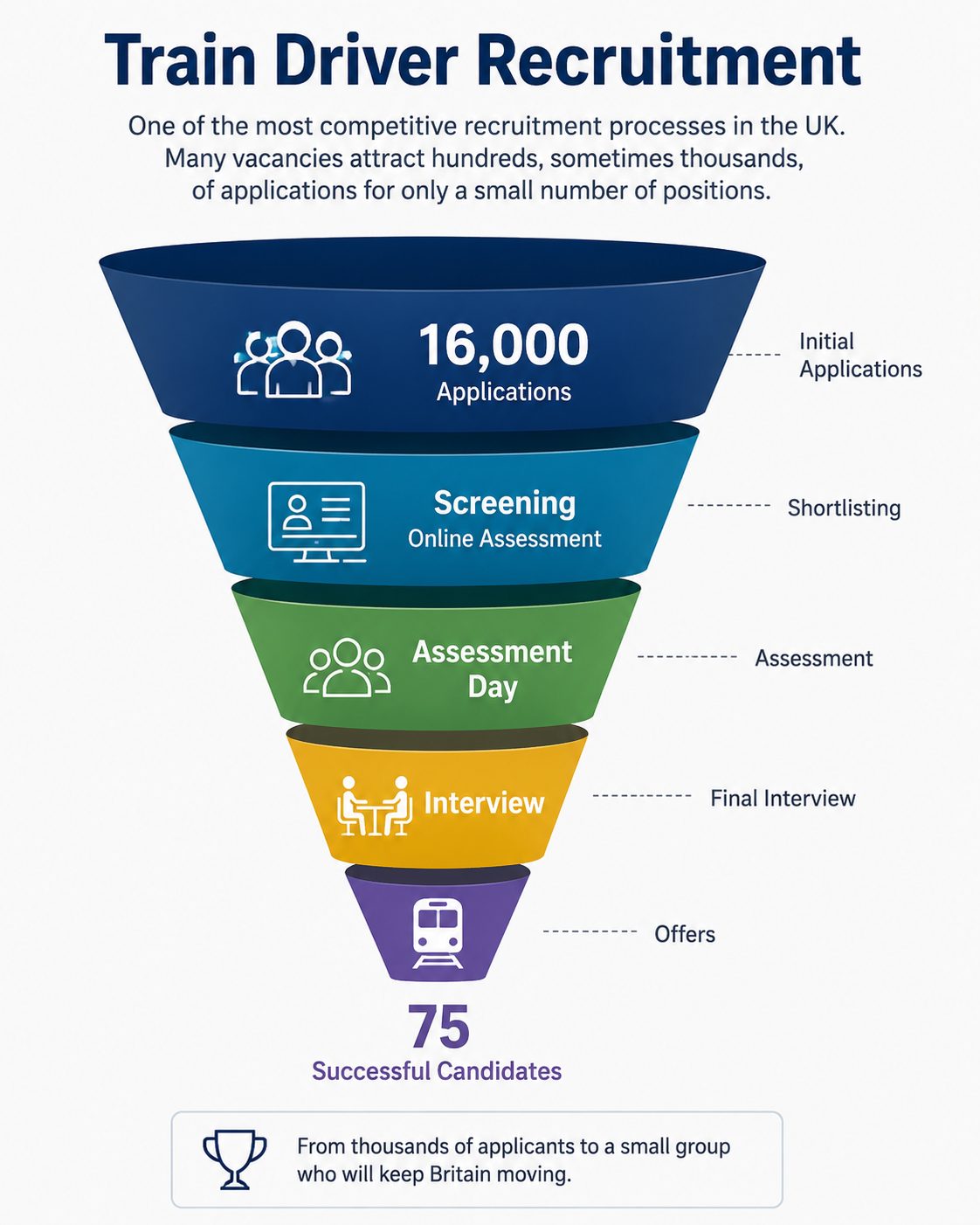
It also does not guarantee success in a trainee train driver campaign. TOCs assess candidates against their own criteria and recruitment stages. These can include application screening, psychometric assessments, structured interviews and further checks. Your preparation should reflect the full process, not concentrate on a single course certificate.
The right way to present the learning on a CV or application is accurately. State the course title, provider and completion date, then explain briefly what it developed: for example, awareness of railway safety principles, operational discipline or risk-based thinking. Do not suggest that it gives you a competence or access permission that it does not provide.
How to use the learning in your career preparation
The most useful course completion is one you can apply thoughtfully. Rather than treating it as another item on a list, consider how it changes the way you prepare for a safety-critical role.
Start by reviewing your existing experience. You may have worked in environments where procedures mattered, such as aviation, manufacturing, emergency services, warehousing, engineering or the military. Identify examples where you followed a process under pressure, identified a hazard, challenged an unsafe practice or communicated a concern clearly. Keep the example factual, focus on your own actions and explain the outcome.
Next, connect that experience to the expectations of railway work without overclaiming. Saying that you understand the importance of rule compliance and clear communication is credible. Claiming to know how a particular railway operation is conducted without formal training is not. Recruiters respond well to candidates who are motivated, informed and appropriately humble about what they still need to learn.
Finally, use the course as part of a structured development plan. Train Driver Foundation’s CPD-focused learning can sit alongside CV preparation, assessment practice and interview development. Each element has a different purpose. Course learning develops operational understanding; interview preparation helps you present your evidence clearly; psychometric practice helps you become familiar with relevant assessment formats while maintaining test integrity.
Choosing a course that supports genuine readiness
Before enrolling, look beyond the course title. Personal track safety is a serious subject, so the provider should describe the learning outcomes clearly and avoid implying that a short online course creates immediate eligibility for track-based work.
Ask four practical questions:
- Is the course clear about whether it is introductory CPD or a formal competence programme?
- Does the content focus on safe behaviours, risk awareness and professional responsibility?
- Can you explain how the learning relates to your target role without overstating it?
- Does it fit into a wider plan for applications, assessments and interviews?
A course is most valuable when it helps you make better career decisions. You may find that the operational discipline of rail confirms your interest. Equally, you may recognise that you need more time to build evidence of safety-focused behaviour before applying. Both outcomes are useful because they make your next step more informed.
Building the right safety-critical mindset
The railway needs people who can learn, follow standards and remain dependable when routine changes. Personal track safety learning offers an early view of that expectation. It can show that safe performance is built through preparation, communication and consistent judgement, not confidence alone.
Approach the course with the same professionalism you would bring to a future role: take the learning seriously, reflect on what it means for your behaviour and be honest about its limits. That habit of careful preparation will serve you well long before you reach the driving cab or any other safety-critical railway position.