



Rail automation is often presented as a threat to the driving grade. For aspiring train drivers, that framing is too simplistic. Automation is changing parts of railway operation, particularly signalling, train control, asset monitoring and traffic management. It is not removing the need for safety-critical professionals who can maintain concentration, follow rules precisely and make sound decisions when conditions are not routine.
If you are preparing for a trainee train driver application, the practical question is not whether technology will matter. It will. The better question is how you can show a Train Operating Company that you are ready to work professionally alongside increasingly sophisticated systems.
What rail automation means in practice
Rail automation covers a wide range of technologies. Some support people in planning and monitoring the railway. Others can carry out defined driving or control functions under specific conditions. They should not all be treated as the same thing.
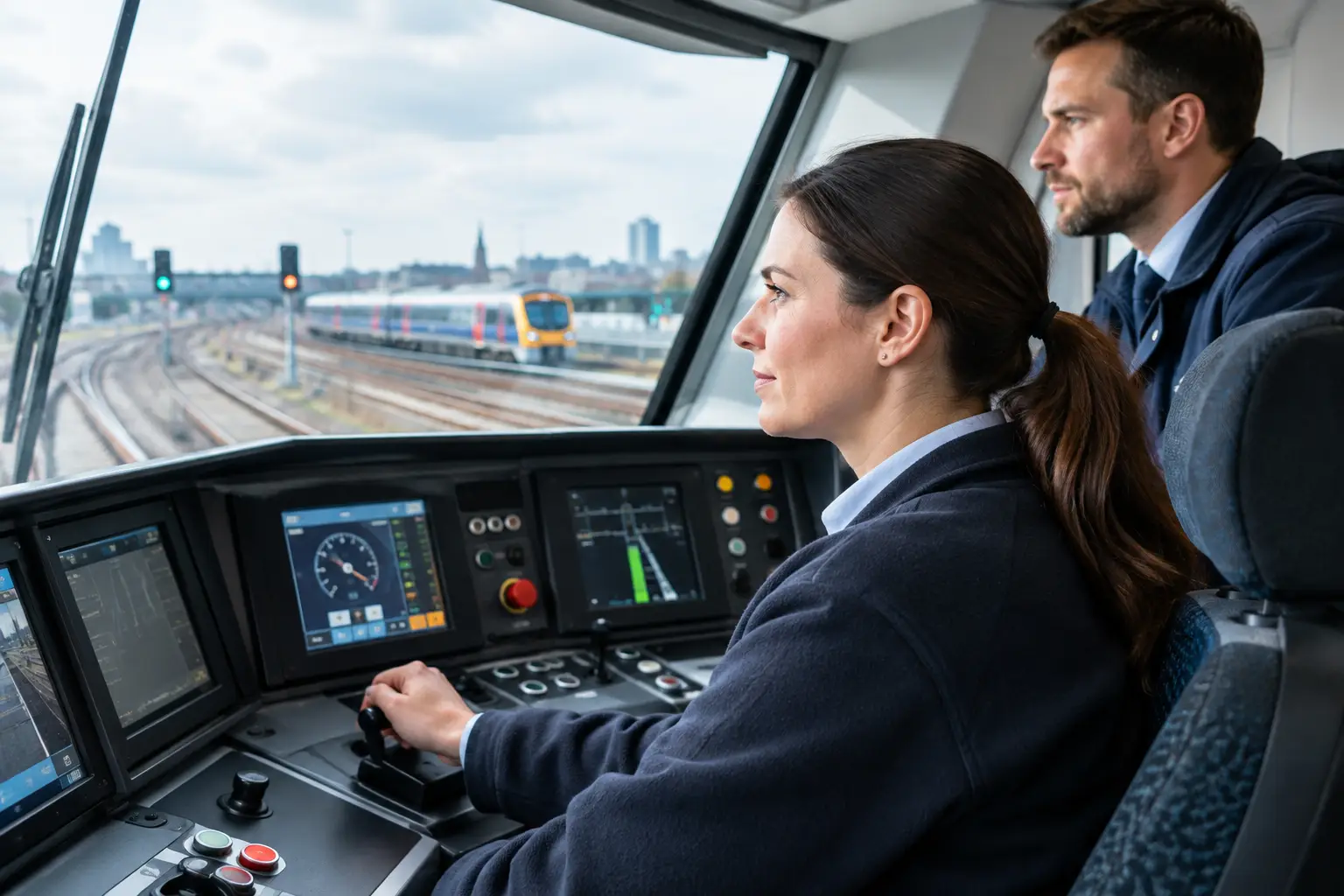
On parts of the network, digital signalling and train protection systems can supervise speed and movement authority more closely than traditional lineside signals alone. Automatic train operation may be used on particular routes or services, with a trained person still responsible for duties that extend beyond moving the train. Elsewhere, automation may be more visible behind the scenes through condition monitoring, timetable regulation, passenger information and maintenance planning.
The UK railway is not one uniform operating environment. Infrastructure, rolling stock, route characteristics and local operating arrangements vary. That means the pace and form of technological change will differ between operators and locations. A candidate should be cautious of broad claims that all train driving will soon be automated, or that automation has no bearing on the role. Neither reflects the reality of a complex railway.
Automation changes tasks, not the safety culture
Technology can reduce certain routine demands and provide clearer information to those operating the railway. It can also introduce new interfaces, new procedures and a greater need to understand system limits. In a safety-critical role, competence is not simply about using a system when everything is normal. It is about applying training, maintaining awareness and responding correctly when circumstances require human judgement.
This is why the core professional expectations of train drivers remain highly relevant: disciplined rule compliance, sustained attention, calm communication, personal responsibility and a consistent approach to risk. Automation does not make these qualities less valuable. In many cases, it makes them more visible.
Will rail automation replace train drivers?
For applicants, the most useful answer is that it depends on the operation, the technology in use and the responsibilities attached to the role. A train driver is not merely someone who controls traction and braking. The role sits within a wider safety system involving passenger care, communication with control and signallers, route and traction knowledge, incident management and adherence to operating rules.
Even where systems perform defined driving functions, the railway still needs competent people to supervise operations, recognise when something is outside normal conditions and act within their competence. The responsibility to work safely does not disappear because a system is more advanced.
Automation may affect how future driving roles are designed and how training evolves. It may also create related opportunities in operations, control, fleet, maintenance and technical support. But it does not lower the standard expected of candidates. If anything, employers need people who can remain engaged rather than complacent when technology is assisting them.
A strong applicant therefore avoids two unhelpful positions. The first is resisting every change as though technology and professionalism are in conflict. The second is assuming that technology removes the need for operational discipline. A measured candidate understands that modern railways rely on both capable systems and capable people.
The skills that matter in an automated railway
Train Operating Companies recruit against the demands of a safety-critical job, not against a candidate's enthusiasm for gadgets. You do not need an engineering background to apply for trainee driver roles. You do need evidence that you can learn technical information, work to standards and take responsibility for the consequences of your actions.
Psychometric assessments and structured interviews are designed to explore capabilities that remain central as technology develops. These can include concentration, reaction to information, working memory, rule-based decision making and your approach to safety. Preparation should help you understand the format, practise professionally and arrive ready to give your best performance. It should never be about trying to bypass assessment integrity.
Operational thinking is a career advantage
Operational thinking means considering how an action affects safety, service delivery, colleagues and customers. It is not about pretending to know restricted procedures before you have been trained. It is about demonstrating a mature mindset.
For example, a good interview answer may show that you recognise the value of checking information, escalating concerns through the correct channels and avoiding assumptions. Someone from the Armed Forces, emergency services, aviation, logistics, manufacturing or another regulated environment may already have useful examples. Career changers from less formal settings can also draw on situations where they followed process, managed pressure, prioritised accuracy or raised a concern responsibly.
The strongest examples are specific. Explain the situation briefly, describe your responsibility, outline the action you took and state the result. Keep the focus on what you personally did and what you learned. Where safety or procedure was involved, do not inflate your role. Credibility matters more than drama.
Digital confidence should be practical
You do not need to present yourself as a rail technology expert. Recruiters are more likely to value a candidate who is comfortable learning new systems, follows instructions carefully and asks appropriate questions when unsure.
Digital confidence can be demonstrated through your approach to training and change. Perhaps you learned a new workplace system, kept accurate electronic records, used data to identify an issue or supported a controlled transition to a different process. Frame the example around accuracy, accountability and compliance, rather than claiming that technology alone solved the problem.
How to prepare for a changing role
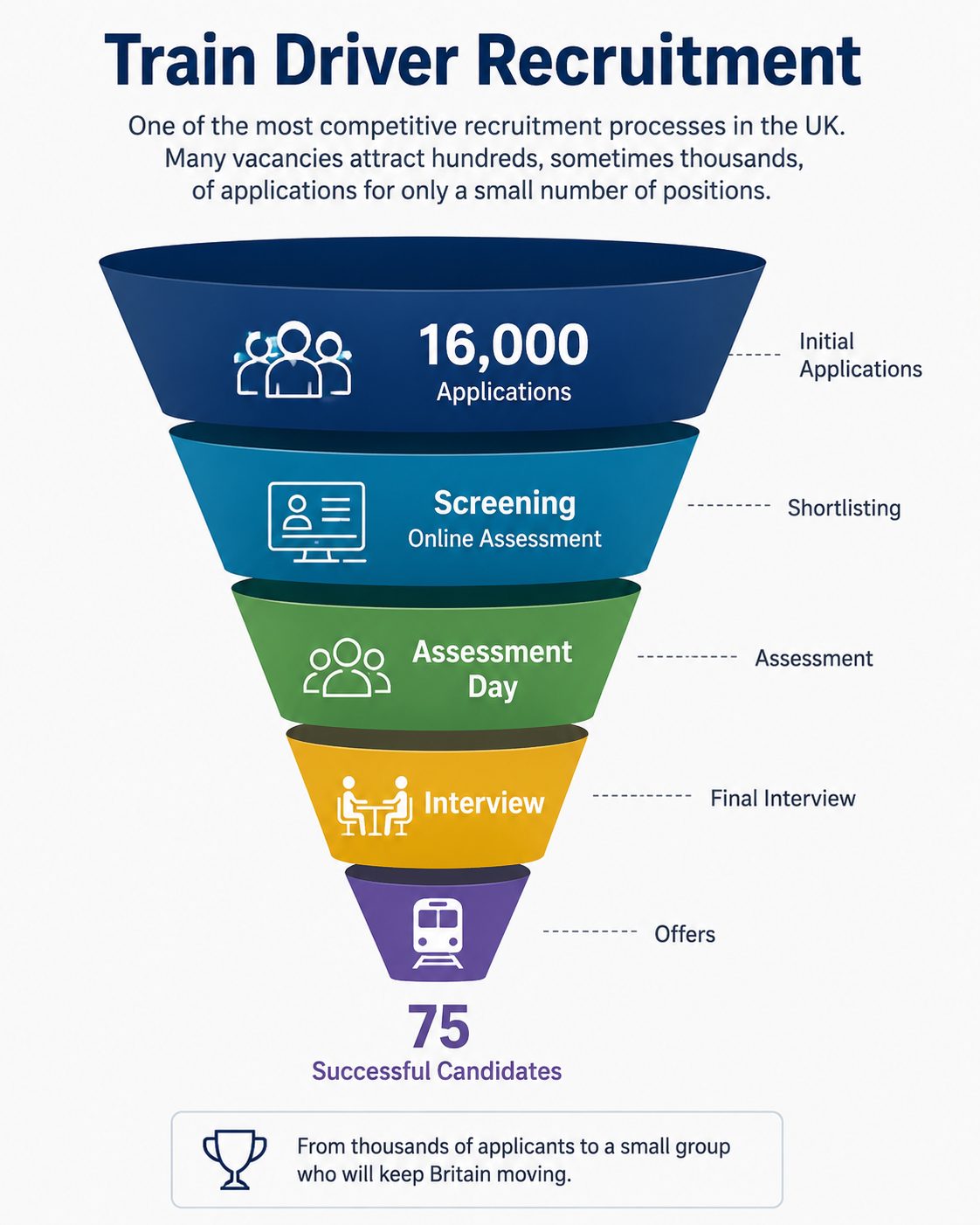
Start with the fundamentals of train driver recruitment. Check that you meet the stated eligibility criteria for the vacancy, read the job description closely and research the operator's route, depot and working patterns where this information is publicly available. Applications are competitive, so generic statements about loving trains are rarely enough.
Your CV should make operationally relevant strengths easy to find. Draw attention to roles involving safety, lone working, shift work, customer responsibility, procedures, reporting, technical learning or managing unexpected situations. Use plain language and evidence. A hiring manager should not have to guess why your previous experience is relevant.
Next, prepare for each recruitment stage with discipline. Familiarise yourself with the purpose of online assessments, practise within the rules and protect your performance conditions by arranging a quiet space, reliable equipment and enough time. For interviews, prepare examples that demonstrate safety awareness, concentration, communication, resilience and motivation for the realities of shift-based work.
CPD can also strengthen your readiness when it is relevant and genuinely completed. Introductory learning in operational thinking, risk-based decision making, personal track safety, traction and rolling stock can help you develop useful vocabulary and a more realistic understanding of railway work. It is not a substitute for employer training, and it will not guarantee an interview or job offer. It can, however, help you approach applications with better-informed motivation.
A professional view of the future
The railway will continue to adopt technology where it supports capacity, safety, reliability and better decision making. For future train drivers, that is not a reason to delay applying or to assume the role is disappearing. It is a reason to prepare for the job as it actually is: highly responsible, structured, technical and centred on safe human performance.
Candidates who are most ready for this future will show curiosity without overconfidence. They will respect the limits of their current knowledge, engage seriously with training and recognise that good automation depends on people who remain alert, accountable and operationally mature. Build those habits now, and you will be preparing for more than a recruitment process - you will be preparing for the standards the railway expects throughout a career.