

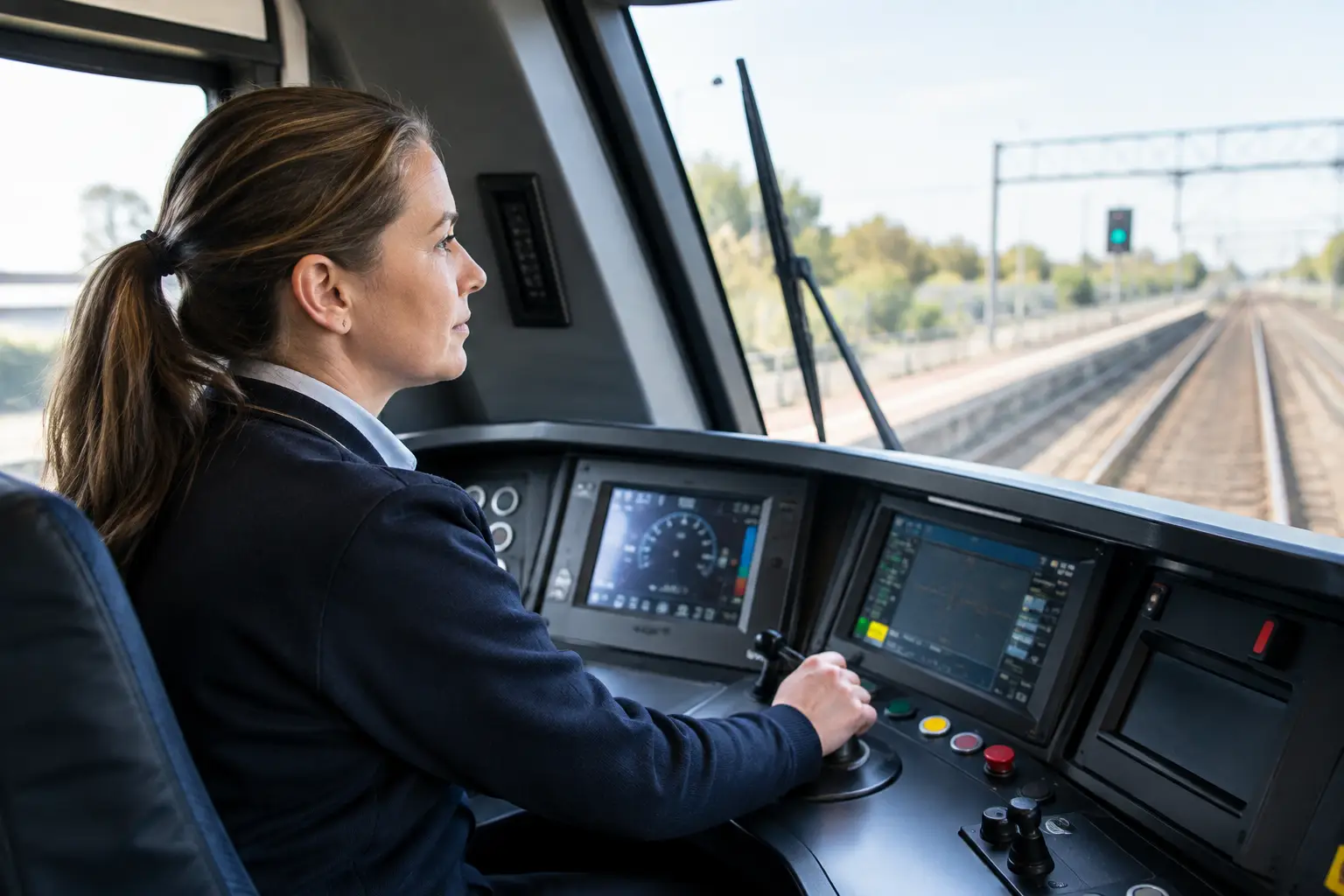
A trainee train driver application can be rejected long before an assessment or structured interview is offered. The reason is not always a lack of relevant experience. Often, the CV has failed to make that experience clear, specific and relevant to a safety-critical role. This rail CV checker review explains where automated CV feedback can help, where it has limits, and how to use it properly when preparing for rail recruitment.
For applicants moving from the Armed Forces, logistics, retail management, engineering, public services or another operational career, the challenge is usually translation. You may already have the habits a Train Operating Company values: following procedures, maintaining concentration, communicating clearly and responding professionally when plans change. Your CV needs to evidence those habits rather than simply state that you have them.
What a rail CV checker should assess
A rail CV checker is most useful when it does more than scan for spelling mistakes or generic keywords. For trainee train driver and other safety-critical applications, it should help you identify whether your CV is presenting the right evidence in a clear, professional format.
At a practical level, the tool should highlight unclear wording, repeated phrases, weak action statements and sections that are difficult to read. It may also flag whether your employment history appears incomplete, whether dates are consistent and whether your personal profile is too broad to add value.
More importantly, a rail-focused check should prompt you to consider relevance. A CV for this type of role needs to show a pattern of dependable behaviour. That may include working accurately under pressure, complying with procedures, managing fatigue responsibly, making sound decisions, reporting issues and maintaining high standards without constant supervision.
The checker cannot invent this evidence for you. Its value lies in showing where the evidence may be buried, vague or absent from the document.
Rail CV checker review: where it adds real value
The strongest reason to use an AI CV checker is speed. Before submitting an application, you can receive an objective first pass on structure, readability and content coverage. That is particularly helpful if you have spent years in one industry and are unsure whether your terminology will make sense to a rail recruiter.
A good tool can also expose familiar weaknesses. Many candidates use phrases such as “hard-working”, “good team player” or “excellent communication skills” without supporting examples. Those statements are not necessarily wrong, but they carry little weight on their own. A checker can prompt you to replace them with evidence from your work history.
For example, instead of writing that you are “safety conscious”, describe a genuine responsibility: completing pre-use checks, applying a documented procedure, escalating a defect, delivering a safety briefing or stopping work when conditions were not safe. The relevant detail will vary by background, but the principle is the same. Show what you did, the standard you worked to and the outcome.
There is also value in consistency. A CV checker can identify a profile that claims attention to detail while containing avoidable errors, inconsistent tense or confusing formatting. In a competitive, safety-critical process, presentation is not a substitute for experience, but it affects how easily a recruiter can assess your suitability.
Where automated feedback has limits
An automated result should not be treated as a recruitment decision. It does not know the full requirements of a particular vacancy, the scoring approach used by a specific TOC or the quality of your real-world judgement. It can identify patterns in the text, but it cannot fully assess context.
This matters because a CV can be optimised too aggressively. Repeating rail terms simply because they appear relevant may make the document sound forced, especially if you do not have direct railway experience. Recruiters are looking for credible, transferable evidence, not a collection of phrases copied from a job advert.
A checker also cannot reliably decide whether an example is your best one. A former warehouse supervisor, for instance, may have several examples of working under pressure. The strongest example might be the one that shows calm decision-making, accurate records, clear communication and procedure compliance together. That requires judgement about what a safety-critical employer is likely to value.
Privacy deserves consideration too. Before uploading a CV to any digital service, check what personal information is requested and avoid including more than is necessary. Your full postal address, date of birth, reference contact details and other sensitive information are rarely needed for an initial CV review.
How to use a CV checker without weakening your application
Start with your own draft. Write an honest CV based on your employment history, qualifications and responsibilities before asking a tool to review it. If you begin by trying to match every possible keyword, the result can become generic and difficult to defend at interview.
Next, review the feedback in categories. Correct straightforward issues first: spelling, grammar, inconsistent dates, poor formatting and unclear headings. Then consider relevance. Ask whether each role demonstrates something useful for a trainee driver application, even where the industry itself is different.
After that, strengthen selected bullet points with specific evidence. You do not need to turn every duty into a lengthy story. One or two well-chosen responsibilities beneath each relevant role are often more effective than a dense list of routine tasks. Use direct language and avoid claims you cannot discuss confidently later.
Finally, read the CV as a recruiter would. Can someone understand your career history quickly? Can they see why you are interested in rail? Does the document show reliability, operational discipline and professional communication? If the answer is unclear, the issue may be positioning rather than formatting.
What a stronger trainee driver CV communicates
A well-prepared CV should create a coherent picture of your working approach. It does not need to claim that you are already a train driver. It should show that you understand the standard expected in a role where concentration, rules, personal responsibility and public confidence matter.
Your strongest evidence will commonly relate to four areas:
- Safety and compliance: following procedures, completing checks, reporting hazards and maintaining required standards.
- Concentration and accuracy: monitoring information, working methodically, maintaining records and noticing when something is not right.
- Communication and teamwork: giving clear updates, handing over work correctly and working constructively with colleagues.
- Reliability and judgement: managing time, working shifts where relevant, responding calmly to disruption and knowing when to seek support or escalate an issue.
These themes should arise naturally from your actual experience. A customer service role may demonstrate calm communication during disruption. A military background may show disciplined procedure use and accountability. Engineering, manufacturing and transport roles may provide strong evidence of inspections, planning and defect reporting. The task is to select examples that are true, concise and relevant.
Is a rail CV checker worth using?
For most first-time rail applicants, yes, provided it is used as one part of a structured preparation process. It can improve clarity, catch avoidable mistakes and help you recognise whether your experience is being presented in language a rail recruiter can understand.
It is less useful when treated as a shortcut. No score or set of automated suggestions can replace careful reading of the vacancy, honest self-assessment or preparation for the later stages of recruitment. A CV may open the door, but your application, assessments and interview responses must all reflect the same professional standards.
Train Driver Foundation's approach is to treat CV preparation as an early readiness check, not a box-ticking exercise. The best final version is one that remains truthful in your own voice while making your operational strengths easy to identify.
Before you submit, give yourself time away from the document, then review it once more with fresh eyes. A clear CV will not guarantee an outcome, but it gives your genuine experience the best opportunity to be properly considered.