




Most rail CVs fail for a simple reason - they read like generic job histories when the role demands evidence of safety, discipline and operational judgement. If you are applying for trainee train driver positions or other safety-critical roles, rail industry CV tips need to be more specific than standard career advice.
A recruiter is not only scanning for experience. They are looking for signs that you understand the working environment you want to join. That means your CV should show reliability, rule-following, concentration, communication and accountability in a way that makes sense for rail recruitment. You do not need railway experience to do that well, but you do need to present your background properly.
Rail industry CV tips that matter most
The strongest CVs for rail roles are focused, evidence-based and easy to assess quickly. They do not try to impress with buzzwords. They make it straightforward for a recruiter to see that the applicant has habits and behaviours suited to safety-critical work.
Start with relevance. If your CV opens with a vague personal profile about being hardworking and motivated, it wastes valuable space. A stronger opening explains the kind of role you are targeting and the strengths you bring that align with rail. For example, experience in transport, logistics, the Armed Forces, emergency response, customer operations or industrial environments can all be highly relevant if framed correctly.
Your profile should sound measured and professional. State that you are pursuing a safety-critical career, then support that with two or three concrete themes such as rule compliance, shift work, incident awareness, customer responsibility or high-concentration working. This gives the rest of the CV direction.
Show operational suitability, not just employment history
One of the most useful rail industry CV tips is to stop thinking like a general applicant and start thinking like a safety-critical candidate. Your job titles matter, but the responsibilities under them matter more.
If you worked in retail, for example, the most relevant detail may not be stock control. It may be cash handling accuracy, opening and closing procedures, lone working, conflict management and adherence to company policy. If you worked in the military, a depot, aviation, warehousing or public transport, your CV should bring forward the parts of the job that demonstrate discipline, situational awareness and procedural consistency.
This is where many applicants undersell themselves. They list duties instead of evidence. Compare “responsible for daily operations” with “followed strict shift handover procedures, completed safety checks and maintained accurate operational records”. The second version gives a clearer picture of behaviour and standards.
That does not mean forcing rail language into every line. Recruiters can tell when wording feels artificial. The better approach is to identify the real demands of your previous roles and describe them in a way that highlights transferable value.
Use achievements carefully
Achievements help, but only if they match the type of role. Awards for sales performance may be less useful than examples showing consistency, attendance, compliance or calm decision-making under pressure. In rail recruitment, strong evidence often looks steady rather than dramatic.
If you have examples of reducing errors, maintaining service standards, following strict procedures or supporting safe operations, include them. If your background is heavily customer-facing, show how you remained professional, accurate and composed in demanding situations. That balance is often more persuasive than broad claims about leadership.
Structure your CV for fast assessment
Recruitment teams may review a high volume of applications, so presentation matters. A rail CV should be clear and restrained. Keep formatting simple, section headings obvious and dates easy to follow. Avoid graphics, icons, coloured skill bars and decorative layouts. They rarely improve your application and can distract from the content.
A practical structure usually includes a short profile, key skills, employment history, education and any relevant training or licences. The order can vary slightly depending on your background. If you have strong operational training, shift-based work or safety-critical certifications, it may make sense to bring those higher up.
Your key skills section should not be a soft list of empty terms. Instead of writing “team player” and “good communicator”, use sharper phrases such as “procedural compliance”, “shift handover communication”, “working under time-critical conditions” and “accurate record keeping”. These are more useful because they point towards role-relevant behaviour.
Keep your writing specific
Vague wording weakens confidence. Phrases like “worked in a fast-paced environment” or “good at dealing with pressure” are overused and difficult to verify. Replace them with practical detail. Explain what the pressure involved, what standards had to be maintained and how you met them.
For instance, if your role involved early starts, rotating shifts, strict deadlines or safety checks before service began, say so. These details matter because they show familiarity with operational discipline. They also help recruiters judge whether you have realistic expectations about the work.
Tailor your CV to the role and operator
Not every rail role asks for the same emphasis. A trainee train driver application should lean heavily into concentration, safety culture, personal responsibility, rules-based working and emotional control. A station or customer operations role may place more emphasis on public-facing judgement, disruption handling and communication. Maintenance and engineering roles may require more technical detail and evidence of compliance.
That is why tailoring matters. A generic rail CV is still generic. Read the advert carefully and look at the language used in the person specification. If the role refers to working alone, following procedures, remaining calm under pressure and maintaining standards, your CV should reflect those themes with real examples.
Be careful, though, not to copy wording line for line. Recruiters want alignment, not imitation. Your task is to prove fit through your own history.
Address career changes with confidence
Many applicants to trainee train driver roles are career changers. That is not a weakness. In fact, mature candidates often bring strong evidence of discipline, attendance, customer responsibility and operational steadiness. The issue is usually not their background but how they explain it.
If you are moving from another sector, avoid apologising for not being from rail. Instead, make the transfer clear. Show that you understand the demands of a safety-critical environment and that your previous roles have prepared you in meaningful ways. A bus driver, prison officer, dispatcher, warehouse team leader, paramedic, police officer or service leaver may each have highly relevant examples, but the relevance must be visible on the page.
It can also help to include relevant CPD or introductory rail learning if you have completed it. This shows commitment and helps bridge the gap between your past experience and your intended direction. Used properly, it signals seriousness rather than guesswork.
Common mistakes that weaken rail CVs
The biggest mistake is being too broad. Saying you are reliable, motivated and passionate about rail tells a recruiter very little unless the rest of the CV proves it.
Another common error is overloading the document with every job duty from the last ten years. A CV is not a complete career archive. It is a selection document. Keep the most relevant detail and trim anything that does not support your suitability.
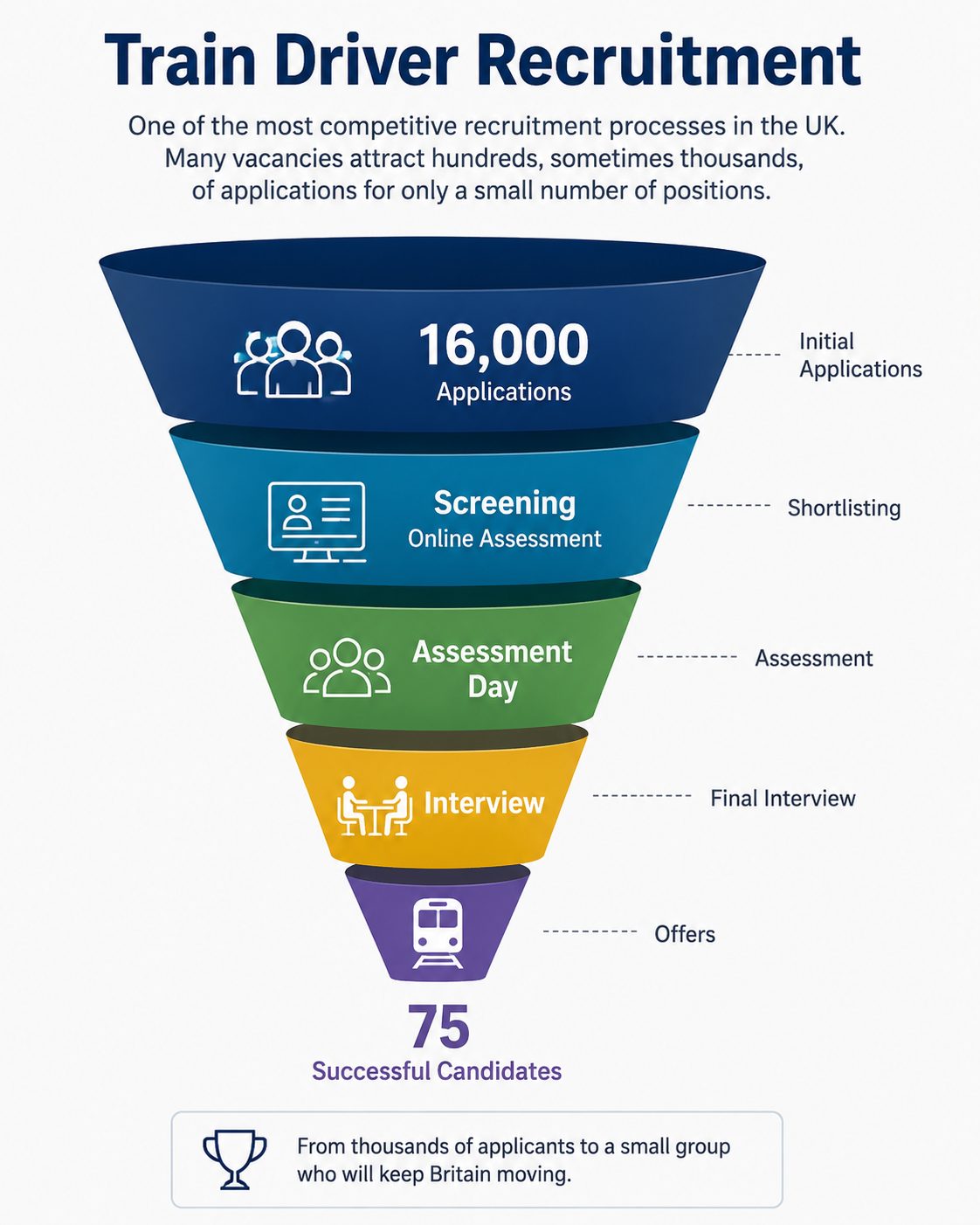
Poor grammar, inconsistent dates and cluttered formatting also create avoidable doubt. In competitive recruitment, small presentation issues can affect how carefully your application is viewed. This is especially true when the role requires concentration and accuracy.
Some applicants also focus too much on wanting the job rather than showing they can do the job. Motivation matters, but readiness matters more. Your CV should give evidence that you can work to standards, absorb procedures and act responsibly in an operational setting.
Before you send your CV
Read your CV as if you were the recruiter. Can someone who does not know you identify safety-critical potential within the first half page? Can they see evidence of discipline, consistency and sound judgement? If not, the content may still be too generic.
Ask yourself whether each line earns its place. If a sentence does not show relevance, remove it or rewrite it. Strong CVs are usually tighter, not longer.
If possible, get your CV reviewed by someone who understands train driver recruitment rather than general employability advice. Rail applications are not judged in the same way as many office roles, and specialist feedback can make your experience read more clearly against the standard expected.
A good rail CV does not try to sound impressive. It sounds credible. When a recruiter can quickly see that you understand safety, responsibility and operational discipline, your application starts on firmer ground - and that is exactly where a rail career should begin.