




A candidate can score well on a broad online aptitude quiz and still feel unprepared when facing rail selection. That is the central issue with rail psychometric practice vs generic aptitude tests: both may involve reasoning, concentration and accuracy, but they do not necessarily prepare you for the same standard of work or the same recruitment context.
For trainee train driver applicants, the aim is not simply to become quicker at tests. It is to demonstrate the reliable, controlled thinking expected in a safety-critical role. Generic practice can have a place, particularly at the beginning of your preparation, but role-specific practice helps you understand what the assessment process is seeking and how to approach it professionally.
Why generic aptitude tests are only a starting point
Generic aptitude tests are designed for a wide audience. They may assess verbal reasoning, numerical reasoning, abstract reasoning, spatial awareness or basic attention. Used sensibly, they can help you become familiar with timed questions, instructions and the discipline of working accurately under pressure.
That familiarity matters. Many capable applicants have not sat formal assessments since school, college, university or a previous recruitment process. A few generic exercises can reduce the initial shock of working to a time limit and highlight practical issues such as rushing, losing focus after an error or misunderstanding what a question is asking.
The limitation is context. A broad aptitude platform is usually built to suit office, retail, management, technical and graduate recruitment alike. Its questions may be useful measures of general ability, but they are not necessarily structured around the behaviours that matter most in rail operations.
A train driver recruitment process is assessing suitability for a role where concentration, rule-based working, alertness, careful information processing and consistency are fundamental. A candidate therefore needs preparation that reflects the demands of safety-critical assessment, without treating practice as a way to bypass standards.
Rail psychometric practice vs generic aptitude tests: the practical difference
The difference is not that one type of practice is automatically harder. It is that specialist rail-focused preparation is more relevant to the demands you are likely to encounter during a trainee driver selection process.
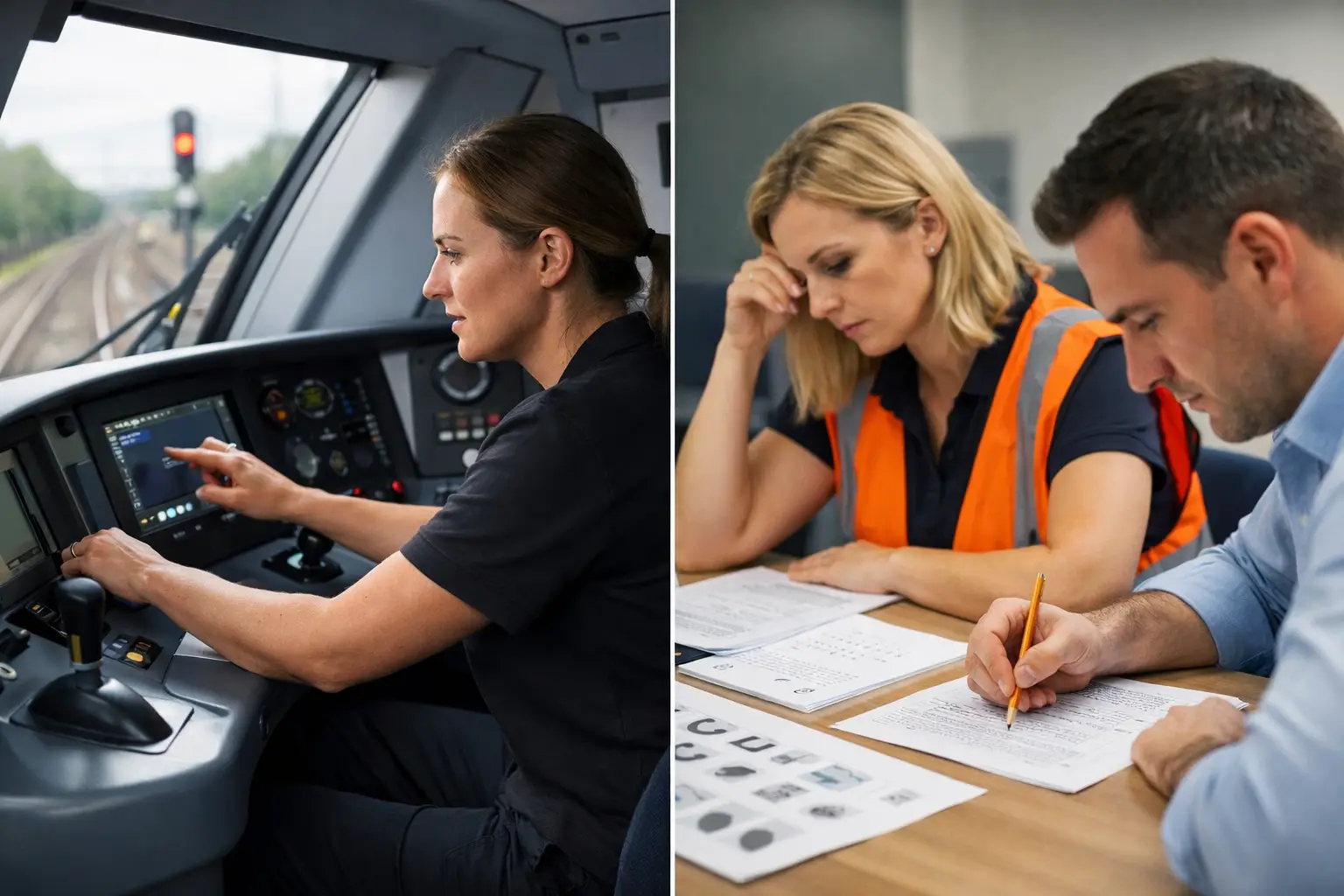
Rail psychometric practice is built around the kinds of cognitive demands associated with safety-critical operational roles. Depending on the employer’s process, this can include sustained attention, checking accuracy, responding consistently to changing information, following detailed instructions and managing pace without sacrificing care. The task may look straightforward at first, but maintaining the required standard across a timed exercise is often the challenge.
Generic aptitude tests, by contrast, can overemphasise areas that may not be central to your rail assessment. For example, completing complex numerical calculations or interpreting business-style passages may improve general test confidence, yet provide limited practice for exercises where focus, precision and procedural discipline matter more than advanced maths.
This does not make generic tests worthless. They are useful for building baseline comfort with assessment conditions. However, relying on them alone can create a false sense of readiness. You may become skilled at the format of a particular website rather than developing the habits needed to perform steadily in a rail-focused assessment environment.
What rail recruitment is trying to identify
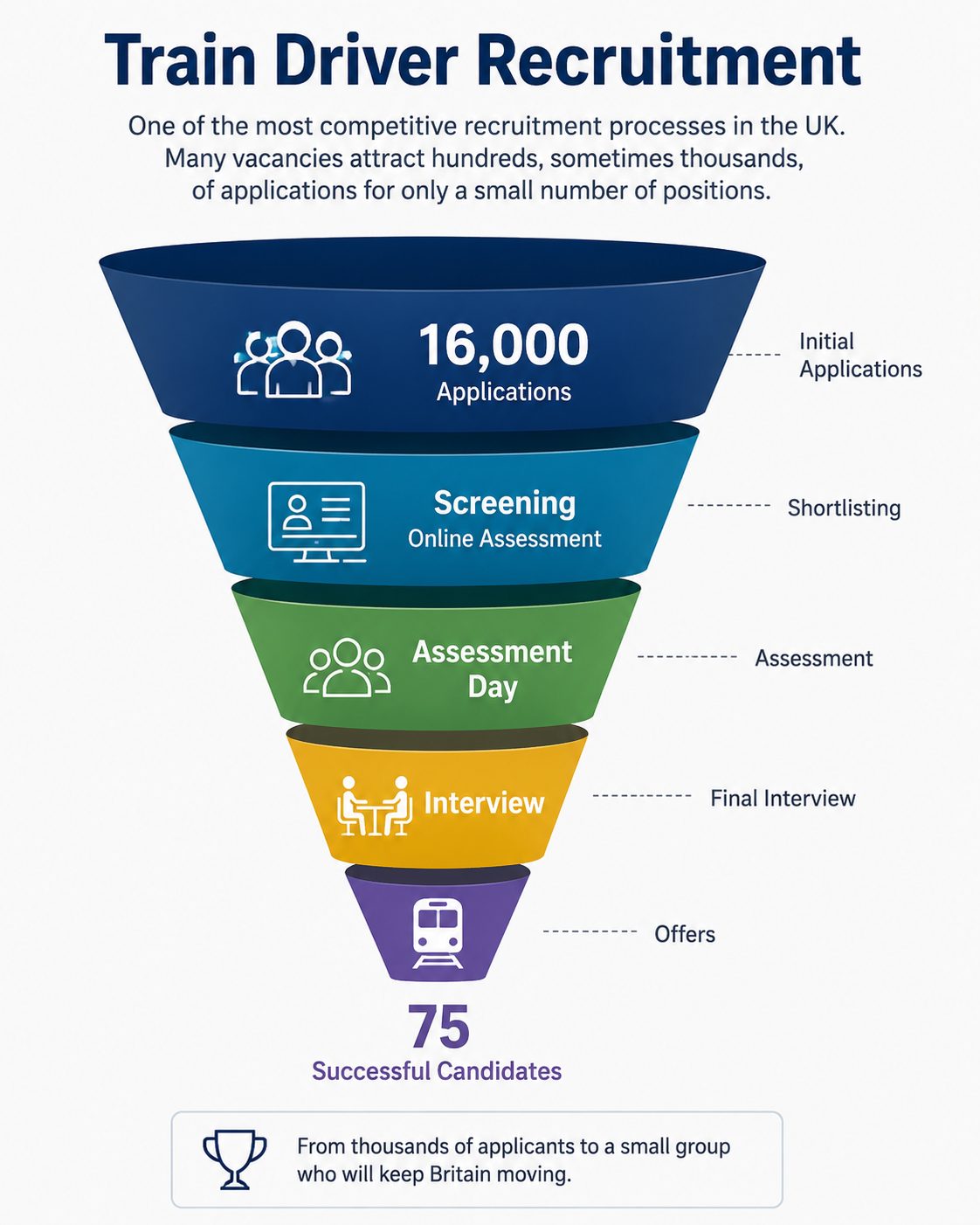
Train Operating Companies need to appoint people who can learn, follow and apply standards consistently over time. Psychometric assessment is one part of a wider selection process, alongside application screening, interviews, medical requirements and other stages set by the individual TOC.
The assessments are not intended to reward clever shortcuts or rehearsed tricks. They help employers understand whether an applicant has the underlying potential and behavioural approach for demanding operational training. This is why accuracy matters even when time pressure is present, and why a calm response to difficulty is more valuable than trying to force a fast answer.
Specialist practice can help candidates recognise these expectations. Rather than approaching every exercise as a puzzle to beat, you begin to approach it as evidence of how you work: whether you read instructions properly, maintain concentration, avoid assumptions and recover appropriately when a task becomes demanding.
That mindset also supports later stages. Structured interviews commonly explore examples of safety awareness, responsibility, communication, working to rules and managing routine. A preparation approach grounded in operational realism makes it easier to connect your assessment preparation with the professional standards expected throughout recruitment.
When generic tests can still help
Generic tests are most useful early in your preparation or when they address a clear personal development need. If you have not worked with timed assessments before, they can help you establish a routine, improve comfort with basic reasoning questions and identify whether you tend to work too quickly or too cautiously.
They can also be helpful between specialist practice sessions. A short numerical or verbal exercise may keep you used to reading carefully under time pressure. The key is to treat the result as feedback, not as a prediction of whether you will pass a rail recruitment stage.
Be selective. A large volume of unrelated quizzes can consume time that would be better spent understanding the role, preparing structured interview examples, reviewing your application and practising relevant assessment skills. Quality and relevance are more useful than collecting high scores on unfamiliar test formats.
How to use rail-specific practice properly
Effective preparation starts with the instructions. In safety-critical work, instructions are not background information to skim before beginning. They define the task. During practice, make a habit of pausing long enough to understand exactly what is required before you start working at pace.
Next, focus on consistency. Do not judge a session only by how many questions you complete. Consider whether your concentration stayed stable, whether your accuracy changed as fatigue set in and whether you noticed errors without becoming flustered. Those reflections are often more valuable than a single score.
It also helps to recreate sensible assessment conditions. Choose a quiet space, remove unnecessary distractions and complete the exercise in one sitting where possible. This is not about making practice stressful. It is about learning how you respond when you must sustain attention rather than work in short, interrupted bursts.
Finally, review patterns rather than obsessing over individual mistakes. If you repeatedly misread a rule, rush the final section or lose your place when information changes, address that specific habit. Slow down during instruction reading, use the practice method provided and build duration gradually. Improvement should be deliberate, not improvised.
Avoid the common preparation traps
One common trap is assuming that speed is the whole objective. Timed assessments do require an efficient pace, but careless speed can work against you. Aim for controlled progress: understand the rule, apply it consistently and keep moving without panicking when a question feels difficult.
Another is using only one provider or one type of exercise. Familiarity with a single layout can make practice scores look stronger than your broader readiness. Varied, relevant exercises are more useful because they require you to interpret instructions afresh and apply the same disciplined approach.
Candidates should also avoid treating online practice as a substitute for role research. You need to understand what a trainee train driver role demands beyond the test room. Read the vacancy carefully, check eligibility requirements, prepare evidence from your own experience and reflect on why safety-critical operational work suits you.
There is no identical practice version of every assessment used by every TOC, and recruitment processes can change. The realistic goal is to build transferable assessment discipline: concentration, accuracy, composure and respect for instructions.
A better preparation balance
For most applicants, a balanced plan works best. Begin with enough generic aptitude practice to become comfortable with test conditions. Then give the greater share of your time to rail-relevant psychometric practice and preparation for the wider recruitment process.
If a practice result is disappointing, do not assume it closes the door on a rail career. Use it to identify what needs work and prepare systematically. Equally, a strong score should not lead to complacency. Competitive trainee driver recruitment rewards candidates who remain thorough from application through to interview and assessment.
Train Driver Foundation supports candidates with rail-focused preparation designed to make the recruitment journey clearer, more structured and more relevant to the role. The value lies in preparing with purpose, not in chasing generic scores.
Approach each practice session as an opportunity to strengthen the professional habits the railway expects. That is a far more useful measure of readiness than how well you perform on an unrelated aptitude quiz.