



A train may be the visible part of the railway, but every safe journey depends on decisions made both in the cab and away from the platform. When comparing railway driver versus signaller roles, the question is not simply which job pays more or appears more interesting. Both are safety-critical careers with demanding standards, shift work and significant personal responsibility, but they require different strengths.
For candidates drawn to operational rail, understanding that distinction early can help you focus your preparation, choose relevant experience and apply for roles that genuinely suit the way you work.
Railway driver versus signaller roles: the core difference
A train driver is responsible for operating a train safely, professionally and in accordance with the route, signalling and operating requirements. The role is highly individual while in motion. A driver must sustain concentration for long periods, respond appropriately to changing conditions, manage the train’s performance and communicate clearly when needed.
A signaller manages the safe and efficient movement of trains across a defined area of railway. Their work involves monitoring the wider operation, setting and protecting routes, regulating traffic where necessary, responding to disruptions and communicating with drivers, control and other operational colleagues.
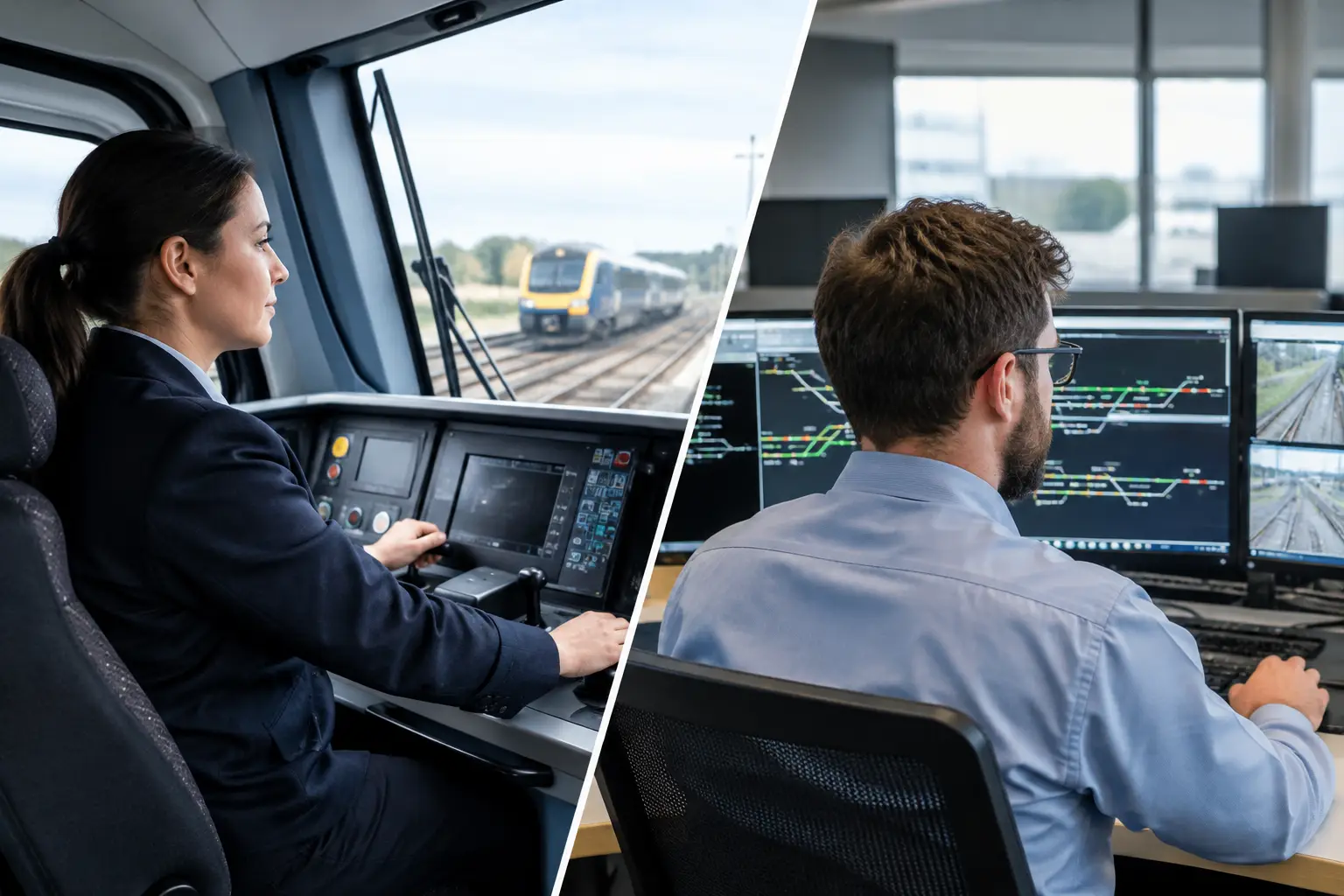
Put simply, the driver’s primary focus is the safe operation of their own train. The signaller’s focus is the safe movement of multiple trains and the railway around them. Neither role is more important than the other. They are interdependent parts of one safety system.
What the working day can feel like
Train driving often appeals to people who value independent, disciplined work. Although drivers work closely within a wider railway team, much of a shift is spent alone in the cab. That does not mean the role is quiet or passive. Drivers must remain alert, manage routine competently and be ready to act decisively if conditions change.
A typical shift can include preparing a train for service, checking relevant information, driving to the timetable, dealing with service variation and handing over accurately at the end of duty. The exact pattern depends on the operator, route, traction and depot. Passenger, freight, engineering and metro operations can all feel very different.
Signalling is generally more centred on continuous oversight and real-time coordination. A signaller may work in a signal box, signalling centre or another operational location, depending on the part of the network and technology in use. The pace can vary sharply. There may be periods of controlled routine, followed by a situation that requires several priorities to be assessed at once.
This makes the signaller role particularly suited to people who can maintain a broad operational picture, make measured decisions under pressure and communicate with precision. It is less about physically driving a train and more about directing the safe movement of traffic through a section of railway.
Safety responsibility in both careers
Both jobs carry substantial safety responsibility. That is why recruitment standards are demanding and why training is detailed, assessed and ongoing.
For drivers, safety depends on consistent concentration, rule compliance, route knowledge, train handling and sound judgement. The job demands the ability to follow established processes even when tiredness, disruption, time pressure or an unfamiliar event creates pressure. A driver cannot allow timetable concerns to override safe decision-making.
For signallers, safety responsibility involves protecting train movements, managing conflicting demands and ensuring that communication is clear and correctly understood. They must recognise when normal working has changed and apply the appropriate process rather than improvising.
The shared quality is operational discipline. Employers look for candidates who understand that safety-critical work is not about being naturally calm on one good day. It is about demonstrating reliable habits, attention to detail, situational awareness and professional judgement over time.
Skills that point towards train driving
Train driving may be a stronger fit if you are comfortable working independently for extended periods and can maintain focus through repetitive but important tasks. You should be able to absorb technical information, follow rules precisely and remain composed when faced with an unexpected situation.
The best candidates are not necessarily the loudest or most outwardly confident. Many successful drivers are methodical, self-aware and consistent. They understand their own limits, communicate professionally and take personal responsibility seriously.
Evidence from previous work can be valuable. Experience in transport, the Armed Forces, manufacturing, emergency services, logistics or other regulated environments may help you explain how you have followed procedures, worked shifts, maintained concentration and managed risk. However, rail experience is not always essential. What matters is whether you can show the behaviours the role requires.
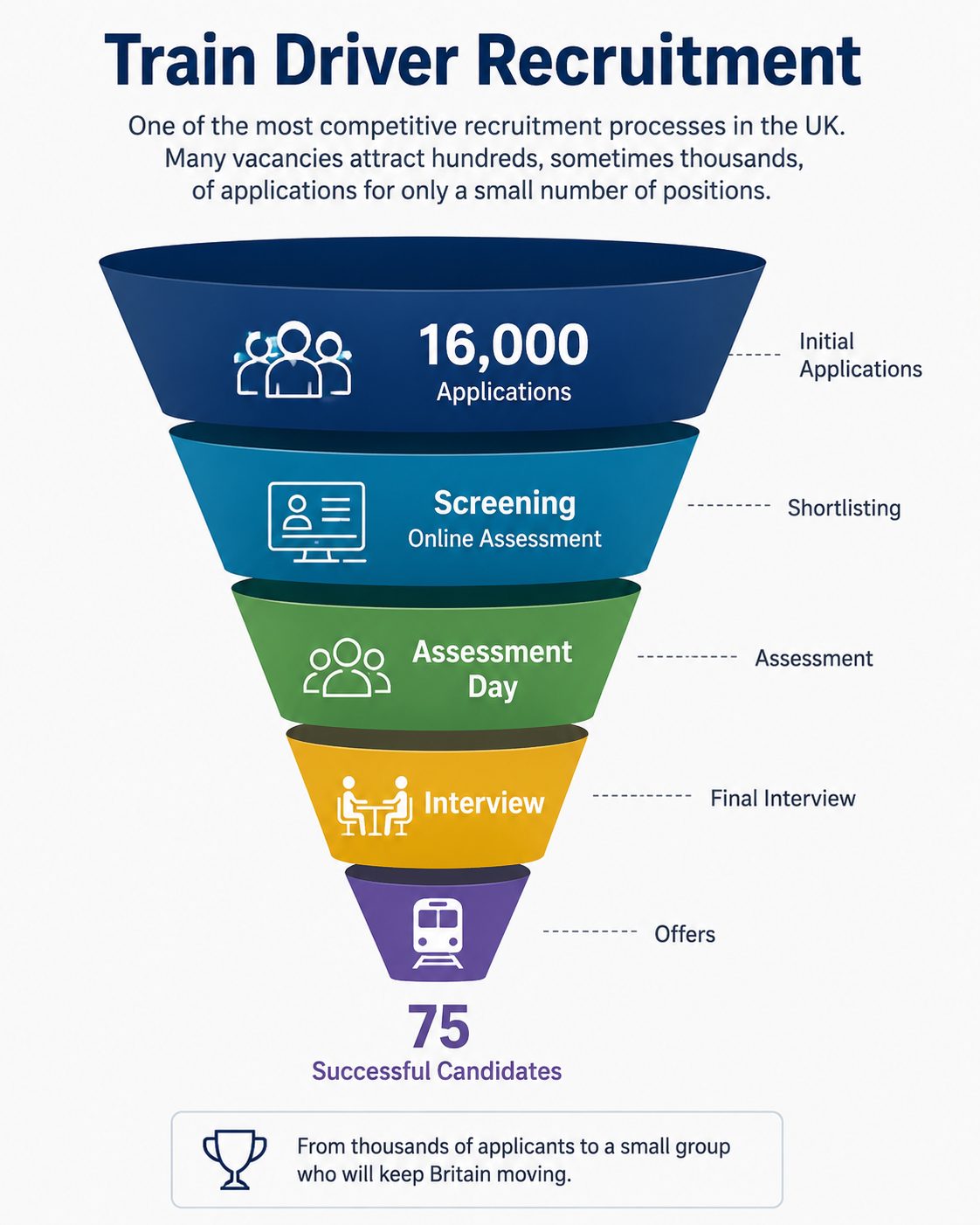
Train driver recruitment commonly includes an application process, online assessments, psychometric tests, structured interviews, medical assessment and other role-specific stages. Each Train Operating Company has its own process and requirements, so applicants should read vacancy information carefully rather than rely on assumptions from another campaign.
Skills that point towards signalling
Signalling may suit you if you naturally think in terms of the wider operation. You may enjoy monitoring several inputs, prioritising tasks and making decisions that affect multiple people. Strong communication is particularly important because a signaller’s instructions and information can have immediate operational consequences.
The work also rewards people who can stay organised in changing circumstances. You may need to deal with service disruption, engineering access, equipment issues or late-running services without losing sight of safety priorities. The ability to pause, assess and act in the correct order is more valuable than rushing.
Previous experience in operations, control rooms, aviation, logistics, the military, emergency response or customer-facing transport can provide relevant examples. Again, the sector matters less than the evidence. Recruiters will want to see how you managed competing demands, followed procedures and communicated accurately under pressure.
Signaller recruitment and training arrangements differ from train driver recruitment, and the employer will set the selection standards. Candidates should avoid treating either pathway as an easier alternative. Both roles require aptitude, resilience and a mature approach to responsibility.
Shift work, lifestyle and personal fit
Shift work is a reality in both roles. Early starts, late finishes, nights, weekends and bank holidays are common because the railway operates beyond standard office hours. Rosters vary between employers and locations, so it is sensible to consider the practical effect on childcare, travel, sleep and family commitments before applying.
For drivers, the working environment can be solitary for much of the shift. Some candidates find this highly rewarding, especially if they prefer focused work with clear individual responsibility. Others may find the lack of regular face-to-face interaction difficult over time.
For signallers, there is often more direct interaction with colleagues, although the role can still require intense concentration and periods of independent decision-making. The environment may be more desk-based or technology-led, but it is not an office job in the usual sense. Operational demands remain constant.
Neither choice should be based on a simplified idea of lifestyle. Ask yourself whether you can protect your sleep, arrive reliably for safety-critical duties and sustain professional performance outside conventional working hours. This is a practical career decision, not merely an interest in trains.
Training and progression
Both careers involve structured initial training followed by ongoing competence management. For drivers, training typically develops the knowledge and practical capability needed to operate specific trains and routes safely. The learning commitment is substantial, and trainees need to retain detailed information while applying it calmly in practice.
Signallers also undertake structured training relevant to their location and responsibilities. As technology, equipment and local working arrangements can differ, competence is closely connected to the operational area.
Progression can take different forms. A driver may build experience across routes, traction types or operational duties, depending on the employer. A signaller may progress through roles with broader or more complex responsibilities. Opportunities are shaped by local vacancies, business needs and an individual’s demonstrated competence.
For aspiring drivers, early CPD can be useful when it builds real operational understanding rather than simply adding certificates. Learning about risk-based decision-making, operational maturity, traction and rolling stock can help candidates speak more credibly about the standards of the role. Train Driver Foundation’s preparation resources are designed to help applicants approach this stage with a clearer understanding of what employers assess.
How to choose between the two
Start with the actual demands of the job, not the job title. If you want to be responsible for operating a train, value sustained independent concentration and are prepared for a long, structured learning journey, train driving may be the better direction. If you prefer coordinating a wider operation, processing several priorities and communicating across a live network, signalling may be a better fit.
It is also reasonable to find both roles appealing. In that case, review current vacancy requirements, compare shift patterns where they are available and consider which examples from your work history are strongest. A well-prepared application begins with an honest match between your capabilities and the role.
The railway needs people who respect process, think ahead and take pride in doing vital work properly. Choose the pathway where you can bring those qualities consistently, then prepare with the same discipline the role itself will demand.