



A trainee train driver vacancy can close within days, while the recruitment process that follows may take several months. That contrast catches many capable applicants out. Understanding the railway recruitment timeline helps you plan properly, protect your availability and prepare for each stage without letting the waiting period undermine your focus.
There is no single timetable used by every Train Operating Company (TOC). Vacancy volumes, depot requirements, assessor availability and the number of candidates already in process all affect the pace. What is consistent is the standard expected: train driving is a safety-critical career, so recruitment is deliberately structured and decisions are based on evidence gathered across several stages.
The railway recruitment timeline at a glance
From submitting an application to receiving a final outcome, a process may take anywhere from a few months to considerably longer. A long wait does not automatically indicate a negative result. TOCs may recruit for future training courses, process applications in batches or pause activity while operational requirements are reviewed.
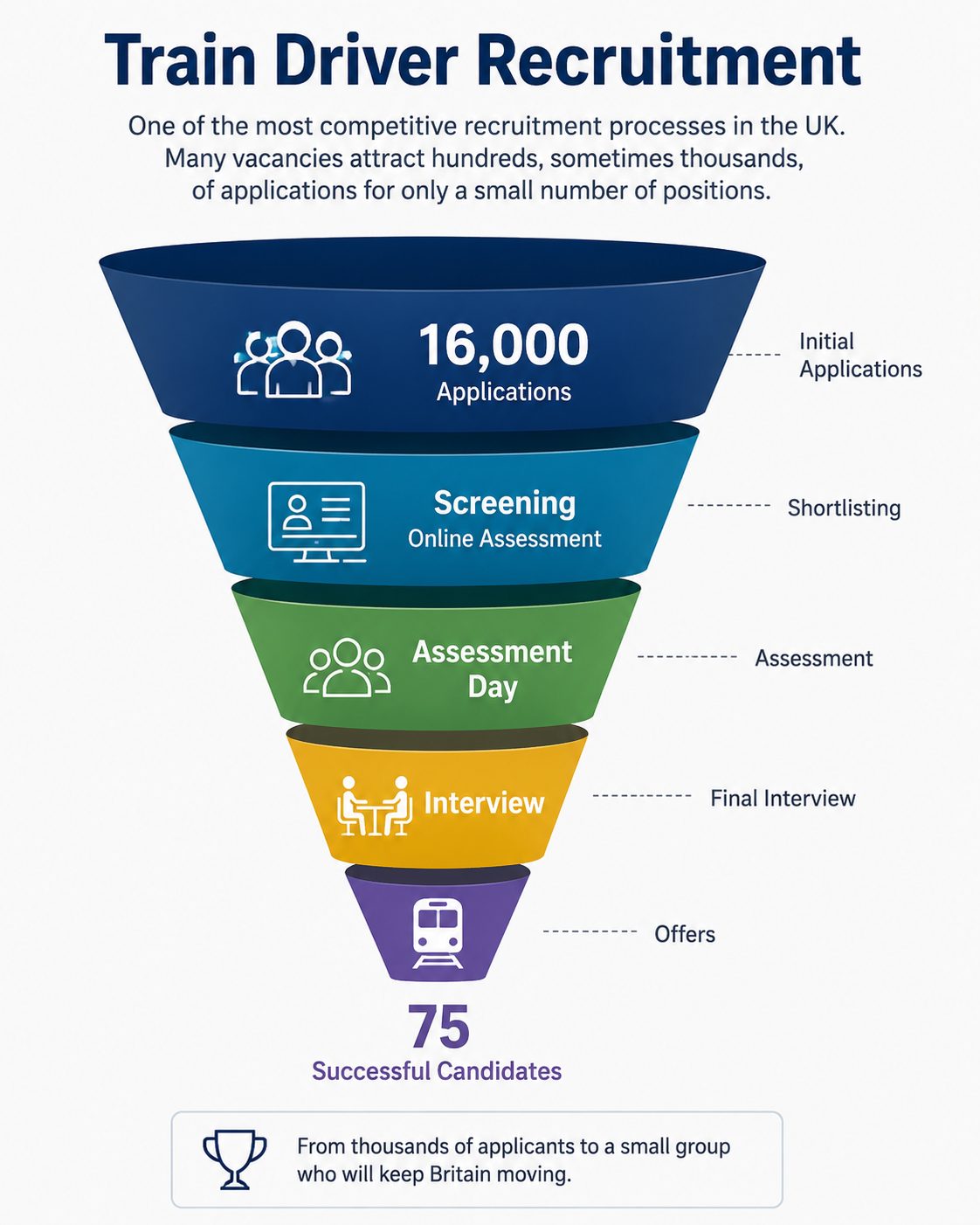
Most candidate journeys include application screening, online assessments or questionnaires, psychometric testing, a structured interview, a medical assessment and pre-employment checks. The order can differ. Some TOCs combine elements into an assessment day, while others invite candidates forward stage by stage.
The sensible approach is to treat every stage as live preparation. Do not wait for an invitation before reviewing your examples, practising appropriate assessment formats or checking that your documents are current.
Stage 1: Vacancy research and application submission
The timeline starts before you press submit. A strong application depends on understanding the specific role, depot location and eligibility requirements. Read the vacancy carefully, particularly residence or travel expectations, shift availability, prior application rules and essential criteria.
The initial review can be quick, but it may also take several weeks. At this point, recruiters are looking for evidence that you meet the stated requirements and that your career history demonstrates reliability, safety awareness, concentration, customer service where relevant, and the ability to follow procedures.
Your CV should be accurate, easy to follow and tailored to the role. Avoid sending a generic document that lists duties without showing responsibility or outcomes. Explain gaps honestly, use clear employment dates and ensure your contact details are correct. An application is not a formality - it is the first evidence of your professional standards.
Stage 2: Initial screening and online assessments
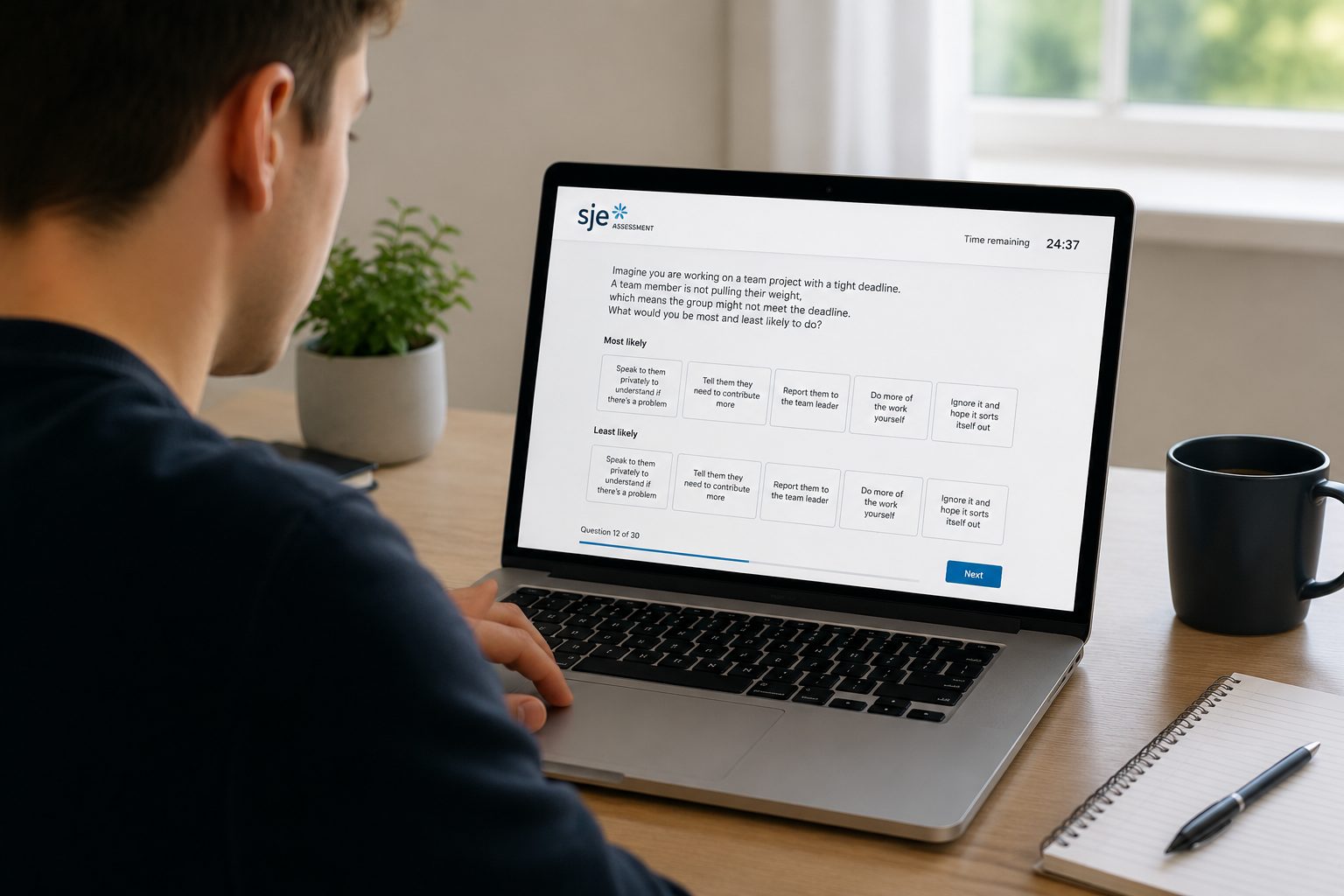
If your application progresses, you may be asked to complete online screening questions, situational judgement exercises or timed assessments. Invitations can arrive soon after the closing date, but some employers review all applications first and contact candidates later.
These assessments are not designed to reward guesswork or shortcuts. They help employers assess qualities relevant to safety-critical work, such as attention, rule adherence, concentration and decision-making. Complete them in a quiet setting, follow the instructions precisely and allow enough uninterrupted time. Technical problems should be raised through the employer's stated process as soon as they occur.
Preparation is useful when it is legitimate and role-focused. Familiarise yourself with the format of practice exercises, develop comfort working accurately under time pressure and learn how to manage your attention. Do not seek ways to compromise assessment integrity. The aim is to demonstrate your own capability consistently.
Stage 3: Psychometric assessment
Psychometric tests are often one of the most demanding parts of the railway recruitment timeline. Depending on the TOC and role, candidates may attend an in-person assessment session or complete elements remotely under controlled conditions. The invitation should explain what you need to bring, identification requirements, location details and the expected duration.
Results can take time to be confirmed, particularly where multiple assessment days are being run. Use that interval constructively. Keep your work and contact commitments manageable, but do not repeatedly chase for updates before the timeframe given by the recruiter has passed.
Effective preparation is not about trying to memorise answers. It is about becoming familiar with timed, accuracy-based work and establishing a calm routine for the day. Sleep, travel planning, food and punctuality matter. Arriving rushed or distracted makes it harder to show your normal level of concentration.
Preparing between recruitment stages
The periods between stages are where well-organised candidates often gain ground. Keep a simple record of every application: the TOC, vacancy reference, closing date, depot, stage reached, communication received and any action required. This prevents missed deadlines, especially if you have applied for more than one role.
Use the time to build a clear evidence bank from your work history. For a structured interview, you may need examples of following a process, identifying a risk, maintaining focus during repetitive work, dealing with an unexpected issue, communicating clearly and taking responsibility for an error. Your examples do not need to come from rail. They do need to be truthful, specific and relevant.
Write brief notes using a situation, action and result structure. Focus on what you did, why you did it and what you learned. In safety-critical recruitment, an answer that shows sound judgement, appropriate escalation and respect for procedures is stronger than a dramatic story with an unrealistic outcome.
Stage 4: Structured interview and manager assessment
Candidates who meet the required standard at earlier stages may be invited to a structured interview, sometimes alongside a manager interview or additional exercises. This can be scheduled within weeks, although demand and interviewer availability may extend the wait.
Expect questions that test motivation, understanding of the realities of shift work, personal responsibility, communication and safety-focused decision-making. A TOC is assessing whether your behaviours and expectations suit a role that requires sustained concentration, independent working and consistent compliance.
Prepare carefully, but do not rehearse scripted speeches. Interviewers need to understand your genuine experience and judgement. Research the employer, revisit the job description and practise explaining your examples aloud. If you have changed career, be ready to explain why train driving is a considered long-term move rather than simply an attractive job title.
A common mistake is focusing only on the appeal of the role. Balance your motivation with a realistic understanding of its demands: early starts, nights, weekends, fatigue management, learning requirements and the responsibility that comes with moving passengers and freight safely.
Stage 5: Medical assessment and pre-employment checks
A conditional offer or final-stage progression may be followed by a medical assessment and employment checks. The exact sequence varies, and passing an interview does not remove the need to meet the relevant health, identity, right-to-work and referencing requirements.
Medical assessments are part of ensuring that candidates can safely undertake the role. If you have a health condition, medication or concern, do not make assumptions based on online discussion. Provide accurate information when asked and follow the occupational health process. Decisions are made against role-specific standards and individual circumstances.
Pre-employment checks can take longer than candidates expect, especially where references, employment history or documentation need clarification. Respond promptly to requests, provide complete information and tell the recruiter if a referee may be difficult to contact. Trying to conceal an issue usually creates a greater problem than addressing it professionally.
What to do when the timeline goes quiet
Silence is frustrating, particularly after you have invested effort in tests or interviews. However, recruitment teams may be coordinating large candidate groups and operational training plans. Check your inbox and spam folder, keep your phone details updated and review any candidate portal used for the application.
If the stated update period has passed, a concise, courteous enquiry is reasonable. Confirm your name, vacancy reference and the stage you completed. Avoid sending repeated messages or treating an absence of immediate news as a result.
Continue developing while you wait. Relevant CPD can strengthen your operational understanding and give you useful language for future applications, but it does not replace the employer's selection process. Train Driver Foundation supports candidates with role-specific preparation that can help make this work more structured, from CV quality through to interview and assessment readiness.
The railway recruitment process asks for patience because the career asks for consistency. Keep your application accurate, your preparation disciplined and your expectations realistic. Each stage is an opportunity to show that you can approach a demanding, safety-critical profession with the care it deserves.