

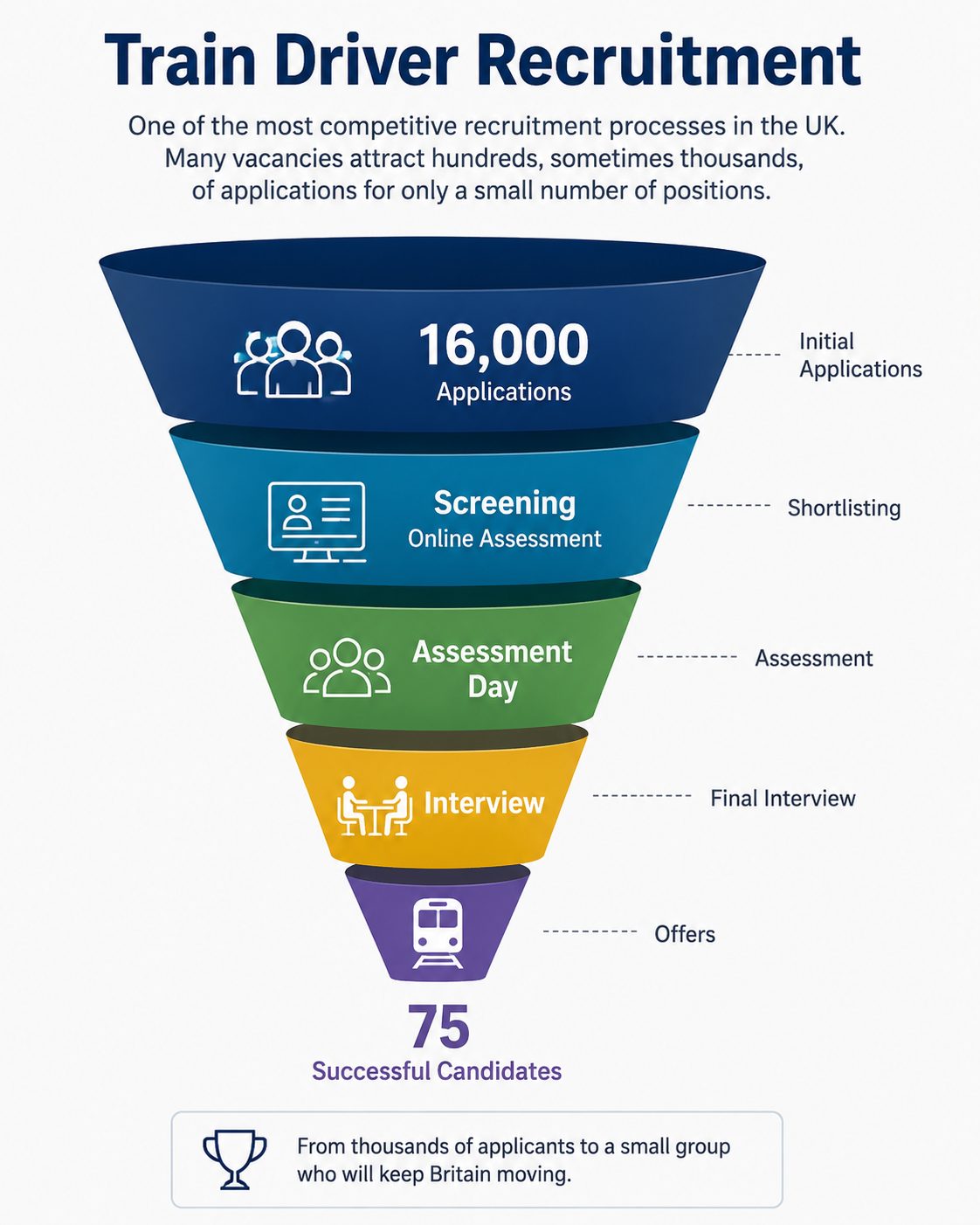



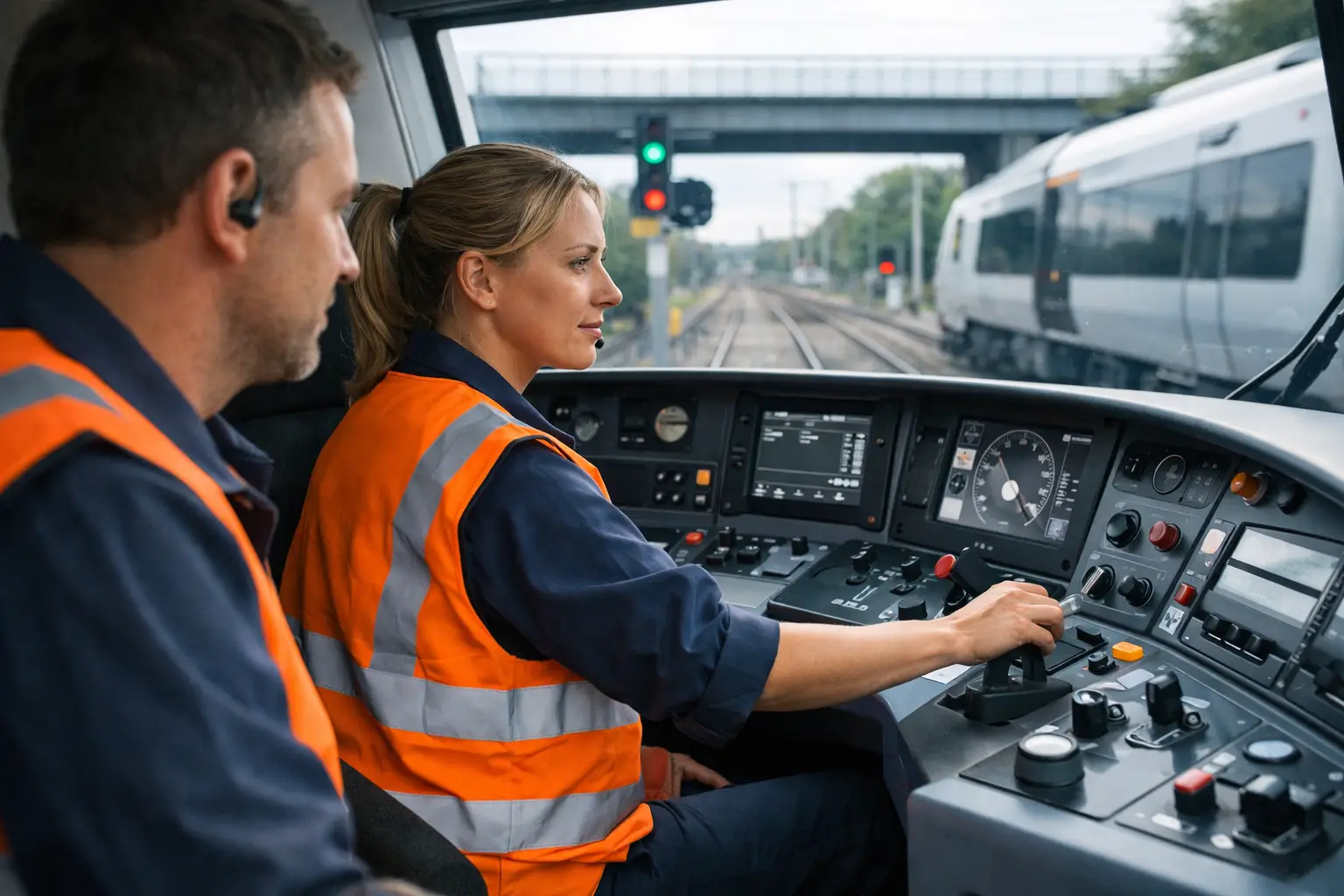
A train driver can spend long periods working independently, yet every decision sits within a wider railway operation. That is why safety critical competencies are central to recruitment. Train Operating Companies are not simply looking for someone who wants the role. They need evidence that a candidate can maintain safe, consistent performance when the work is routine, demanding or disrupted.
For applicants, this can feel less tangible than a driving qualification or previous rail experience. In practice, competencies are behaviours that can be demonstrated through your work history, examples and approach to assessment. Understanding them gives your preparation a clearer purpose.
What are safety critical competencies?
Safety-critical work is work where a lapse in judgement, attention, communication or procedure could create risk. In rail, the consequences of an error can extend beyond the individual to passengers, colleagues, infrastructure and the wider service.
Competencies are the observable behaviours that help someone perform safely and reliably. They are not a fixed list of personality traits, and they are not something to perform for an interview then forget. They describe the professional habits expected throughout a railway career.
For trainee train driver recruitment, a TOC will assess suitability through several stages. The exact process varies by employer and vacancy, but applications, structured interviews, psychometric assessments and medical standards all contribute to the overall picture. No single answer or test result should be viewed in isolation.
The key point is this: a safety-critical candidate does not rely on confidence alone. They show disciplined decision-making, respect for rules and the ability to recognise when a situation needs to be checked, reported or escalated.
The safety critical competencies employers look for
The wording may differ between roles and employers, but several themes recur across train driver and operational railway recruitment.
Rule compliance and procedural discipline
Railway rules and local instructions exist to control known risks. A strong candidate understands that following a process is not bureaucracy for its own sake. It creates consistency, especially when pressure, fatigue, distraction or disruption could otherwise influence judgement.
In an interview, avoid presenting yourself as someone who always finds a quicker way around a process. A better example shows that you checked the relevant requirement, completed the necessary action and raised a concern when something did not appear right. This is particularly valuable if you have worked in the Armed Forces, emergency services, aviation, manufacturing, logistics or other controlled environments.
Concentration and sustained attention
Train driving requires concentration over extended periods, including during repetitive tasks and on familiar routes. Candidates need to show that they can remain alert without assuming that a routine situation is automatically safe.
Good evidence might come from monitoring equipment, conducting inspections, handling safety checks, operating vehicles, supervising a process or maintaining accuracy during a long shift. Explain how you stayed focused, what you were required to notice and how you responded when conditions changed.
Situational awareness
Situational awareness means understanding what is happening around you, what it could mean and what may be needed next. It is not about guessing. It is about gathering the available information, recognising relevant cues and avoiding assumptions.
For example, an operational employee may notice an unusual condition, compare it with normal expectations and stop to clarify the issue before proceeding. The strongest examples show a measured response: neither ignoring a concern nor overreacting without evidence.
Communication and escalation
Although drivers work independently for much of the shift, they are part of a coordinated operation. Clear, concise communication helps others make safe decisions. Equally, knowing when to seek instruction is a mark of professional judgement, not weakness.
When preparing examples, focus on what information you communicated, who needed it and why accuracy mattered. If there was a problem, explain how you remained factual and followed the appropriate reporting route. Avoid stories that frame you as a lone hero who solved everything without involving others.
Risk-based decision-making
Risk-based decision-making is the ability to pause, assess the situation and choose the safest appropriate action within your authority. It requires calm thinking, particularly when there is time pressure, conflicting demands or incomplete information.
Candidates sometimes believe interviewers want dramatic stories. Usually, a straightforward example is more useful. A delayed task, a faulty item, an unclear instruction or a customer-related issue can all demonstrate sound judgement if you explain the risk, your options, the action taken and the outcome.
Personal responsibility and reliability
Safety depends on people arriving fit, prepared and ready to perform. Reliability includes punctuality, careful preparation, ownership of mistakes and a willingness to learn from feedback.
This does not mean claiming you have never made an error. A more credible answer acknowledges a mistake, explains how you dealt with it honestly and identifies the change you made afterwards. Employers are looking for maturity, not perfection.
How safety critical competencies appear in recruitment
Competencies are assessed through patterns, not just polished phrases. Your application form may ask for examples of working to procedures, managing safety or responding to changing circumstances. A structured interview will then test whether your example has enough detail and whether you personally took the actions you describe.
Psychometric assessments may explore abilities and behavioural preferences relevant to safe operational work. Preparation should help you understand the format, practise working accurately under timed conditions and arrive composed. It should not be treated as a way to manufacture a personality or bypass the purpose of the assessment.
Your employment history also matters. Frequent gaps, poor attendance, unexplained short tenures or vague responsibilities may invite questions. This does not automatically rule someone out, particularly where there are legitimate circumstances, but it makes clear and honest preparation more important.
Medical and fitness requirements are separate from competency evidence, yet they support the same objective: ensuring candidates can undertake safety-critical duties safely. Always provide accurate information and follow the employer’s process.
Building credible evidence from your experience
You do not need previous railway employment to demonstrate safety-critical behaviours. Many career changers already have relevant experience but describe it too generally. Saying “I am safety conscious” is far less persuasive than showing what you did when safety, service and time pressure competed.
Use a clear structure when developing examples. Set out the situation and your responsibility, explain the specific risk or requirement, describe the actions you personally took, then state the result and what you learned. Keep the example factual. If others were involved, make your own contribution clear without overstating it.
Choose examples with genuine accountability. A warehouse operative who stopped a loading activity after identifying an unsafe condition may have a stronger example than a manager describing a policy they did not personally apply. Likewise, a customer-facing role can be relevant where it involved accurate communication, conflict management, safeguarding or following an escalation process.
Aim to prepare several examples rather than forcing one story to answer every question. Your evidence should cover routine discipline, a changing situation, communication with others, a difficult decision and learning from feedback. That range makes your preparation more natural and helps you respond to the question actually asked.
Common mistakes to avoid
The most common issue is treating safety as a slogan. Statements such as “safety always comes first” need supporting detail. Explain what safety required in that specific moment and how you knew the correct course of action.
Another mistake is confusing speed with effectiveness. Railway operations value punctuality, but safe performance comes before rushing. If an example celebrates cutting corners to meet a target, it is unlikely to support a safety-critical application.
Candidates should also avoid memorising answers word for word. Structured interviews reward clear evidence, but over-rehearsed responses can sound detached from real experience. Practise the structure and key facts, then speak naturally.
Finally, do not assume transferable experience will be obvious to the recruiter. Translate it. Explain the procedure you followed, the risk you managed, the standard you worked to and the reason your actions mattered.
Preparing with the right standard in mind
A career in train driving calls for more than enthusiasm for the railway. It requires the capacity to be dependable on ordinary days and disciplined when circumstances become less straightforward. That standard can feel demanding, but it is also something you can prepare for systematically.
Review your work history through a safety-critical lens before you apply. Identify the occasions when you followed a rule under pressure, spotted a developing issue, communicated clearly or accepted responsibility for an outcome. These are not just interview stories. They are the foundations of the professional approach the role requires.
The strongest preparation is honest preparation: understand the standard, recognise where your evidence is already strong and develop the areas that need work. That gives you a more credible application and a better starting point for a career where safe decisions matter every day.