



A missed signal, an incorrect isolation, a platform dispatch error - in railway operations, small mistakes can carry serious consequences. That is why safety critical rail careers attract people who value discipline, concentration and responsibility, and why employers assess candidates so carefully before offering a start.
If you are considering a move into rail, it helps to understand that “safety critical” is not simply a label applied to train driving. It covers a wider group of roles where judgement, compliance and consistent performance directly affect the safe running of the railway. For some applicants, that opens up more than one route into the industry. For others, it confirms that the railway is the right environment because the standards suit the way they already work.
What safety critical rail careers involve
A safety critical role is one where physical fitness, mental alertness, rule compliance and operational decision-making matter every day. The railway relies on people carrying out tasks correctly, under pressure, with limited room for error. That can include driving, dispatch, maintenance, infrastructure access, control functions and some onboard or station-based operational positions.
The exact duties vary, but the common thread is accountability. You are trusted to follow procedure, manage risk and remain calm when conditions change. In practical terms, that means employers are not only hiring for technical potential. They are also looking for concentration, communication, situational awareness, operational maturity and a professional attitude to safety.
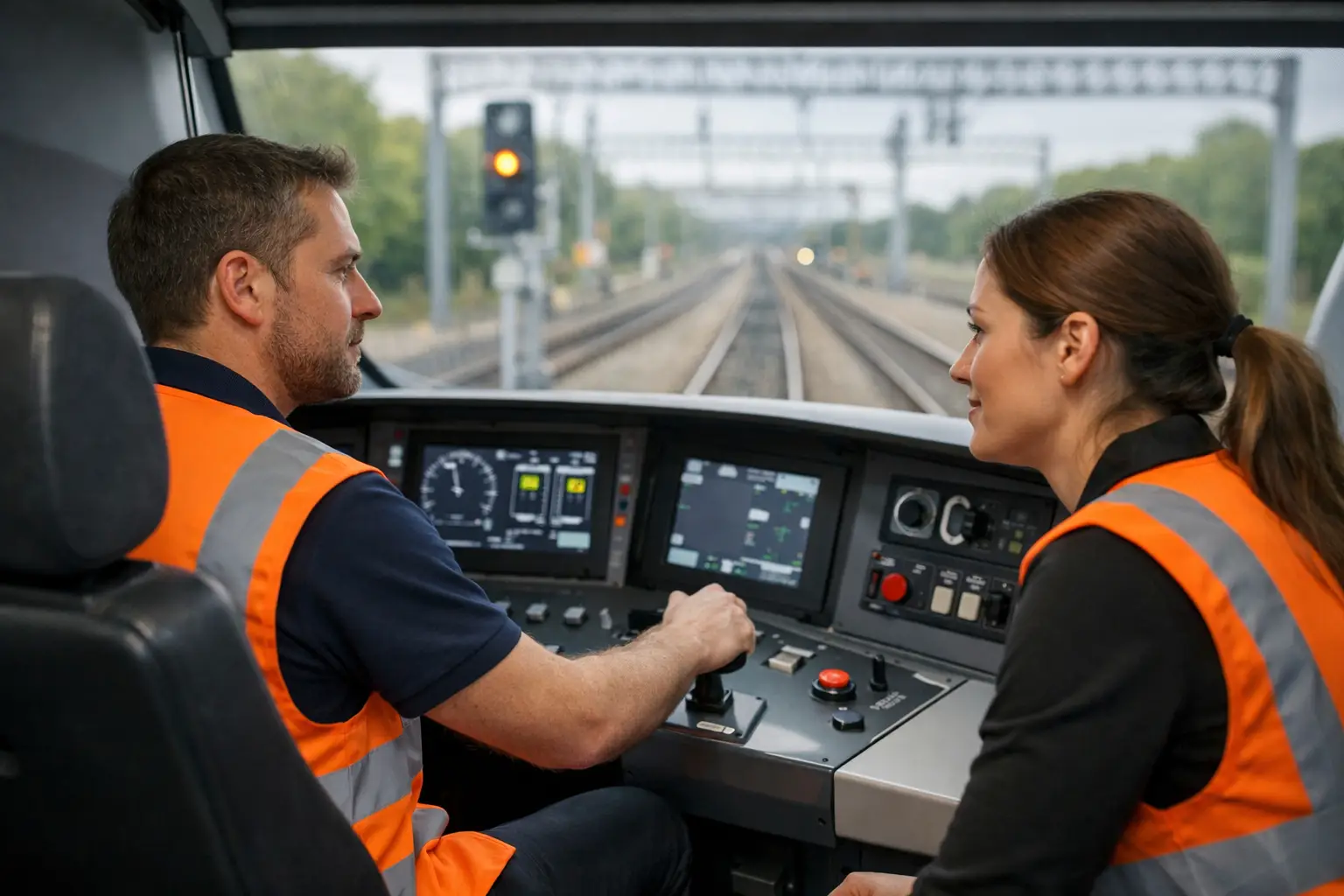
For aspiring trainee train drivers, this matters because recruitment standards are built around the realities of the job. A train driver is expected to process information continuously, retain rules, respond appropriately to abnormal situations and maintain performance over long periods. The same principle applies across many safety-critical rail roles, even when the day-to-day tasks differ.
Types of safety critical rail careers
Train driving is the role most applicants know first, but it sits within a broader operational landscape. Dispatch and platform roles can be safety critical where staff are responsible for train despatch procedures, platform-train interface risks and clear communication with drivers and signallers. Trackside roles can also be safety critical, particularly where workers access live railway environments and must demonstrate strict compliance with safe systems of work.
Maintenance and engineering positions may fall into the same category when the work affects the integrity of rolling stock, signalling systems or infrastructure. Control and operational planning roles can also carry safety implications, especially where disruption management and live decisions affect train movements.
The right path depends on your background. Someone from the Armed Forces may find the procedural discipline and safety culture familiar. A bus, coach or HGV professional may already be used to concentration-heavy work, public responsibility and irregular hours. Candidates from customer-facing roles may be stronger on communication and composure, but need to build a clearer understanding of operational standards.
Why these careers appeal to serious applicants
There is a reason so many career changers are drawn to the railway. Safety critical rail careers tend to offer structure, long-term progression and work that carries genuine public value. For people who want responsibility rather than constant ambiguity, that is a major attraction.
There is also a strong cultural fit for applicants who prefer clear expectations. Railway operations are not built around improvisation for its own sake. They are built around standards, competence and repeatable performance. That suits people who take pride in doing things properly.
The trade-off is equally clear. These roles are not casual, and they are not suitable for anyone who struggles with routine, concentration or procedural discipline. Shift work, weekend working, fatigue management and medical standards are all part of the picture. Some candidates are attracted by the stability of rail work but underestimate the consistency expected in safety-critical environments. The recruitment process is designed to test exactly that.
Safety critical rail careers and recruitment standards
One of the biggest mistakes applicants make is treating rail recruitment like a general job search. In safety-critical hiring, employers are assessing suitability for a regulated, high-responsibility environment. Your CV, application responses, interview examples and test performance all need to show that you understand this.
That does not mean trying to sound overly technical. It means demonstrating behaviours that matter in operations. Employers want evidence that you follow rules, maintain standards, manage distraction, communicate clearly and make sound decisions when the pressure increases. If your examples come from logistics, emergency response, manufacturing, customer operations or military service, that can work well - provided you frame them properly.
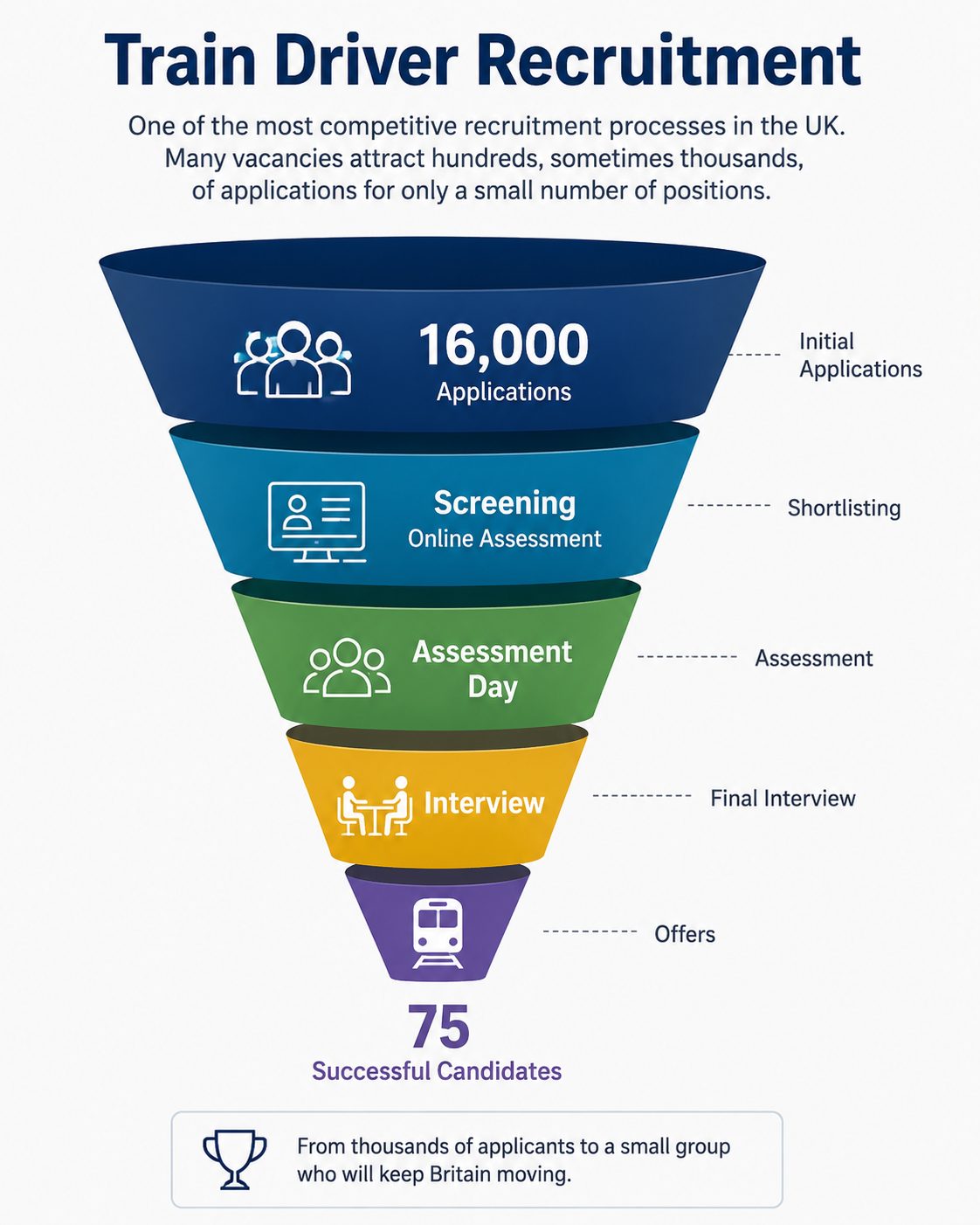
Psychometric assessments often form part of the process, especially for trainee train driver recruitment. These are not there to trick candidates. They are used to assess concentration, reaction, attention control and other capabilities relevant to safe operational performance. Structured interviews then examine behaviours in more depth, often focusing on safety, responsibility, teamwork and resilience.
It depends on the role, but most candidates benefit from preparing in three areas at once: role understanding, assessment readiness and operational self-presentation. Being a strong worker in another industry does not automatically translate into a strong railway application unless you can evidence the right fit.
How to prepare for safety critical rail careers
Preparation starts before you apply. First, make sure you understand the operational reality of the role you want. For trainee train driver applicants, that means appreciating the concentration demands, irregular shifts, solitary working and strict adherence to rules. For trackside or dispatch positions, it means understanding public safety, environmental hazards and procedural compliance.
Next, review your own background honestly. Which parts of your experience show responsibility, safe working, rule adherence and performance under pressure? This is where many candidates undersell themselves. A warehouse supervisor who managed incidents properly, a service leaver who operated within strict procedures, or a transport professional who maintained standards during fatigue-heavy shifts may all have relevant evidence. The key is selecting examples that align with railway expectations.
Then focus on application quality. Generic CVs and weak supporting statements rarely perform well for safety-critical roles. Your documents should show relevance, not just employment history. If you mention safety, it should be backed up with clear examples rather than broad claims. If you describe responsibility, explain what was at stake and how you maintained standards.
Assessment preparation also matters, but it should be approached professionally. Good preparation improves familiarity, confidence and consistency. It should never be about looking for shortcuts or trying to game the process. In a safety-critical environment, integrity matters as much as performance.
For many applicants, targeted CPD can help bridge the gap between interest and readiness. Learning in areas such as operational thinking, risk-based decision making and personal track safety can strengthen both understanding and confidence. It also helps candidates speak more credibly about the demands of rail work without overstating experience they do not yet have.
What employers are really looking for
Strong candidates are usually more measured than dramatic. They do not present themselves as thrill-seekers or people chasing status. They present as reliable, trainable and switched on to risk. That distinction matters.
Employers are looking for people who can perform safely on an ordinary Tuesday as well as during an unusual event. They want candidates who can stay focused during repetitive tasks, not just react well in obvious emergencies. They want professional judgement, not impulsive confidence.
This is why operational maturity comes up so often in rail recruitment. It is the ability to stay within standards, communicate clearly, take responsibility and avoid unnecessary risk. You do not need previous railway experience to show that quality, but you do need to evidence it consistently throughout the recruitment process.
Is this the right career direction for you?
The honest answer is that safety-critical work suits some people far better than others. If you prefer clear procedure, meaningful responsibility and a structured working environment, rail can be an excellent long-term option. If you dislike compliance, lose focus easily or resent formal standards, it may not be the right fit.
That is not meant to put people off. It is meant to help applicants approach the industry with the right mindset. The best candidates are usually those who respect the standard before they ever reach interview stage. They understand that the role is demanding, and they prepare accordingly.
For anyone serious about entering the railway, clarity is an advantage. Learn what the role requires, assess your fit honestly, and build your application around evidence rather than assumption. Safety-critical careers reward professionalism long before the first day of training, and that is often where successful candidates separate themselves from the crowd.
If you are aiming for train driving or another operational rail role, treat preparation as part of the job itself - because in this sector, readiness is not a bonus. It is the starting point.