



Leaving the Armed Forces can mean translating years of disciplined, safety-focused experience into a civilian career path that employers understand. Standard learning credits rail training can help make that transition more structured, particularly for service leavers considering train driving or another safety-critical railway role.
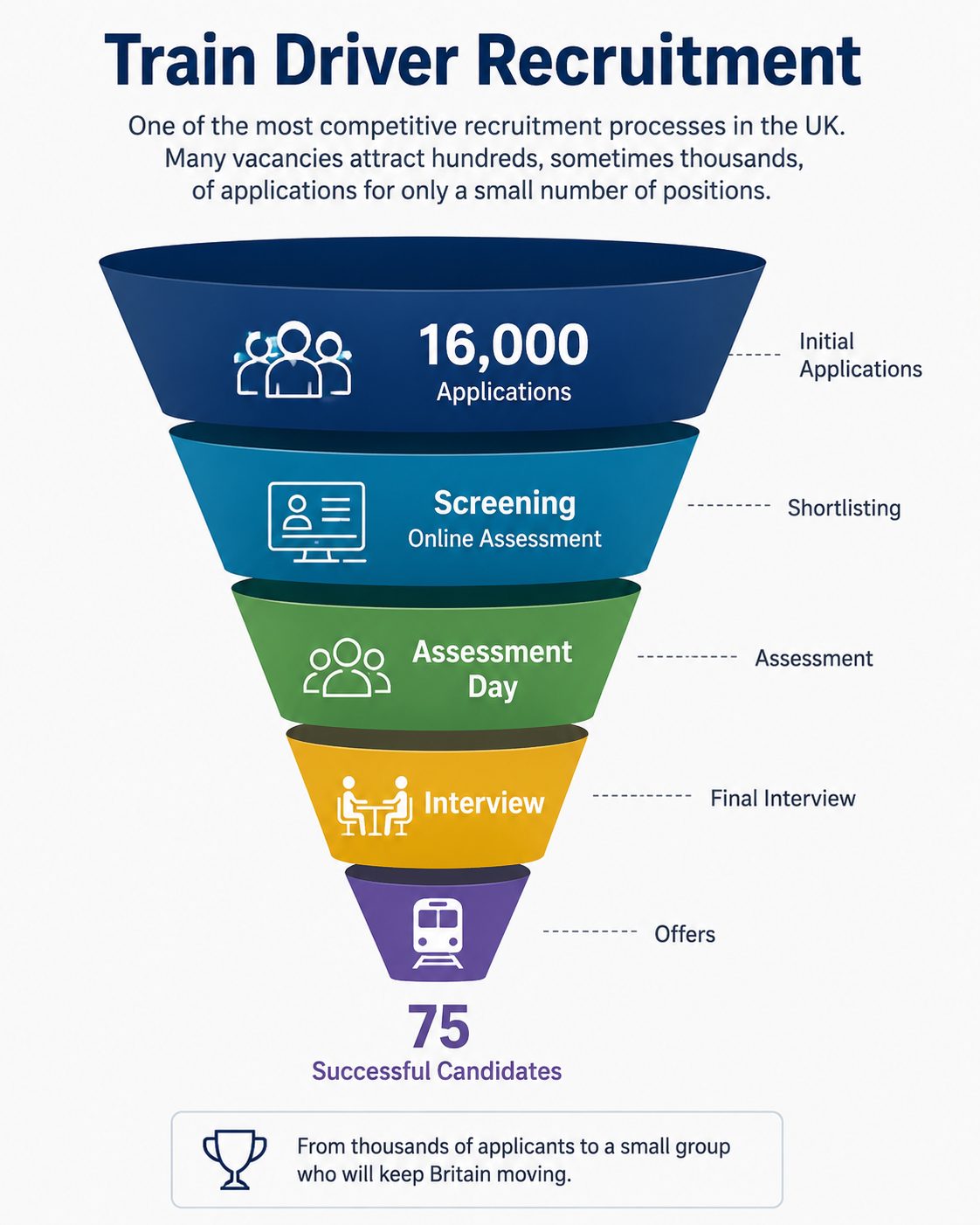
The credit itself is not a route around railway recruitment. Train Operating Companies (TOCs) still apply their own eligibility requirements and selection standards, and competition for trainee driver positions is high. Used well, however, funded professional development can help you build relevant knowledge, strengthen the language you use in applications and demonstrate a considered commitment to the industry.
What Standard Learning Credits can support
Standard Learning Credits (SLC) are intended to support eligible personnel with worthwhile, approved learning. Your entitlement, contribution requirements and the process for making a claim depend on current service policy, your individual circumstances and the course provider’s status. Before enrolling, confirm the latest requirements with your service education staff and check that the specific course is eligible for your intended claim route.
For someone targeting rail, the strongest learning choice is rarely the course with the most impressive-sounding title. It is the one that develops capabilities relevant to a safety-critical operational environment. Train driver recruitment is not based solely on previous railway experience, but candidates need to show sound judgement, attention to detail, reliability, composure and an ability to follow rules consistently.
Military experience may already give you a credible foundation in these areas. A well-chosen CPD course helps you explain that experience in a rail context without overstating what you know. It can also show that you have taken ownership of your transition and understand the professional standards expected in operational roles.
Standard Learning Credits rail training choices
Rail careers cover far more than driving trains, and the right learning pathway depends on your objective. If your immediate aim is trainee train driver recruitment, prioritise learning that improves operational awareness and supports stronger evidence at application and interview stage. If you are also considering station, depot, fleet or wider operational roles, broader rail knowledge may be particularly useful.
Courses in operational thinking, risk-based decision making and operational maturity are relevant because they address the behaviours behind safe performance. They can help you reflect on how you assess changing situations, manage competing priorities, communicate clearly and act within defined limits. Those are useful themes in structured interviews, where broad statements such as “I am good under pressure” carry little weight without a clear example.
Introductory learning in traction and rolling stock can build a practical understanding of the railway environment. It should be treated as foundation knowledge, not evidence of competence on a particular train type. Similarly, personal track safety learning can support wider awareness of railway risk, but it does not replace employer training, site-specific induction or formal authority to work in an operational setting.
For aspiring drivers, introductory train driving education can be valuable when it explains the role realistically: concentration over extended periods, rule compliance, controlled decision making, communication and personal responsibility. It should reinforce an important point: train driving is not simply about operating a vehicle. It is a role where consistent behaviour, situational awareness and safety discipline matter every day.
Match the course to the gap in your preparation
A useful starting point is to identify what you already bring from service and what you need to develop. Someone with substantial experience of safety management may benefit most from rail-specific operational context. Someone changing career from a less directly operational military role may need to spend more time building confidence with safety-critical terminology and decision-making principles.
Avoid choosing learning purely because it appears railway-related. Ask whether you will be able to explain three things afterwards: what you learned, how it applies to the role you want and how it has improved your professional approach. If the answer is unclear, the course may not be the best use of your credits.
Build a credible rail preparation pathway
SLC-funded learning works best as one part of a planned transition, rather than a collection of unrelated certificates. A sensible pathway links career research, CPD, application preparation and assessment readiness.
A practical sequence could look like this:
- Clarify your target role. Read trainee train driver vacancy requirements carefully and check practical factors such as location, shift patterns, travel distance and eligibility before investing heavily in preparation.
- Choose relevant CPD. Select approved learning that develops operational judgement, risk awareness or foundational rail knowledge aligned with your current experience and career goal.
- Record your learning properly. Keep course certificates, learning outcomes and reflective notes. These will help when updating your CV and preparing interview examples.
- Prepare for the recruitment process. Research how TOCs assess candidates, practise working through structured interview questions and approach psychometric test preparation ethically and methodically.
The fourth stage is where many capable applicants lose focus. A course certificate may demonstrate commitment, but it does not automatically produce a strong application. Your CV still needs to present relevant evidence clearly, and your interview responses need to show what you did, why you did it and what the outcome was.
For example, an SLC-funded course on risk-based decision making may prompt you to revisit a real service example. Rather than saying you “managed risk”, explain the context, the information available, the procedure you followed, the point at which you escalated or paused activity, and the result. That level of structure is far more useful in a competency-based interview.
What SLC-funded learning cannot do
It is worth being clear about the limits. Rail CPD does not guarantee an interview, a pass at assessment or an offer from a TOC. It cannot replace the medical, psychometric, structured interview and other recruitment requirements set by an employer. Nor should introductory learning be presented as operational qualification or formal driving experience.
This is not a reason to dismiss training. It is a reason to use it honestly. Recruiters are looking for candidates who understand the responsibility of the role and can evidence the right behaviours. A service leaver who has invested in relevant learning, reflects well on their experience and prepares carefully is in a stronger position than someone relying on generic claims about transferable skills.
Another common mistake is treating every railway role as identical. A course may support your longer-term understanding of the sector while not being the most direct preparation for a specific vacancy. Read each job description closely and tailor your application to the actual role, not to a broad idea of working on the railway.
Turn learning into stronger recruitment evidence
Once you have completed relevant rail training, integrate it into your career preparation. Mention it accurately on your CV under professional development, with a concise description of the operational themes covered. Do not let it dominate the document if you have substantial service experience - the value comes from connecting the learning to the evidence you already have.
Use the same approach at interview. You might explain that the course strengthened your understanding of risk controls, then support this with an example of following procedure under pressure. You might describe how introductory rail learning confirmed your interest in safety-critical operations, then show how your record demonstrates reliability, rule adherence and calm communication.
Train Driver Foundation’s CPD-focused learning is designed to help candidates build this early-stage operational understanding while preparing for a demanding recruitment journey. The most effective preparation remains measured and purposeful: learn what is relevant, reflect on it honestly and apply it to the standard expected of the role.
Your service experience has value, but rail employers need to see how you will carry that professionalism into their environment. Use Standard Learning Credits to make that connection clearer, then give yourself the time to prepare for each stage of the process properly.