


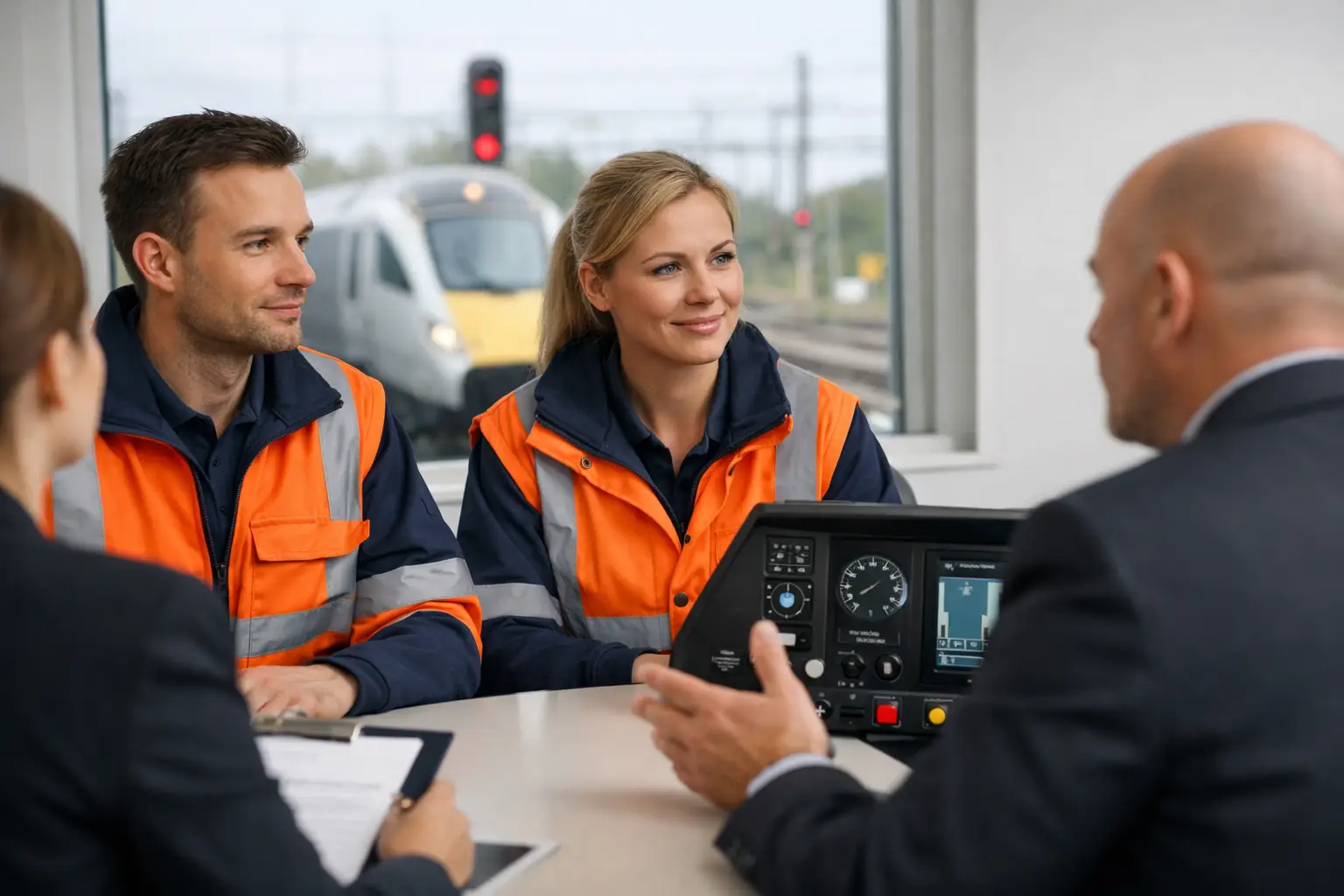
When candidates reach the structured interview train driver role stage, the process usually becomes more serious very quickly. At this point, a Train Operating Company is not looking for charm or polished sales talk. It is assessing whether your past behaviour, judgement and attitude match the standards required for a safety-critical role.
That shift catches many applicants out. Strong candidates are often rejected not because they lack potential, but because they answer too vaguely, speak in general terms, or fail to show evidence of the behaviours the interviewer is measuring. A structured interview is designed to reduce subjectivity. You are being assessed against defined competencies, not against how confident you sound on the day.
What a structured interview for a train driver role is really testing
A structured interview for a train driver role follows a set format. Interviewers ask prepared questions linked to specific competencies, and your answers are scored against consistent criteria. That matters because train driving is a highly controlled profession. Recruitment methods need to be fair, evidence-based and aligned to the demands of safety-critical work.
The competencies assessed can vary slightly between TOCs, but the themes are usually familiar. You may be asked to demonstrate concentration, rule adherence, communication, personal responsibility, calmness under pressure, decision making, and the ability to work alone without standards slipping. You are also likely to be assessed on motivation for the role and your understanding of what the job involves in reality rather than in theory.
This is where many applicants make the wrong assumption. They think the interview is mainly about proving enthusiasm for trains or showing that they want a stable career. Motivation matters, but only as one part of a wider picture. Employers need evidence that your behaviour in previous roles already reflects the discipline expected in rail.
Why generic interview advice does not work well here
A train driver interview is not the place for broad claims such as "I work well under pressure" or "I always put safety first". Those statements have little value unless you back them up with a precise example. In structured interviews, evidence carries far more weight than intention.
Generic interview coaching often encourages candidates to appear confident, personable and flexible. Those qualities are not irrelevant, but they are not the core of the assessment. A stronger answer usually shows that you recognised a risk, followed a process, communicated clearly, and stayed composed even when conditions changed.
That means your preparation should focus less on sounding impressive and more on selecting examples that stand up to scrutiny. If your answer cannot show what happened, what action you took, why you took it, and what the outcome was, it will often feel underdeveloped.
The competencies you should expect to evidence
Although wording differs, most structured interviews for trainee driver vacancies look for evidence in a few key areas.
Safety and rule compliance
This is central. Employers need people who respect procedures even when nobody is watching, even when time pressure exists, and even when shortcuts might seem easier. Good examples often come from logistics, transport, engineering, the armed forces, manufacturing, emergency response, warehousing or any role with formal procedures and consequences for error.
The strongest examples do not simply say you followed a rule. They show that you understood why the rule mattered, what the risk was, and how your actions protected people, equipment or operations.
Concentration and sustained attention
Train driving includes prolonged periods of high vigilance. Interviewers may explore situations where you had to maintain focus during repetitive work, monitor changing conditions, or detect something important that could easily have been missed.
This area can be harder for applicants from less obviously operational backgrounds, but it is still possible to evidence. The key is to choose examples where attention to detail had real consequences rather than examples based on routine admin alone.
Working alone and taking responsibility
A trainee driver must be able to work independently without constant supervision. Structured interview questions may test whether you can stay disciplined, manage your own standards and make sound decisions within procedure.
This does not mean acting beyond your authority. In fact, strong answers often show the opposite. Good judgement in a safety-critical environment includes knowing when to stop, when to escalate and when not to improvise.
Communication in operational settings
Communication in rail is not about being chatty. It is about clarity, accuracy and professionalism. Interviewers may look for situations where you passed on important information, challenged something unsafe, confirmed instructions, or avoided misunderstanding in a pressured environment.
The quality of your example matters here. A vague story about teamwork is usually weaker than a clear incident where your communication helped prevent error or maintain standards.
Motivation and understanding of the role
This part is often underestimated. Interviewers want to know why you want this career and whether your expectations are realistic. They may test your understanding of shift work, training demands, rules-based working, lone working and the long-term discipline the role requires.
A good answer is grounded and professional. It should show that you are attracted to the responsibility, structure and standards of the job, not only the salary, status or lifestyle.
How to structure your answers properly
Most candidates benefit from using a clear answer framework. STAR is widely known, but many people use it badly by spending too long on background and not enough on action. In a structured interview, the action and reasoning are usually where the marks sit.
Start by choosing one specific example. Set the scene briefly. Explain the task or risk. Then focus on what you did, why you did it, and how you kept control of the situation. Finish with the outcome and, if relevant, what the experience shows about your working standards.
If you give an example involving a team, make sure your own contribution is clear. Saying "we did this" throughout can weaken your answer because the interviewer cannot easily assess your individual behaviour.
It also helps to avoid overcomplicating examples. Candidates sometimes choose dramatic incidents because they think bigger means better. Usually, a simpler example with clear judgement, compliance and accountability scores better than a dramatic story told badly.
Common mistakes in a structured interview train driver role assessment
One of the most common mistakes is giving theory instead of evidence. If you are asked about dealing with pressure, the interviewer wants a real example, not your views on staying calm.
Another frequent issue is choosing examples with weak relevance. A customer service story about handling a complaint may show patience, but it may not show the operational discipline needed for a train driver role unless there was a clear safety, procedure or accountability element.
Some applicants also damage otherwise good answers by presenting themselves as too independent. In rail, confidence without compliance is not a strength. If your example suggests you ignored procedure, acted on assumption, or solved a problem by bypassing controls, it is unlikely to help.
There is also a balance to strike when discussing mistakes or setbacks. You do not need to present yourself as flawless. In fact, honest reflection can be valuable. But if you describe an error, make sure you show accountability, corrective action and learning. Defensive answers rarely land well.
How to prepare in a way that matches the role
Preparation should be deliberate. Start by identifying six to eight solid examples from your work history that show safety, concentration, responsibility, communication, decision making and professionalism. Then test each example. Is it specific? Is it credible? Does it show your behaviour clearly? Can you explain it without rambling?
Next, rehearse aloud. Structured interviews reward clarity. An answer that sounds fine in your head can become unfocused when spoken. Practising aloud helps you tighten the sequence and remove unnecessary detail.
You should also review your reasons for applying. Be ready to explain why train driving suits your strengths and working style. If your motivation sounds generic, interviewers may question whether you fully understand the role.
Finally, prepare with the right mindset. This is not about performing a personality. It is about presenting evidence that you can meet a demanding operational standard. Specialist preparation can help because role-specific interview support is usually much closer to what TOCs are actually measuring than broad job interview advice.
A structured interview is demanding because the job is demanding. Treat it as an assessment of operational suitability, not just a conversation, and your preparation becomes much clearer. The more precisely you can evidence safe, disciplined and responsible behaviour, the more credible your application becomes.