

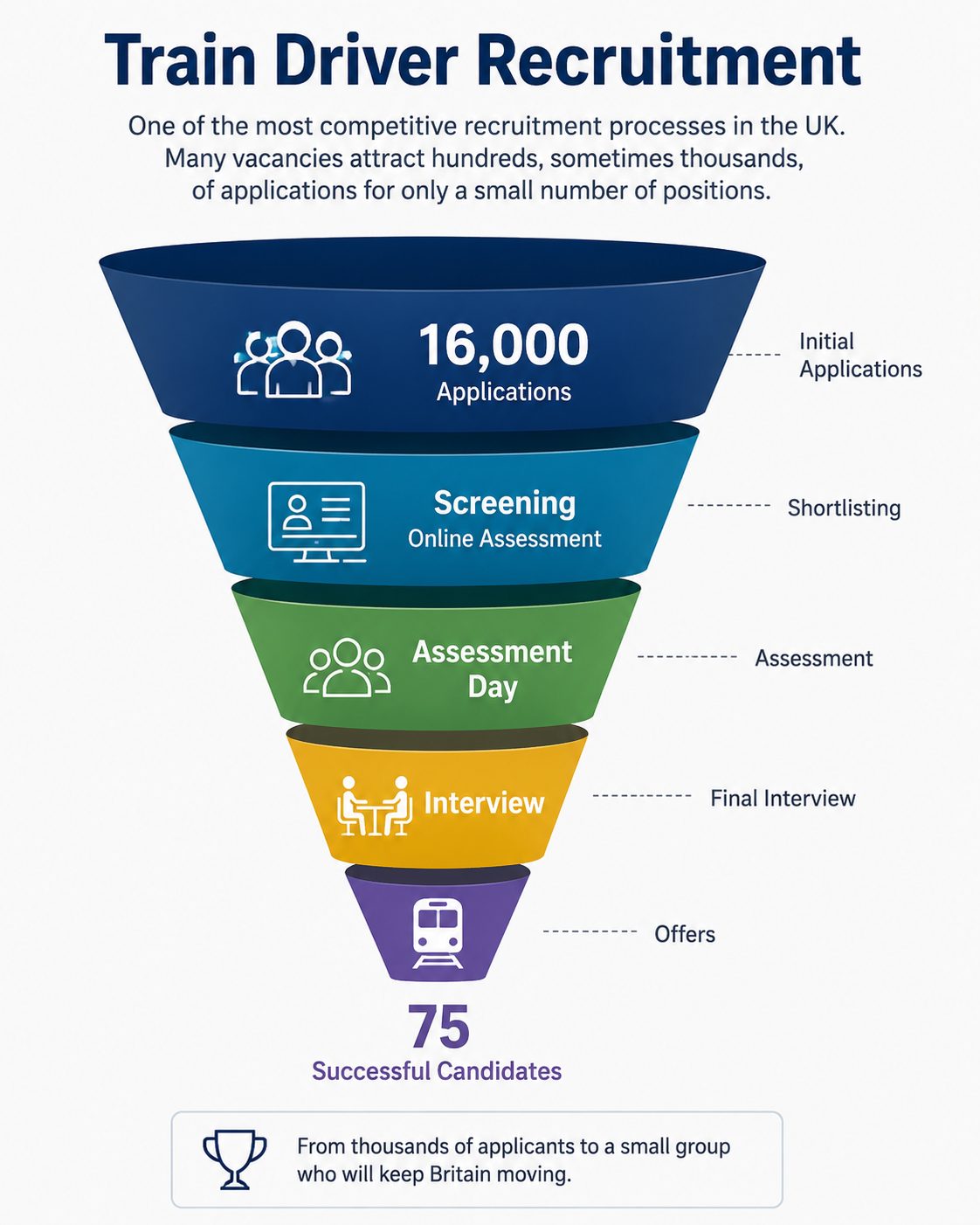



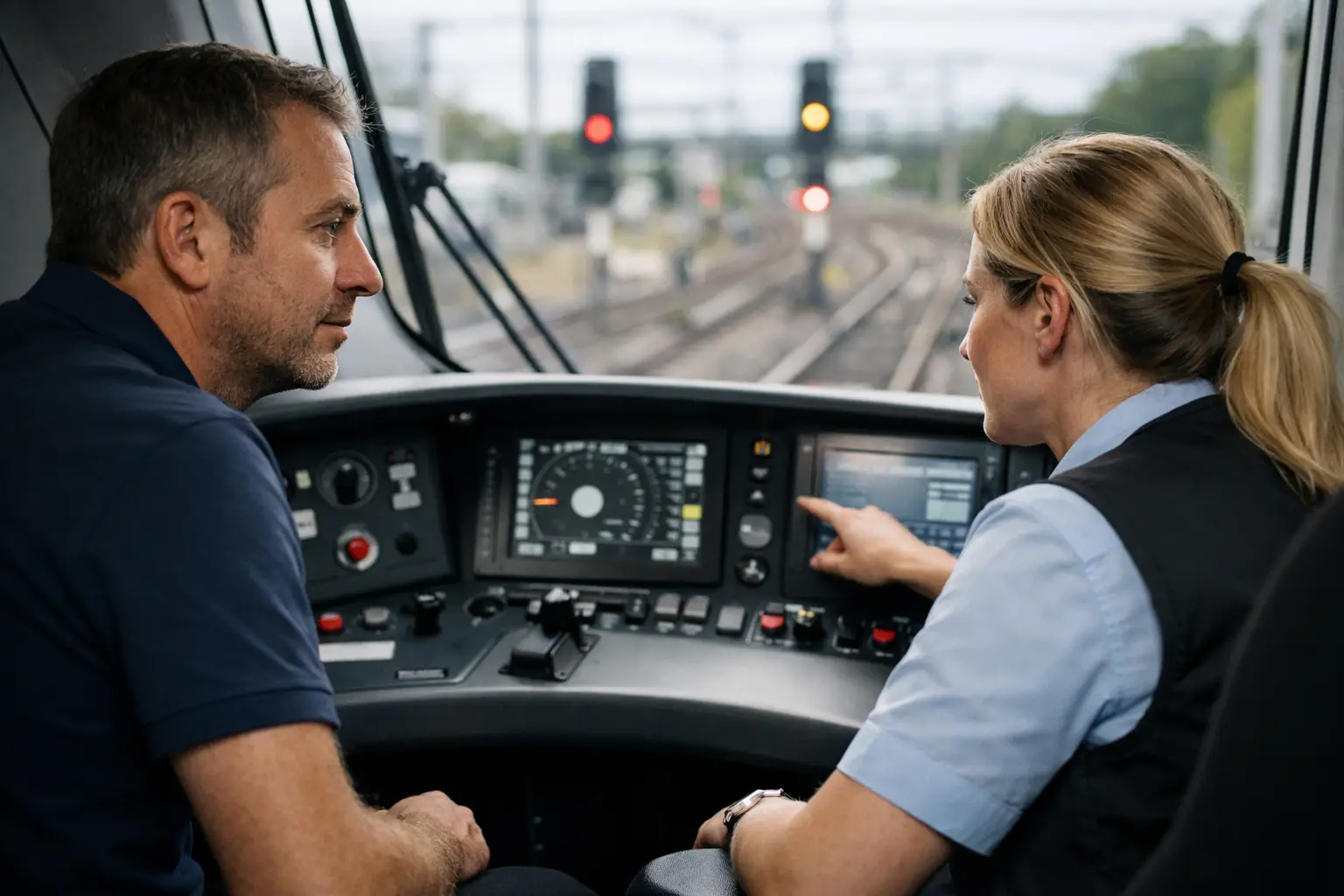
If you are serious about becoming a trainee train driver, the first step is not your CV or interview technique. It is understanding the train driver eligibility requirements that decide whether your application can move forward at all. In a safety-critical role, employers are not simply looking for enthusiasm. They are assessing whether you meet a set of baseline standards for safety, judgement, reliability and long-term suitability.
That matters because many applicants lose time applying for roles they are not yet ready for, or they underestimate how strict some entry criteria can be. While each Train Operating Company has its own recruitment process, the broad requirements are similar enough that you can assess your position early and prepare properly.
What are the main train driver eligibility requirements?
Most trainee train driver vacancies are built around a core set of requirements. These usually include minimum age, the right to work, acceptable educational standards, medical fitness, satisfactory background checks and the ability to pass psychometric assessments and structured interviews. Some operators also place weight on previous experience in safety-critical, operational or customer-facing roles.
The key point is that eligibility is not just about meeting one standard. It is about presenting as a credible candidate across several areas at once. A strong work history cannot compensate for failing the medical. Equally, meeting the medical standard does not remove the need to demonstrate concentration, rule compliance and professional communication.
Age, right to work and basic entry standards
For most roles, you must be at least 20 years old to apply, although some employers may recruit slightly earlier with the expectation of full qualification at a later stage. Age requirements are set around training timelines and licensing considerations rather than simple preference.
You will also need the legal right to work in the UK. That is a basic gateway requirement, but it should not be treated casually. If your documentation is unclear or time-limited, it can create avoidable delays during recruitment.
Educational requirements vary. Some TOCs ask for GCSEs, often including English and maths, while others focus more on evidence of capability than formal qualifications alone. If your academic record is not especially strong, that does not automatically close the door. What matters is whether you can demonstrate the reading, communication and information-processing ability needed for rules, notices, procedures and training material.
Medical standards and why they are non-negotiable
Medical fitness is one of the most important train driver eligibility requirements because the role is safety-critical from day one. Drivers must be able to operate safely for sustained periods, manage fatigue appropriately and meet strict standards around vision, hearing and general health.
This is not about perfection. It is about risk control. Certain conditions may require further review, and the outcome can depend on severity, treatment, stability and occupational impact. Vision standards are especially important, including corrected and uncorrected vision in some cases, along with colour vision requirements. Hearing is also assessed, as are issues that could affect alertness, consciousness, concentration or safe decision-making.
Medication can be relevant too. Some prescribed drugs are entirely manageable within an occupational health process, while others may raise concerns depending on side effects. The sensible approach is honesty. Trying to minimise or hide a health issue is far more damaging than declaring it and allowing proper assessment.
Background checks, conduct and employment history
Trainee driver recruitment typically includes reference checks, work history review and, in many cases, criminal record screening relevant to the role. This does not mean every historic issue makes you ineligible, but it does mean integrity matters.
Gaps in employment are not necessarily a problem if you can explain them clearly. Repeated short-term jobs, conduct issues or dismissals may prompt closer scrutiny, particularly if they suggest unreliability, poor rule compliance or difficulty operating within disciplined environments. In a role where punctuality, procedure and personal accountability are central, employers will look for consistency.
That is why candidates from the Armed Forces, transport, emergency services, logistics and other operational sectors often have relevant strengths. They are used to standards, shift work, responsibility and working within defined systems. However, no background guarantees progress. The recruitment process still tests role-specific suitability.
Psychometric testing and assessment standards
A large number of applicants meet the basic administrative criteria but then struggle at assessment stage. This is where train driver eligibility requirements move beyond paperwork and into evidence of capability.
Psychometric assessments are designed to measure traits and abilities linked to safe train driving. Depending on the vacancy, this may include concentration, vigilance, response accuracy, information checking, memory, rule application and behavioural tendencies relevant to safety-critical work. Structured interviews then examine how you have behaved in past situations and whether your judgement fits the standards of the role.
This is not an area for guesswork. Good candidates often fail because they misunderstand the level of discipline required, or they approach preparation too late. Preparation should focus on familiarity, consistency and understanding what the role actually demands. It should never be about trying to game the process.
Do you need previous railway experience?
No, not usually. Many trainee train drivers enter the industry from outside rail. What matters more is whether your previous work shows transferable evidence of responsibility, concentration, procedure, customer awareness and calm performance under pressure.
A candidate from bus driving, aviation support, manufacturing, warehouse operations or the military may have very relevant examples. So might someone from healthcare or emergency response. Even retail or hospitality experience can help if it demonstrates professionalism, conflict management and reliability, although highly operational roles tend to map more directly to driver expectations.
The trade-off is this: lack of rail experience is not a barrier, but lack of evidence is. If your background does not obviously look safety-critical, you need to be able to explain clearly how your experience still proves suitability.
The less obvious requirements candidates miss
Some train driver eligibility requirements are not always listed as a single line in a job advert, but they still influence hiring decisions heavily.
One is location. Many trainee driver roles require you to live within a specified travel time of the depot. This is about fatigue management, shift reliability and practical attendance, not convenience. If you are outside the required radius, your application may be rejected even if the rest of your profile is strong.
Another is flexibility. Drivers work early starts, late finishes, weekends and bank holidays. Not every applicant fully thinks through the lifestyle implications. If your circumstances make that pattern difficult, it is better to consider it honestly before entering a long recruitment process.
There is also the issue of maturity. This does not simply mean age. It means self-management, composure, adherence to standards and the ability to make safe decisions without unnecessary drama. Structured interviews often reveal quickly whether a candidate understands the seriousness of the role.
How TOC requirements can differ
Although the broad standards are similar, TOCs can differ in how they apply them. One operator may place more emphasis on customer-facing experience. Another may prioritise operational discipline or expect stronger examples around lone working and rule adherence. Some may be stricter on depot location or qualification wording in the advert.
That is why reading each vacancy carefully matters. Candidates sometimes assume that because they were eligible for one trainee role, they are automatically eligible for all others. In practice, small differences in wording can point to significant differences in what the employer wants to see.
A focused approach is better than a scattergun one. Apply where your profile genuinely aligns, and tailor your application around the standards actually being asked for.
How to assess your readiness before you apply
A sensible readiness check starts with the basics. Can you meet the age, work-right and depot-location criteria? Are your employment history and references likely to support your application? Are there any medical factors you need to understand before committing to the process?
Then move to the competitive layer. Can you show evidence of concentration, responsibility, rule compliance and calm decision-making? Do you understand how psychometric testing and structured interviews work? Can you explain clearly why your background fits a trainee driver role, rather than just why you want one?
This is where specialist preparation can make a real difference. Candidates often benefit from objective feedback on their CV, interview examples and overall readiness, particularly if they are changing careers or applying to rail for the first time. Train Driver Foundation supports applicants in exactly that stage - turning interest into a more credible, better-prepared application.
If you do not meet every requirement yet
Not being ready now does not mean the goal is unrealistic. It may mean you need to improve one or two areas first. That could involve strengthening your work history, building examples of operational responsibility, understanding the assessment process better or checking whether a medical issue needs professional clarification.
The strongest applicants usually take a long-term view. They do not rely on luck or volume of applications. They treat train driving as a professional pathway with clear standards and prepare accordingly.
If you approach the process with honesty, patience and proper preparation, the eligibility question becomes much clearer - and that clarity is often what separates a hopeful applicant from a genuinely competitive one.