

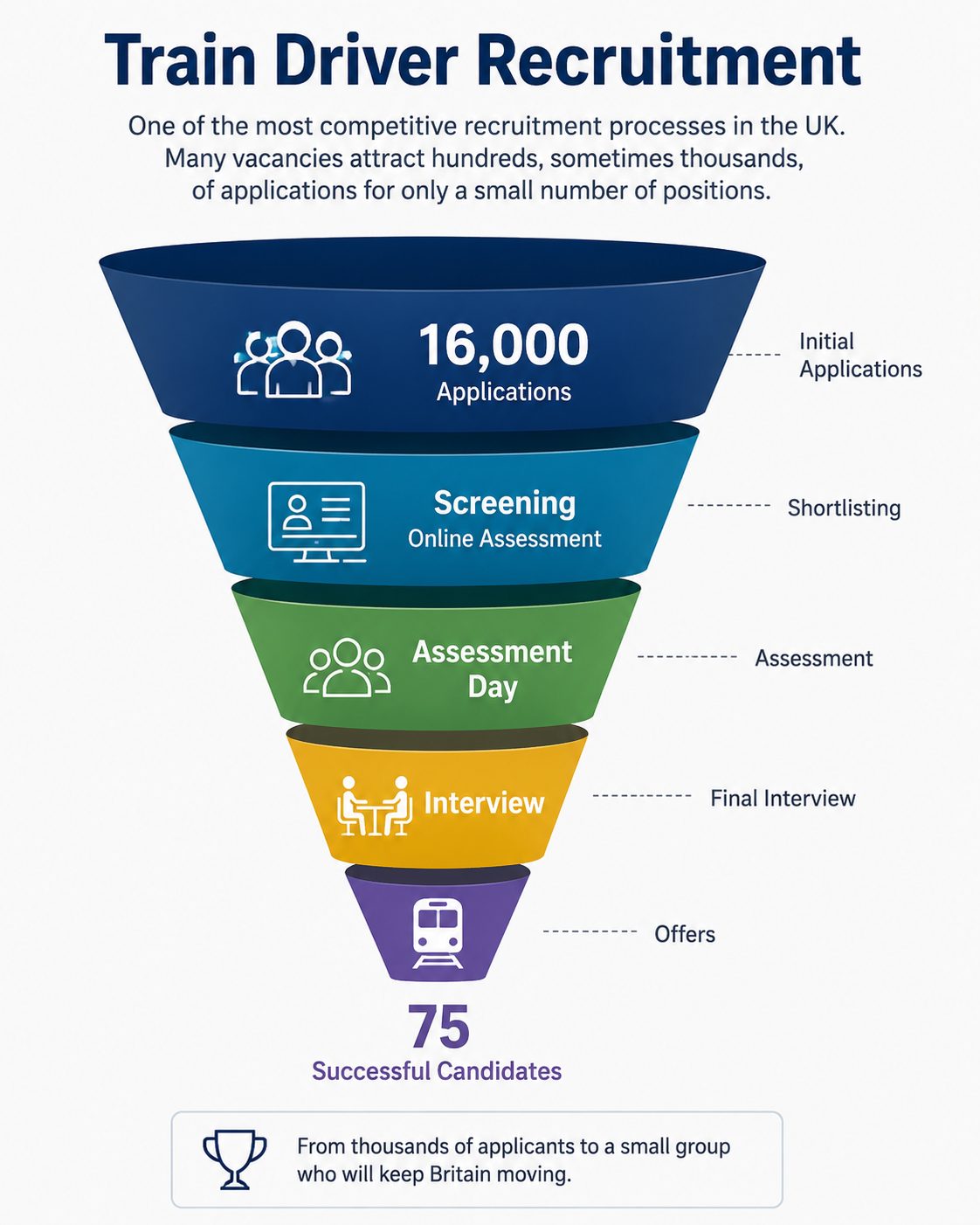



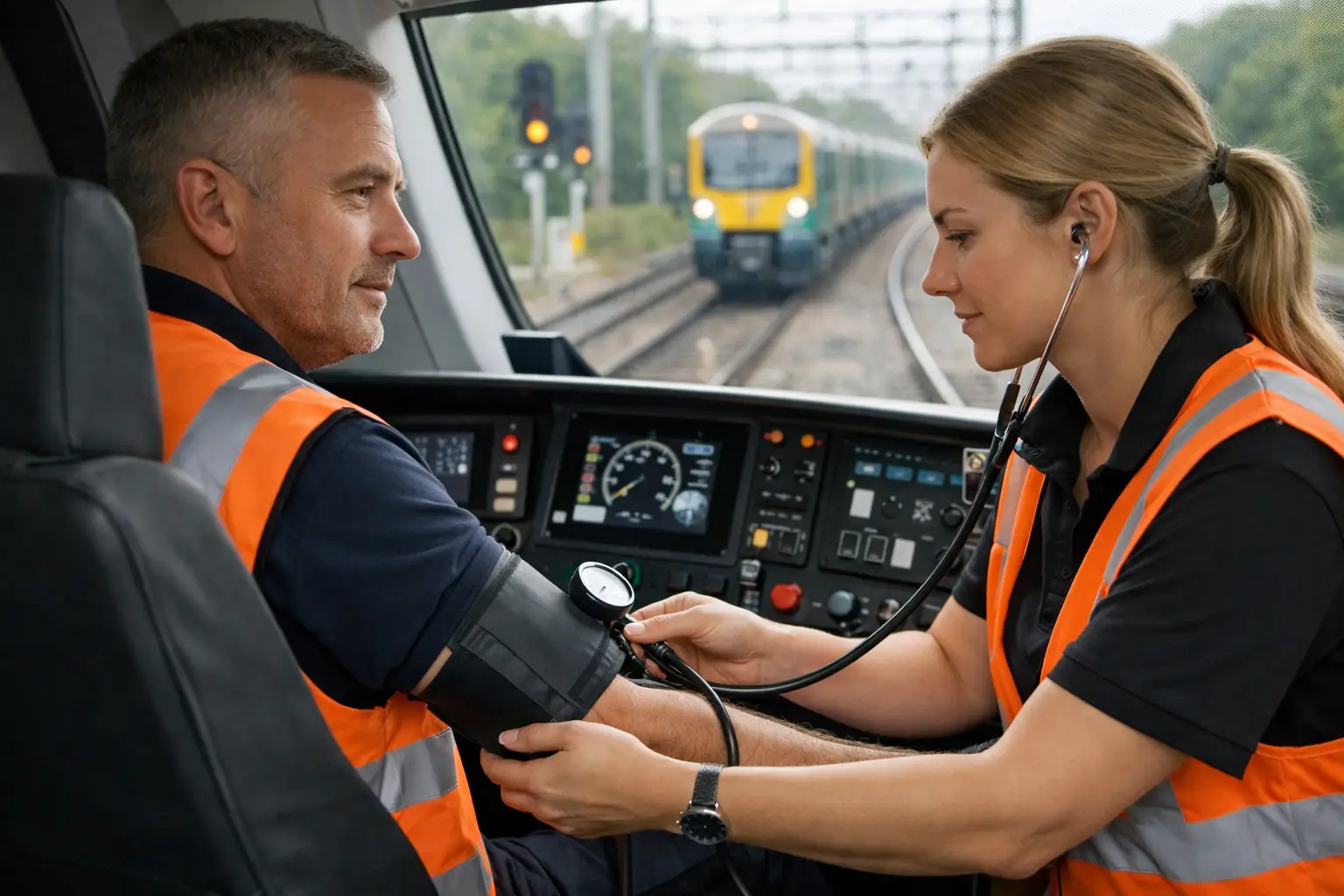
A failed medical can stop an otherwise strong trainee train driver application very late in the process. That is why understanding train driver medical standards early matters. If you know what is typically assessed, what may need evidence, and where borderline issues can arise, you can prepare properly rather than making assumptions.
For anyone applying into a safety-critical rail role, the medical is not a formality. It is there to confirm that you can carry out the role safely and consistently, without a health condition creating unacceptable risk to you, passengers, colleagues or the railway. That does not mean every past or current condition leads to rejection. It means the standard is specific, evidence-based and focused on operational safety.
Why train driver medical standards are taken so seriously
A train driver works in an environment where concentration, situational awareness, visual accuracy, hearing, fatigue management and fitness for duty all matter every shift. Unlike many jobs, there is very limited tolerance for sudden incapacity or impaired judgement. Signals, signage, track conditions, dispatch information and unusual operating events must be recognised and responded to correctly, often under time pressure.
That is why train operating companies and medical assessors do not look only at whether you feel generally fit and well. They look at whether you meet the standard required for a safety-critical railway role. In practice, that means your medical history, current health, medication, eyesight, hearing and sometimes lifestyle factors can all come under review.
For candidates, the key point is simple. Being capable in your current job does not automatically mean you will meet train driver medical standards. The assessment criteria are role-specific.
What the medical assessment usually covers
Although exact processes can vary between employers and occupational health providers, the overall themes are consistent. The medical normally reviews your general health history, checks core senses and assesses whether there is any condition that could affect safe train operation.
Vision is one of the most closely scrutinised areas. Drivers must be able to read signals and visual information accurately, in varied light and weather conditions, and distinguish colours reliably where required. A candidate may feel their eyesight is good enough for daily life yet still need corrective lenses or further assessment to meet the railway standard.
Hearing is also important. This is not simply about conversation in a quiet room. Railway environments involve alarms, radio communications, ambient noise and safety-related auditory cues. If hearing is reduced, assessors need to know whether it affects operational safety.
Medical questionnaires usually form part of the process as well. These can cover previous operations, chronic conditions, neurological history, cardiovascular issues, diabetes, sleep disorders, mental health history, alcohol or substance misuse, and current medication. Honesty matters here. A disclosed issue does not automatically end an application, but an undisclosed one can create serious problems later.
Eyesight and colour vision standards
When applicants think about the medical, eyesight is often the first concern, and with good reason. Train drivers need dependable visual performance, not just acceptable eyesight for ordinary domestic tasks.
Distance vision standards are typically assessed with and without correction, depending on your circumstances. If you wear glasses or contact lenses, these may be acceptable if your corrected vision reaches the required level. What matters is not preference but whether your vision is stable, safe and meets the occupational threshold.
Colour vision can be a more sensitive area. Signal recognition is fundamental to safe operation, so colour vision deficiencies may require further investigation. Some candidates assume that a mild issue they have lived with for years will not matter. In a railway setting, it can matter a great deal. Where testing identifies a concern, the outcome depends on the extent of the deficiency and the specific standard being applied.
You should also expect your broader eye health to matter. A history of eye disease, double vision, progressive conditions or anything affecting visual field may need further review. If you have had eye treatment or surgery, it is sensible to bring accurate information rather than relying on memory.
Hearing, balance and general physical health
Hearing assessments are usually straightforward but important. The question is whether you can safely detect and interpret relevant sounds in an operational environment. Some levels of hearing loss may prompt further review rather than an automatic fail. It depends on the severity, whether one or both ears are affected, and whether the issue is stable or worsening.
Balance and neurological health can also be relevant. Conditions linked to dizziness, blackouts, seizures, sudden loss of awareness or impaired coordination are taken seriously because of the obvious safety implications. Even if an episode happened years ago, it may still need medical evidence to confirm current risk.
General physical fitness is part of the picture too, but not in the gym-performance sense some candidates imagine. The assessment is less about athleticism and more about whether you can safely undertake a safety-critical role, manage the physical demands of the working environment and avoid health-related sudden incapacity.
Health conditions that may need closer review
Many applicants worry that any diagnosis will remove them from contention. That is too simplistic. Some conditions are compatible with rail work if well managed, stable and supported by medical evidence. Others present more obvious barriers because they carry unacceptable risk in a train driving environment.
Diabetes is a common example where detail matters. The key issue is usually control, treatment type and whether there is a risk of hypoglycaemic episodes or impaired awareness. Sleep apnoea is another area that can affect suitability, particularly where excessive daytime sleepiness is present. For a role requiring sustained vigilance, that concern is obvious.
Cardiovascular conditions may also require evidence from your GP or specialist, especially if there is a history of chest pain, arrhythmia, collapse or treatment affecting fitness for duty. Mental health is similar in that it must be considered carefully and properly rather than through assumptions. A past episode of anxiety or depression does not automatically prevent a rail career, but current symptoms, medication effects, stability and occupational risk all matter.
This is where candidates benefit from a calm, factual approach. The aim is not to hide information or catastrophise it. It is to understand what evidence may be needed and how the condition is viewed in a safety-critical context.
Medication, fatigue and fitness for duty
One of the most misunderstood parts of train driver medical standards is medication. Candidates often focus on the underlying condition but forget that treatment itself can affect alertness, reaction time, judgement or sleep quality.
Some prescription and over-the-counter medicines can cause drowsiness or reduced concentration. Others may be acceptable in daily life but unsuitable for a role where vigilance is critical. That does not mean all medication is disqualifying. It means the occupational health assessment must consider what you take, why you take it, how often, and what side effects may be relevant.
Fatigue-related issues deserve particular attention. Train driving demands reliable concentration across shifts, early starts, late finishes and changing work patterns. If you have a condition that affects sleep quality, daytime alertness or circadian adjustment, expect it to be reviewed carefully.
How to prepare before your medical
Preparation should be practical rather than dramatic. If you wear glasses or contact lenses, make sure your prescription is current and bring what you need. If you have a known medical condition, be ready to provide accurate details, including diagnosis, treatment and any specialist input.
It is also wise to review your own health history before attending. Dates of operations, periods off work, medication names and previous investigations are often easier to gather in advance than to reconstruct under pressure. If you have had recent tests or consultant letters relevant to a declared condition, having them available can help avoid delay.
Just as important, answer questions clearly and honestly. A medical is not something to try to outmanoeuvre. Rail recruitment standards are designed to protect safety, and candour is part of being suitable for a professional operational role.
What happens if something is borderline
Not every outcome is immediate. In some cases, the assessor may request further information from your GP, ask for a specialist opinion or arrange additional testing. That can be frustrating, especially if you feel well, but it is a normal part of a safety-critical recruitment pathway.
A borderline result does not always mean rejection. Equally, a condition that seems minor to you may still prove incompatible with the standard. This is where patience and evidence matter more than guesswork. Strong candidates treat the process professionally, provide what is asked for, and avoid filling the gaps with rumours from forums or social media.
If you are still at the early stage of preparing for train driver recruitment, understanding the medical standard alongside the psychometric and interview requirements gives you a more realistic starting point. That is one reason specialist preparation matters. Train Driver Foundation supports candidates by helping them approach the process with clarity rather than confusion.
The best approach is to treat the medical as part of your overall readiness. If there may be a question mark over your health, find that out early, gather proper information and deal with the facts. A professional railway career starts long before the cab door closes behind you.