

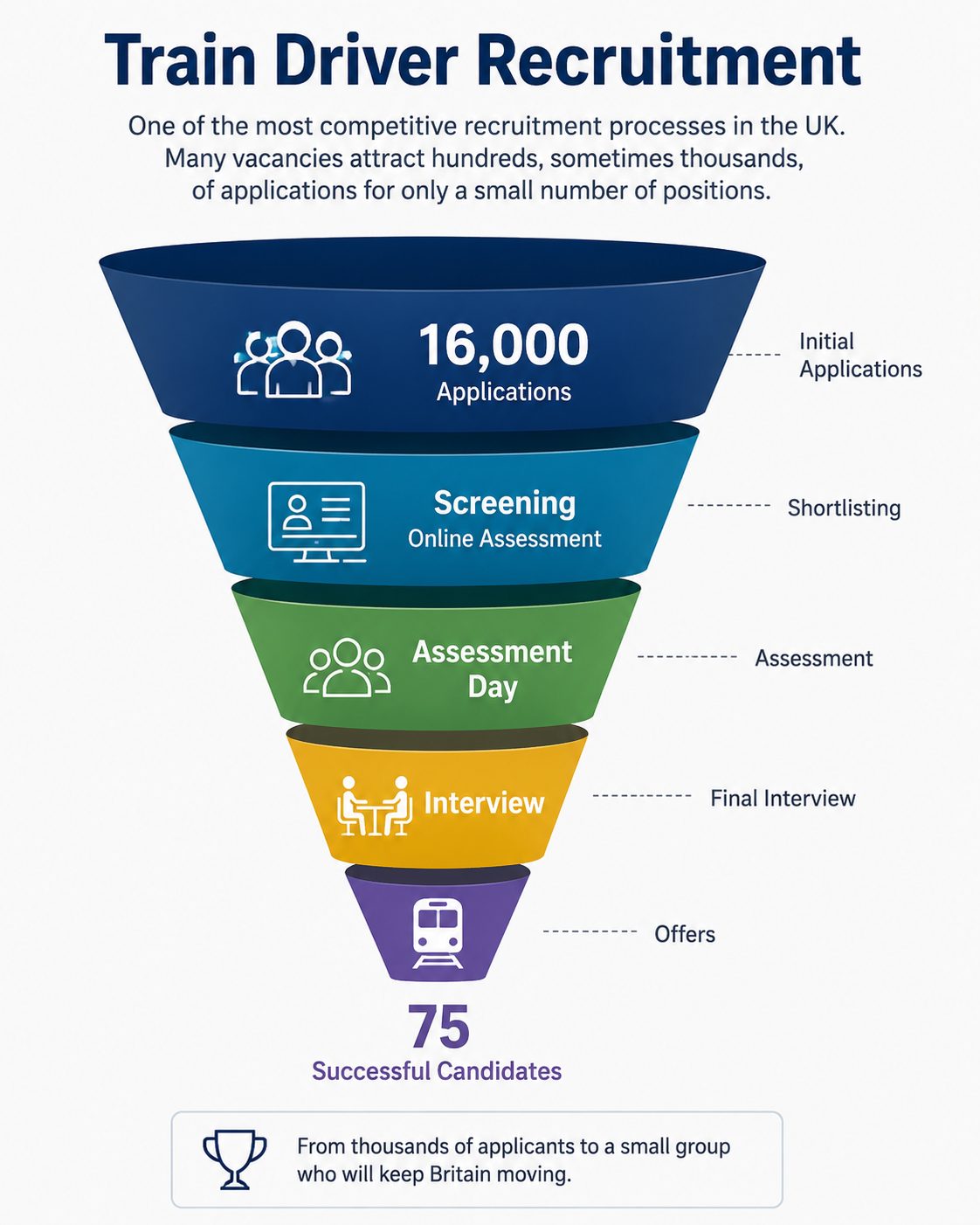



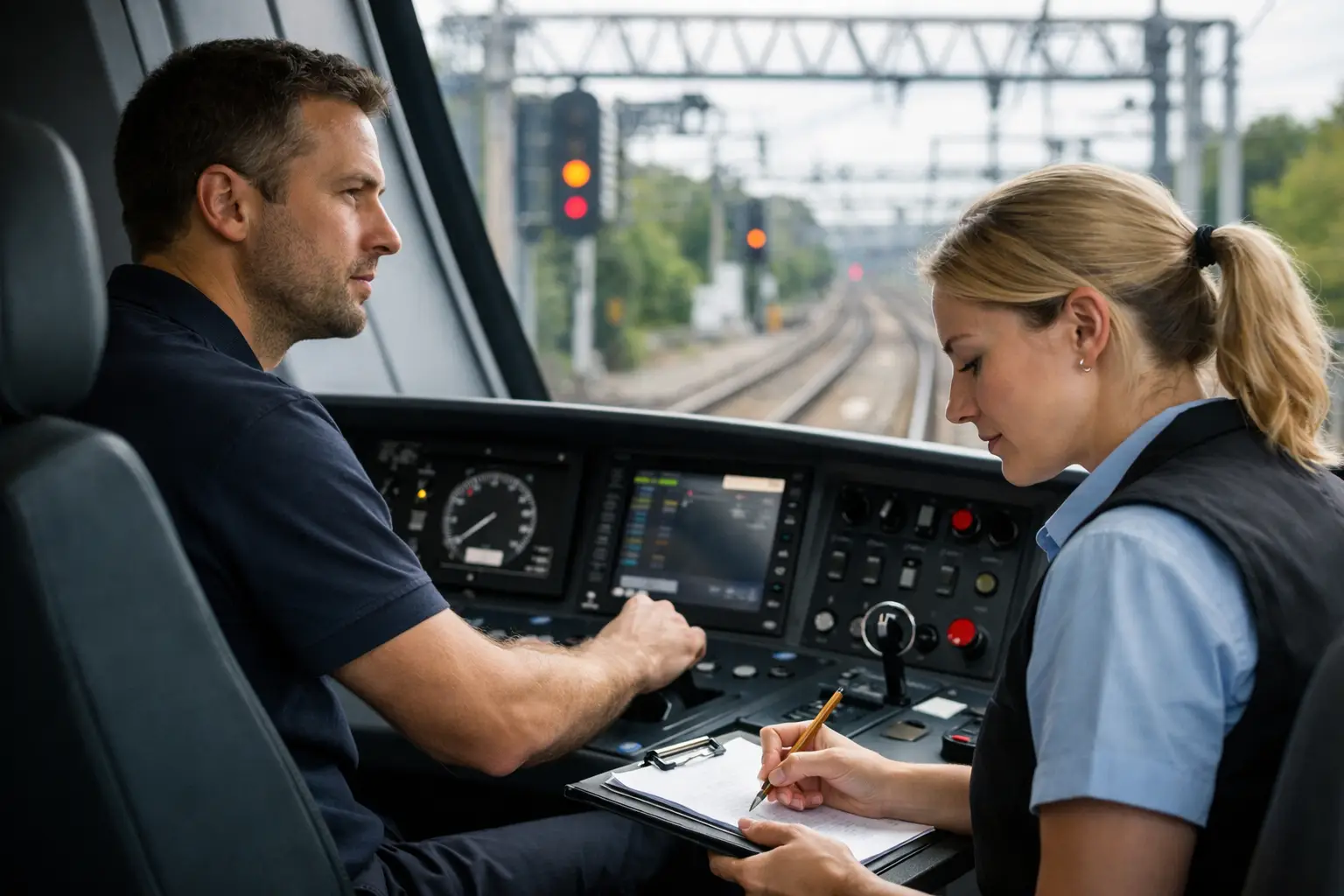
Most candidates do not fail at the psychometric stage because they lack ambition. They fall short because they underestimate how specific the standard is. Train driver psychometric test practice works best when it reflects the reality of safety-critical selection: sustained concentration, rule-following, consistency under pressure and disciplined decision-making.
That matters because trainee train driver recruitment is not built around general employability. It is designed to assess whether your natural approach, attention control and working style are suited to a role where mistakes carry real operational consequences. Good preparation does not mean trying to outsmart the process. It means understanding the demands of the assessments and giving yourself the best chance to perform at your true level on the day.
What train driver psychometric test practice should actually prepare you for
A lot of applicants hear the word psychometric and think of school-style revision. That is usually the wrong starting point. These assessments are less about memorising content and more about how reliably you process information, maintain focus and respond to task rules.
For train driver recruitment, practice should prepare you to work accurately for sustained periods, cope with repetitive but demanding tasks, manage time pressure without becoming careless and stay composed when a task feels mentally draining. Some assessments focus heavily on concentration and vigilance. Others place more emphasis on pattern recognition, following instructions precisely or balancing speed with accuracy.
This is why generic aptitude preparation often falls short. If your practice bears little resemblance to safety-critical testing, you may improve your confidence but not your actual readiness. The better approach is targeted preparation that mirrors the mental demands of rail selection as closely as possible.
Why candidates struggle with psychometric assessments
The first issue is unfamiliarity. Many strong applicants have not sat formal assessments for years. Career changers, military leavers, bus and coach drivers, operations staff and warehouse supervisors often bring excellent behavioural strengths, but the testing format can still feel uncomfortable at first.
The second issue is pace. Candidates often begin too quickly, then lose accuracy. In train driving assessments, careless performance is not a minor detail. A pattern of errors can suggest weak control under pressure, even if your overall ability is better than the result shows.
The third issue is inconsistency. One strong practice session proves very little. Psychometric testing is closer to performance stability than one-off brilliance. If your concentration rises and falls sharply, that can become a problem when the real assessment requires steady output from start to finish.
There is also the pressure factor. Once a candidate starts thinking, "I must pass this", attention often shifts away from the task itself. That is where avoidable mistakes creep in. Structured practice helps because it reduces the novelty of the test environment and gives your brain a repeatable method to rely on.
How to approach train driver psychometric test practice properly
The most effective preparation starts with realism. Treat practice as skills training, not reassurance. If you only repeat easy exercises that make you feel comfortable, you may build false confidence. Useful practice should expose weak areas early enough to work on them.
Start by training little and often. Short, focused sessions are usually better than occasional long ones, especially for concentration-heavy tasks. You are trying to improve mental control and familiarity, not simply accumulate hours.
It also helps to separate task types. If you are practising concentration exercises, work specifically on sustained accuracy. If you are practising timed reasoning tasks, monitor whether your errors increase when you speed up. Different tests place different demands on you, and your preparation should reflect that.
Record your results. Not just your score, but what went wrong. Did you rush the first third and fade later on? Did you misread instructions? Did your concentration drop after a minor mistake? Those patterns matter because they tell you where your real work is.
Train driver psychometric test practice and the speed versus accuracy problem
One of the most common mistakes is assuming faster always means better. It does not. In safety-critical recruitment, uncontrolled speed can work against you. The aim is efficient, accurate performance within the rules of the task.
Some candidates are naturally cautious and need to build pace. Others are naturally quick and need to tighten discipline. Neither profile is automatically right or wrong, but both require adjustment. The strongest test performance usually comes from candidates who find a controlled rhythm early and hold it.
A useful question after each practice session is not simply, "How many did I complete?" Ask, "Was my method stable?" If your pace depended on guesswork, tension or bursts of effort, it may not hold up under formal assessment conditions.
This is where repetition has value. Proper practice helps you learn your working tempo. Once that tempo becomes more consistent, you can make better decisions about when to push on and when to slow down to protect accuracy.
Building concentration like an operational skill
Concentration is often talked about as if you either have it or you do not. In reality, it can be trained, but usually in a measured way. You are unlikely to transform your focus overnight. What you can do is improve stamina, reduce distraction and get better at resetting after small errors.
That last point is especially important. In psychometric testing, one mistake often causes several more because candidates become annoyed with themselves and stop attending to the next item properly. Operationally, that loss of composure is a risk. During practice, work on recognising a mistake, letting it go quickly and continuing with discipline.
Your wider routine matters as well. Sleep, hydration and timing affect concentration more than many applicants admit. A candidate who practises only when tired after work may not be seeing their true level. Equally, someone who depends on ideal conditions may struggle if the assessment day feels stressful or unfamiliar. Preparation should build capability, but also resilience.
What good preparation looks like in the final weeks
As your assessment date approaches, the goal shifts slightly. Early practice is about identifying weaknesses and improving them. Later practice should become more about consistency and composure.
Avoid cramming. Heavy last-minute practice can leave you mentally flat, especially if you are working full time alongside preparation. Instead, focus on maintaining familiarity with task formats, reinforcing instruction-reading habits and protecting your concentration levels.
This is also the stage to get practical details under control. Know your schedule, your route, your documents and your timing for the day. Psychometric performance is affected by unnecessary stress. If avoidable admin issues are occupying your headspace, that is energy taken away from the assessment itself.
In the final days, confidence should come from evidence rather than wishful thinking. If you have practised regularly, tracked your performance and corrected bad habits, you do not need to tell yourself the process is easy. You only need to know that you have prepared professionally.
Common mistakes to avoid
The biggest mistake is using generic test materials with no regard for train driver standards. General aptitude practice can help with familiarity, but it should not be your whole plan.
Another is confusing repetition with improvement. If you keep making the same type of mistake, more volume will not solve it. You need to identify the cause, whether that is poor instruction reading, over-speeding, fatigue or loss of concentration after pressure builds.
Candidates also sometimes compare themselves too closely to others. That usually creates noise rather than progress. Your focus should be on whether your own performance is becoming more stable, accurate and reliable.
Finally, avoid treating the psychometric stage as a hurdle to get past before the "real" job begins. The qualities being assessed are directly connected to train driving itself. The better your preparation aligns with that reality, the more useful it becomes beyond recruitment.
A professional mindset gives your practice value
Train driver psychometric test practice is most effective when it is approached with the same seriousness expected in the role. That means structure, honesty about weak areas and respect for the purpose of the assessment.
For many applicants, the process feels demanding because it is demanding. That is not a sign that something is wrong. It is a sign that standards matter. If you prepare in a focused and realistic way, you give yourself a stronger platform to show what you can actually do when it counts.
A steady, professional approach nearly always beats last-minute intensity. Build the right habits now, and your preparation will start to look much more like readiness.