



A train may arrive safely, leave on time and give passengers a calm journey because several railway professionals have done their jobs well. When comparing train driver vs conductor, the key distinction is not who has the more important role. Both are essential. The difference is where their responsibility sits: the driver operates the train, while the conductor role is generally focused on the train’s safe dispatch, customer service and onboard operation.
For candidates considering a career in rail, this matters. The two roles require different working styles, recruitment preparation and long-term career expectations. A person who thrives in concentrated, independent work may be better suited to driving. Someone who performs strongly when communicating with people and managing changing situations may find conductor work a more natural fit.
Train driver vs conductor: the core difference
A train driver is responsible for operating the train safely and professionally in accordance with the route, timetable, signalling and operating requirements. This is a safety-critical role requiring sustained concentration, disciplined decision making and the ability to remain composed when conditions change.
A conductor, often referred to in some parts of the railway as a guard or train manager, works onboard the service. Exact job titles and duties vary between Train Operating Companies (TOCs), service types and local arrangements. However, conductors are commonly responsible for supporting safe dispatch procedures, communicating with the driver and control where necessary, assisting passengers, checking tickets and responding to incidents during the journey.
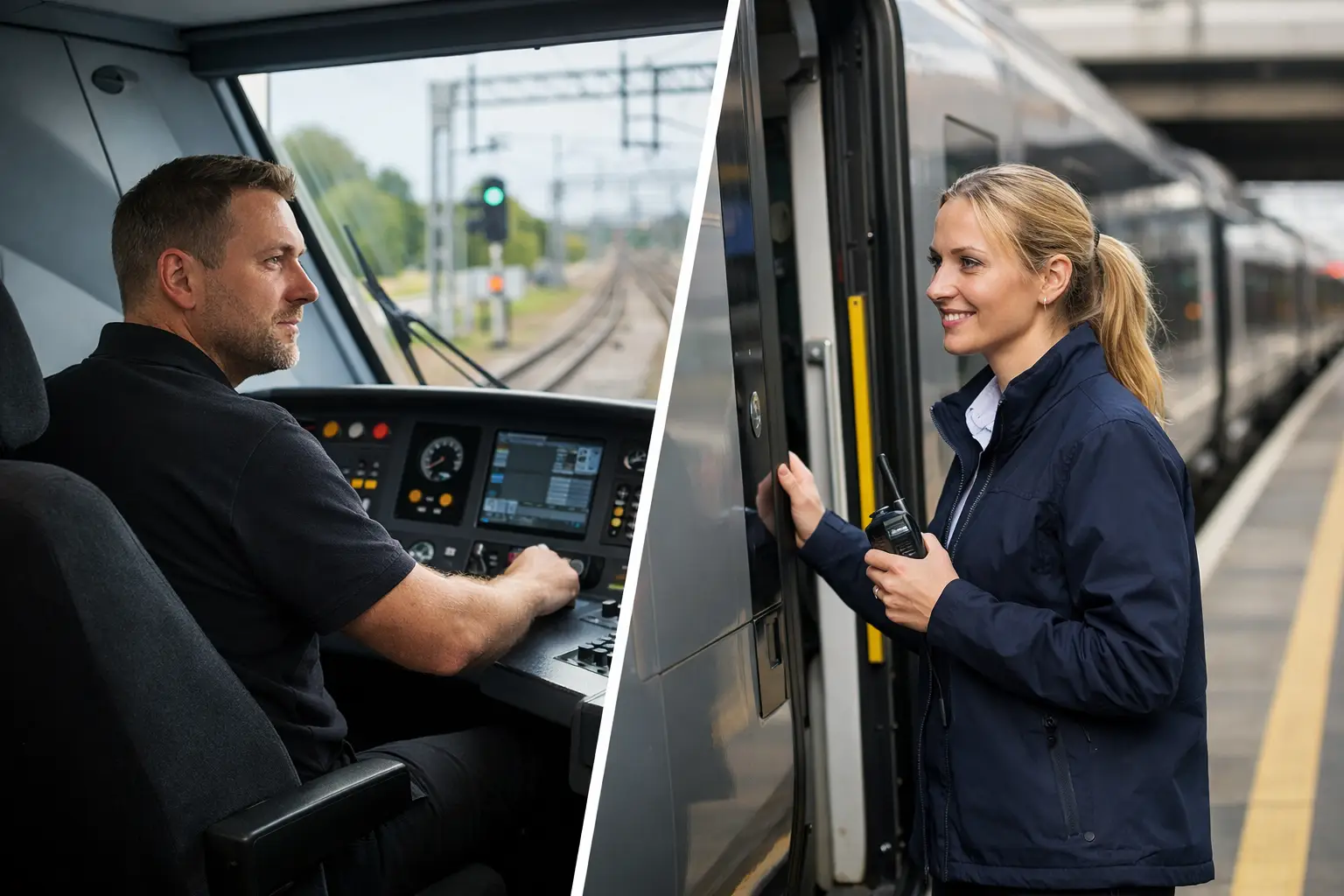
The driver’s workplace is the cab. The conductor’s workplace is usually the train and its passengers. Both work irregular shifts, both need a strong safety mindset, and both must follow procedures carefully. Yet their day-to-day experience can feel very different.
What does a train driver do?
Train driving is not simply a matter of moving a train from one station to another. Drivers must maintain close attention for the full duration of a shift, interpret signals and route information, manage train performance and respond correctly to faults, delays or unusual conditions.
The role involves long periods of independent working. Although drivers communicate with signallers, control, platform staff and other railway colleagues, much of the operational task is completed alone in the cab. That suits candidates who are comfortable with personal accountability and who can maintain focus without regular supervision or conversation.
A driver also needs to be dependable in a very practical sense. Railway work is shift-based, with early starts, late finishes, nights, weekends and public holidays often forming part of the roster. Reliable attendance, effective fatigue management and a stable approach to routine are fundamental.
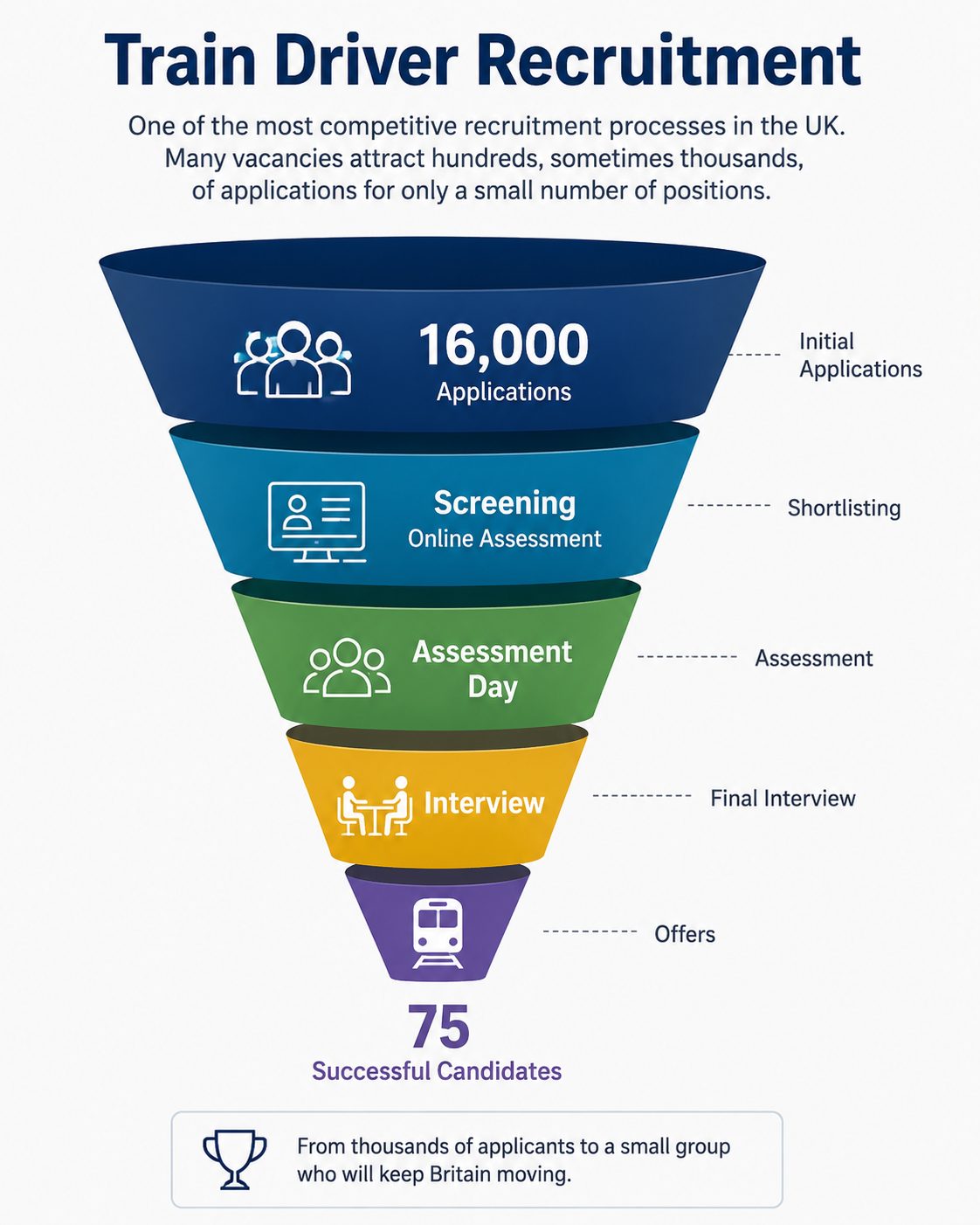
During recruitment, TOCs assess whether candidates can meet the cognitive and behavioural demands of a safety-critical driving role. This can include application screening, online assessments, psychometric tests, structured interviews, medical assessment and other selection stages. The process is competitive because a trainee driver programme represents a significant investment in training and competence development.
The working style that suits train driving
Strong driver candidates are usually methodical, alert and able to follow rules consistently. They do not need constant variety or frequent social interaction to stay engaged. Instead, they take satisfaction in doing a responsible task accurately, repeatedly and professionally.
This does not mean drivers are isolated from the wider railway. Good communication remains essential, especially when reporting defects, receiving instructions or dealing with disruption. The difference is that communication supports the operational task rather than being the main feature of the job.
What does a conductor do?
A conductor’s role is more passenger-facing. Depending on the TOC and service, this may include ticket examination, customer assistance, announcements, disruption support and helping to ensure the train is dispatched safely. Conductors can be the most visible operational representative of the railway for passengers during a journey.
This role requires confidence when dealing with a wide range of people. One moment may involve helping a family find the correct carriage; the next may require a calm, firm response to a customer dispute or a service disruption. Professionalism is important, but so is judgement. Passengers need clear information, particularly when a journey does not go to plan.
Conductors also work within a safety-critical environment. They must understand and apply the procedures relevant to their duties, communicate effectively with drivers and station teams, and recognise when an issue needs to be escalated. Customer service never overrides safety. A good conductor balances both without becoming flustered.
The working style that suits conductor work
Conductor work may suit people who enjoy being active, visible and responsive throughout a shift. It can appeal to candidates from customer service, hospitality, the Armed Forces, security, transport and operational roles where communication and calm authority have been important.
The role still demands concentration and procedural discipline. However, the pattern of work is usually less solitary than driving. There is more direct contact with passengers and more frequent interaction with colleagues across the network.
Responsibility and pressure: different, not lesser
It is unhelpful to view train driver and conductor roles as a simple hierarchy. Each role carries significant responsibility, but that responsibility takes different forms.
Drivers hold direct responsibility for the safe operation of the train. Their work requires continuous awareness, rule compliance and disciplined reactions under pressure. A small lapse in concentration can have serious consequences, which is why selection and training standards are demanding.
Conductors carry responsibility for the safe and orderly operation of the passenger environment, alongside their specific dispatch and onboard duties. They may need to make sound decisions while handling customer concerns, delays or unexpected events in a public setting. Their role often requires a more outward-facing kind of composure.
In both cases, safety is built through preparation, communication and adherence to established processes. Neither role rewards guesswork, shortcuts or casual attitudes.
Recruitment: how the routes differ
Trainee train driver recruitment is typically highly selective. Applicants need to show not only that they want the job, but that they understand its realities. A strong application demonstrates reliability, safety awareness, concentration, rule-following, resilience and an informed motivation for the role.
Structured interviews often explore past behaviour. Candidates may be asked for examples of working safely, maintaining focus, following a process, dealing with pressure, learning technical information or managing shifts. The quality of the example matters, but so does the candidate’s ability to explain their own actions and the outcome clearly.
Conductor recruitment can also involve assessments, interviews and medical standards, although the exact process varies by employer. Selection may place greater emphasis on customer service, conflict management, communication, revenue protection awareness and the ability to work independently while remaining approachable.
For either route, generic interview preparation is rarely enough. Candidates should study the job description carefully, understand the TOC’s service environment and prepare evidence that matches the stated competencies. A customer service example can be valuable for a conductor application, while a disciplined safety or concentration example may carry more weight for a driver role. In reality, both roles benefit from evidence of professionalism and operational maturity.
Can a conductor become a train driver?
Yes, conductor experience can provide a useful foundation for a later driver application, but it is not an automatic route into the driving grade. Internal vacancies may be available at some TOCs, while other candidates apply externally. The recruitment standards for trainee drivers still apply, and previous railway experience does not remove the need to perform well at each stage.
That said, conductor work can help an applicant understand shift patterns, safety culture, disruption, passenger expectations and the importance of accurate communication. It can also confirm whether the railway environment is genuinely the right long-term fit.
Candidates should avoid taking a conductor role solely as a shortcut to driving. It is a career in its own right, and employers will expect applicants to show genuine motivation for the position they are applying for. If your longer-term aim is driving, be honest with yourself about the demands of that role while fully committing to the responsibilities of any role you hold first.
Which role should you choose?
Choose train driving if you are drawn to concentrated operational work, personal accountability and a highly structured safety-critical environment. You should be comfortable working alone for extended periods and able to maintain the same high standard when a shift feels routine.
Choose conductor work if you want an operational railway role with regular passenger contact, varied situations and visible responsibility onboard. You will need patience, confidence and the ability to communicate clearly when people are stressed or dissatisfied.
For some candidates, the decision becomes clearer after reviewing real job descriptions and reflecting on previous work. Think about the tasks that have brought out your best performance. Have you excelled when following detailed procedures independently, or when coordinating people and resolving issues face to face? The answer is often more useful than choosing based on job title alone.
A railway career is built on dependable habits, not quick wins. Whether you pursue driving or conductor work, prepare for the role you actually want, understand the standards behind it and develop the professional evidence that shows you can be trusted with responsibility.