



If you are researching a train operating companies UK list, you are probably not looking for names alone. Most aspiring drivers want to know which operators exist, where they run, and how that affects vacancies, depot locations and the style of recruitment they may encounter. That is the useful question, because choosing where to apply is rarely just about geography. It is about fit, readiness and timing.
For train driver candidates, the UK rail landscape can look more complicated than it first appears. Some operators run long-distance intercity routes, some focus on regional services, and others manage commuter-heavy networks with dense diagrams and busy depots. Those differences matter. The day-to-day operating environment, the route knowledge required and the competition for trainee roles can vary considerably between companies.
Train operating companies UK list
A practical train operating companies UK list should start with a simple point. The passenger rail network is made up of multiple TOCs, and they do not all recruit in the same way or at the same frequency. Names and structures can also change over time through franchise reform, operator changes or public ownership arrangements, so applicants should always verify current status before applying.
At the time of writing, the main passenger train operating companies commonly recognised across Great Britain include Avanti West Coast, c2c, Caledonian Sleeper, Chiltern Railways, CrossCountry, East Midlands Railway, Gatwick Express, Great Northern, Great Western Railway, Greater Anglia, Heathrow Express, Hull Trains, LNER, London Northwestern Railway, Merseyrail, Northern, ScotRail, South Western Railway, Southeastern, Southern, Thameslink, TransPennine Express, Transport for Wales Rail, West Midlands Railway and Grand Central.
Some of these brands sit within larger operating groups or share recruitment structures. Great Northern, Southern, Thameslink and Gatwick Express, for example, are closely linked under the Govia Thameslink Railway structure, even though candidates may know the public-facing brands better. London Northwestern Railway and West Midlands Railway are another example where branding and operational identity overlap. That is why jobseekers should look beyond the logo and check the actual employer, depot and route context.
Why this list matters to trainee train driver applicants
If your goal is a trainee driver position, a TOC list is only useful when it helps you narrow your target applications. Many candidates waste time applying broadly without considering depot location, travel distance, shift practicality or the sort of operational environment they are entering.
A commuter-focused operator serving London and the South East may offer a very different experience from a regional operator in Wales, Scotland or the North of England. Dense stopping patterns, intensive signalling areas and high passenger volumes can shape both training demands and operational expectations. Long-distance operators may involve different route structures, traction exposure and customer service pressures. Neither is automatically better. It depends on where you live, what lifestyle you can realistically sustain and where your strengths sit.
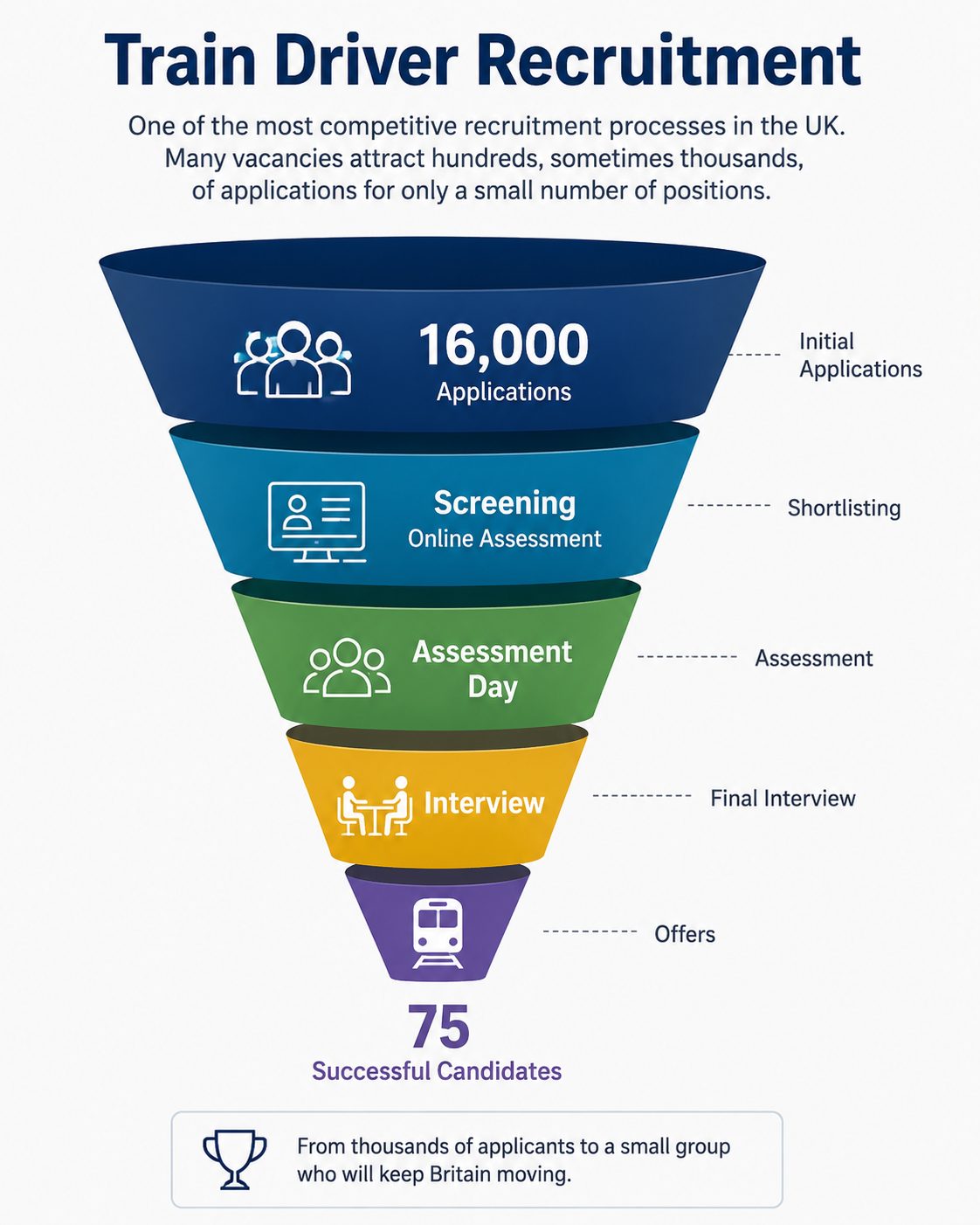
There is also a recruitment reality. Some TOCs open trainee campaigns rarely and attract very high applicant volumes. Others recruit more locally around depot need. If you are prepared and eligible, timing can matter almost as much as company preference.
The difference between passenger operators and other rail employers
Applicants sometimes mix TOCs with freight operators, infrastructure employers and open-access businesses without understanding the distinction. A train operating companies UK list usually refers to passenger operators, not every employer in rail.
That matters because the recruitment process, training pathway and role profile may differ. If you want to drive passenger services, focus on passenger TOCs first. If you are open to freight or other safety-critical rail roles, your search should widen, but you should still understand that standards, working patterns and operational culture can differ significantly.
How to use a train operating companies UK list properly
The best use of a TOC list is to turn it into a shortlist. Start with depot geography. A trainee driver role may require you to live within a defined travelling distance of the depot, and that is not a minor detail. Shift work, very early starts and late finishes mean a role that looks attractive on paper may be unrealistic in practice.
Next, look at the operator's route profile. Is it predominantly suburban, regional or intercity? Does it run an intensive timetable? Does it involve major city terminals, rural routes or mixed traction? These factors will not usually determine whether you can become a driver, but they may influence where you feel most suited and where your existing operational background is most relevant.
Then consider recruitment style. Most TOCs follow a structured process built around eligibility checks, application screening, psychometric testing, manager interview and medical standards. But the pace, communication and campaign format can vary. Some campaigns are highly selective from the application stage, especially where vacancy numbers are small.
For that reason, serious applicants should not just collect company names. They should prepare for the common standard of assessment that sits beneath many TOC recruitment campaigns.
What changes between TOCs and what stays the same
Candidates often ask whether one operator is easier than another. That is not the right way to frame it. Train driver recruitment is safety-critical across the board, and no credible preparation should suggest otherwise.
What changes is context. Depot availability changes. Competition levels change. Route type changes. The way a company presents its vacancies or phrases its application questions may change. What stays broadly consistent is the need to demonstrate concentration, rule adherence, calm decision making, situational awareness and the maturity to work safely with limited supervision.
That is why applicants with a strong background in disciplined operational work often perform well, even if they are new to rail. Military service leavers, transport professionals, emergency response staff and candidates from other safety-critical sectors may recognise the emphasis on standards, routine, responsibility and controlled judgement. They still need rail-specific preparation, but the underlying behaviours are familiar.
Grouped brands can affect your application strategy
One practical point often missed by first-time applicants is that some TOCs are part of wider groups or shared operating structures. If you apply for multiple brands under one parent operation, your applications may not be as independent as you assume. That does not mean you should avoid applying, but it does mean you should read each vacancy carefully and keep track of where your applications sit.
A well-managed application strategy is better than a scattergun approach. Quality matters. A focused application tailored to the depot, route and role stands up better than five rushed submissions.
Common mistakes when reviewing TOC lists
The first mistake is assuming all vacancies are trainee roles. Many TOCs advertise qualified driver posts, conductor roles, station grades and operational support positions alongside driver opportunities. Read the advert title and entry requirements carefully.
The second is ignoring location restrictions. If a depot requires you to live within a certain distance and you cannot meet that requirement, the application may not progress regardless of motivation.
The third is overlooking the assessment standard. A lot of candidates spend weeks researching operators and almost no time preparing for the recruitment stages that actually decide the outcome. If you are serious about becoming a driver, your effort should be weighted towards application quality, psychometric readiness, structured interview preparation and evidence of operational suitability.
The fourth is treating brand reputation as the whole story. Candidates sometimes form strong opinions about a company based on public discussion, but your actual experience will be shaped by depot culture, management approach, route type and your own resilience during training. It is sensible to be informed, but less sensible to build your plan on rumour.
Which TOC should you apply to?
The honest answer is that it depends. The right TOC for one candidate may be the wrong one for another. If you need stability close to home, depot location may be your deciding factor. If you already work shifts and want a realistic commute, that narrows the field quickly. If you are transitioning from another safety-critical career, you may prefer operators where your experience aligns strongly with the demands described in the advert.
A good starting point is to shortlist operators within practical commuting distance, then assess each one against four factors: depot accessibility, vacancy type, operational fit and your current level of recruitment readiness. If you are not yet ready for the application standard expected by TOCs, the best move may be preparation first and application second.
That is where structured support can make a real difference. Train Driver Foundation focuses on helping candidates approach the process professionally, from CV and application quality through to interview and assessment preparation, without treating recruitment as guesswork.
A TOC list is useful, but it is only the beginning. The stronger move is to turn that list into a plan based on where you can realistically work, where your background adds value and how well prepared you are for a highly competitive, safety-critical selection process. If you do that properly, you stop searching for any operator and start targeting the right opportunity.